
Reviewed · PHNOM CHISOR & TONLE BATI TEMPLE TRIPS
Prasith and Reap Temples Private Day Trip from Phnom Penh
A day trip with two temple personalities. Phnom Prasith gives you big views and daily monk life, while Phnom Reap feels like a modern take on Angkor Wat. I love that this tour is designed to keep things private and paced to your group, not stuck behind a bus. I also love the chance to watch locals make a pilgrimage and interact with monks without the usual big-city tourist shuffle.
The only real drawback to weigh is physical effort: you’re on your feet in temple settings and Phnom Prasith sits up on twin hills, so you’ll want a moderate fitness level for steps and walking.
In This Review
- Key points you’ll care about
- Getting out of Phnom Penh: tuk tuk vs car and that morning snack
- Phnom Prasith Temple: twin-hill views and monastery life
- What to watch for
- Why this stop is worth it
- Putmondul Buddhist centre: reclining Buddha and the good-luck culture
- A quick reality check
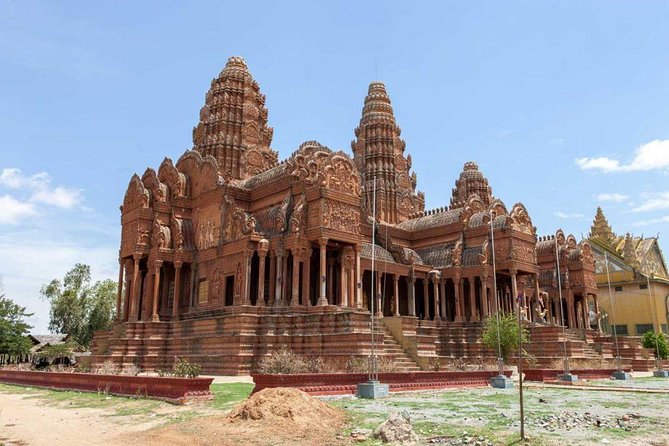
- Phnom Reap Temple (Prasat Vihear Suor): the new Angkor Wat feel from 1998
- The pilgrimage element is the real star
- Photo tip that avoids the usual hassle
- Lunch in rural calm: shaded Khmer food with views
- Your guide makes the difference: what good communication looks like
- Price and value: is $117.44 per person worth it?
- Who this private day trip suits best
- Should you book the Prasith and Reap Temples private day trip?
Key points you’ll care about
- Angkor Wat style, but not the Angkor crowds at Phnom Reap, finished in 1998
- Private guide flexibility so you’re not waiting on other groups
- Tuk tuk time through the market for a fun, local-feeling ride
- Monks, nuns, and offerings at Putmondul where people go for good luck
- Lunch and tea included in a shady Khmer setting with countryside views
- Clear structure for an 8-hour day that still feels unrushed
Getting out of Phnom Penh: tuk tuk vs car and that morning snack
Most temple days from Phnom Penh start the same way: a pickup, a quick introduction, then a drive out of town. This one adds a choice that changes the whole vibe. You can go by tuk tuk or car, and that morning ride matters more than you might think.
If you choose the tuk tuk, you’ll likely get more street-level views and a slower rhythm through local areas. One of the standout moments people remember is the tuk tuk ride through the market, which is exactly what you want on a private day: small, sensory scenes you’d miss if you sat in a fast-moving car the whole way.
Either way, plan for about 90 minutes to reach the first stop, Phnom Prasith. During that ride, you’ll get a local snack for morning tea. It’s a small inclusion, but it helps the day feel smoother—temples often come with long walking stretches, and a snack early keeps you from going hungry while you’re climbing and exploring.
Practical tip: bring cash for personal spending and small donations, even though donations are not included. If you want to buy a drink or a snack during a break, having some money ready keeps things easy.
A few more Phnom Penh tours and day trips our team keeps coming back to

Phnom Prasith Temple: twin-hill views and monastery life
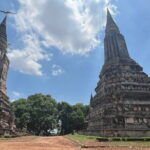
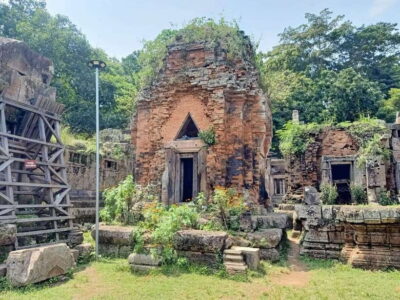
Phnom Prasith Temple sits high on top of twin hills in a way that makes you understand why pilgrims come here. The payoff is the views over the surrounding countryside, which is one of the best reasons to include this temple on your Phnom Penh day. Even if you’ve seen temples elsewhere, there’s something special about looking out and realizing you’re not in a tourist box—you’re seeing where people live and farm and worship nearby.
Once you arrive, you’ll explore an ancient structure and see a community of monks going about their daily routines. This isn’t just scenery. The temple feels active, and that matters, because Buddhism in Cambodia isn’t only for visitors with cameras. It’s part of everyday rhythm, and you’ll notice that more when you’re on a private schedule and can pause where you want.
What to watch for
- Expect steps and walking. The tour specifically points to moderate physical fitness, which is a hint that you shouldn’t plan on this being effortless.
- Go with respectful temple behavior. You’ll be around monks, and the atmosphere is more calm and devotional than sightseeing.
Why this stop is worth it
Phnom Prasith is the old-to-new hinge of the day. You start with the feeling of long-standing religious practice, then later shift to Phnom Reap, which is modern but intentionally modeled on Angkor Wat. That contrast is what makes the trip more interesting than a one-temple outing.
Putmondul Buddhist centre: reclining Buddha and the good-luck culture
After Phnom Prasith, the tour moves to Putmondul, a Buddhist centre where monks and nuns are present, and where locals come with offerings for good luck. This stop is a strong example of why a private guide helps: they can point out what you’re looking at and explain why people are there, without turning the visit into a lecture.
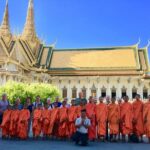
One highlight here is a magnificent reclining Buddha. The reclining posture can be striking in any setting, but it hits harder when you’re also seeing the surrounding practice—people lining up with offerings, chatting quietly, and waiting for blessings. You get a sense of the centre as a working spiritual space, not just a photo spot.
You’ll also see paintings depicting the history of Buddhism. Even if you don’t read Khmer fluently, you’ll probably catch the overall storyline through the imagery and the way locals reference scenes around you. The key is to look slowly and treat it like a visual lesson, not a museum rush.
Go at your own pace with more private Phnom Penh tours



A quick reality check
This isn’t a temple where you come for big “wow” structures only. It’s more about atmosphere: the people, the offerings, and the daily spiritual flow.
Phnom Reap Temple (Prasat Vihear Suor): the new Angkor Wat feel from 1998
Then you reach the main architecture moment of the day: Phnom Reap Temple, also known as Prasat Vihear Suor. This is the modern twist that makes the whole trip memorable.
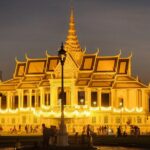
Phnom Reap is relatively new—it was finished in 1998—and it’s based on the architectural style of Angkor Wat. That’s why people call it the new Angkor Wat. The name can sound like a marketing label, but once you’re there, the influence feels intentional: towers, layout ideas, and ornamentation that nod to Angkor-era design.
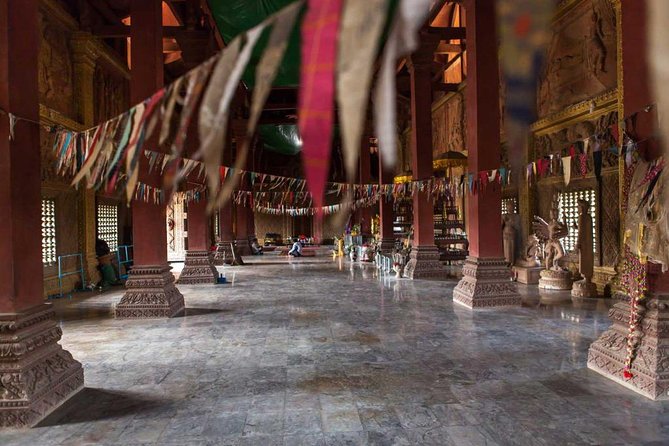
You’ll find sculptures of ancient kings and Buddha, which gives the site a dual focus—temporal power (kings) and spiritual authority (Buddha). It’s a clean way to understand how Cambodian religious spaces often mix myth, heritage, and devotional practice.
The pilgrimage element is the real star
A big part of Phnom Reap’s charm is the crowd you don’t mind. The tour highlights locals who make the journey to seek blessings from Buddhist monks in hopes of good fortune. That means you’re not just looking at stone—you’re watching something happening.
Because your tour is private, you can take your time and move at your pace. That’s especially valuable at Phnom Reap, where the experience works best when you slow down and notice what people are doing around you.
Photo tip that avoids the usual hassle
If you want pictures without fighting for angles, a private guide can help you pick when to step into the best spots. You’re not stuck waiting for a whole group to move at once, which is usually what ruins temple photos.
Lunch in rural calm: shaded Khmer food with views
Between temples, you’ll stop for lunch at a traditional Khmer restaurant in a beautiful shady location with views of the surrounding countryside. This is one of those underrated value moments. When tours skip real breaks, you end up eating fast and forgetting half the day.
Here, the lunch stop functions like a reset. You’ll refuel before the afternoon temple, and the setting helps the day feel less like a checklist. You also get a included coffee or tea, which is a practical plus in Cambodia, where heat can creep up on you even on a “not too long” day.
A smart way to enjoy this part: eat first, then let your guide show you what to notice in the view. It’s not just scenery—it’s a sense of place. You start the trip in Phnom Penh, then your day shifts into the quieter rhythm of temples outside the city.
Your guide makes the difference: what good communication looks like
The tour’s biggest quality signal shows up in the way guides interact with you. In the feedback tied to this experience, guides were praised for being warm, fluent in English, and helpful without pushing information on you.
If you get Li, the style is described as knowledgeable but not pushy—more like a conversation where you can ask questions as you go. Another named guide, Seung (spelling may vary), was praised for being on time and for excellent English. That combination matters: temple days can turn awkward if the guide talks too much or not enough. You want someone who can explain what you’re seeing and also read the mood.
So here’s what to do: ask one or two focused questions early, then let the guide guide the pace. For example, you might ask what locals believe they’re seeking at Putmondul, or why Phnom Reap was modeled after Angkor Wat. Those questions usually lead to the most useful storytelling during your walking time.
Price and value: is $117.44 per person worth it?
At $117.44 per person for about 8 hours, the value comes down to what’s included and what you’re paying to avoid.
You get:
- hotel pickup
- private transport (tuk tuk or car) with driver
- private guide
- bottled water
- lunch
- coffee and/or tea
That’s a lot of “day cost” bundled into one figure. Many DIY temple days from Phnom Penh are cheaper on paper, until you add private transport, a driver waiting around, and time wasted coordinating. This tour is built to handle the whole chain: leaving on schedule, reaching the two temple areas, and getting you back with minimal stress.
The other value is quality of experience. Phnom Penh isn’t always the first choice for temple seekers, so it often delivers something calmer than Siem Reap’s biggest crowds. And you’re not doing the classic “hit three sites fast” plan. Instead, you get time for views, monastery life, a reclining Buddha centre, and a modern Angkor-style temple with pilgrimage energy.
If you like your days structured but not rushed, this price can feel fair.
Who this private day trip suits best
This tour fits best if you:
- want temples outside the Siem Reap crowd pattern
- like a blend of old and new: Phnom Prasith plus Phnom Reap modeled on Angkor Wat
- prefer a private guide who can adjust pace and explain what you’re seeing
- enjoy seeing daily religious life, not only carved stone from a distance
- are comfortable with some walking and steps, given the moderate fitness level requirement
It may be less ideal if you want a purely flat, low-effort day with minimal stairs. Phnom Prasith on twin hills is a clue.
Should you book the Prasith and Reap Temples private day trip?
Book it if you want a day that feels like Cambodia beyond the usual tourist route. You’ll get Phnom Reap’s Angkor-style modern architecture, plus the quieter, devotion-focused atmosphere of pilgrimage spaces at Phnom Prasith and Putmondul. The private setup keeps you from waiting on others, and the included lunch and tea help the day stay comfortable.
Skip or reconsider if you’re trying to avoid any hillside walking at all. The tour expects moderate physical fitness, and Phnom Prasith’s hilltop setting can be a deal-breaker for very limited mobility.
If you’re in Phnom Penh and you want one strong temple day with real atmosphere, this is the kind of trip that makes the city feel worth slowing down for.
More Private Phnom Penh Tours to Bookmark
More Tour Reviews in Phnom Penh

More Phnom Chisor & Tonle Bati Temple Trips in Phnom Penh
Keep browsing: more Phnom Penh tours and day trips our team has reviewed






Phnom Chisor & Tonle Bati Temple Trips, compared.
 ★ 5.0Phnom Chisor & Tonle Bati Private Tours from Phnom PenhFrom $13534 reviews
 ★ 5.0A Day Trip To Phnom Chisor – Tonle Batti From Phnom PenhFrom $6110 reviews
 ★ 4.9One Day Trip to Phnom Da, Ta Prohm Bati, Neang Khmao & ChisoFrom $1436 reviews
 ★ 5.0Chiso temple, Neang khmao, and Taprum temple historical site TourFrom $1905 reviews
Browse the lists this tour appears in