
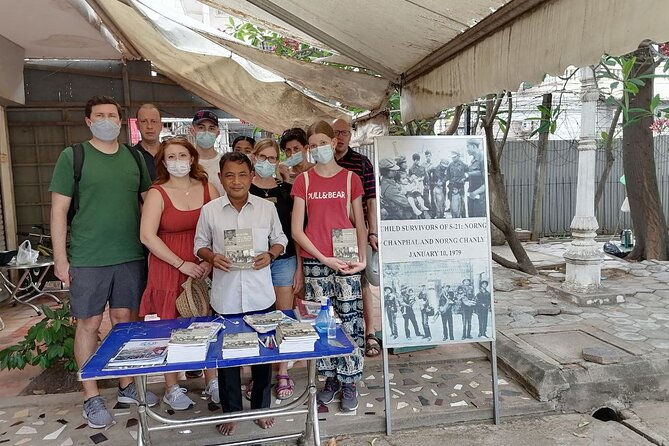
Reviewed · KILLING FIELDS & GENOCIDE HISTORY TOURS
Killing field and Toul Sleng genocide museum Tour
Hard history, told with care. This Phnom Penh tour connects Choeung Ek and Tuol Sleng so you understand what happened to prisoners under the Khmer Rouge, and why it still matters today.
I love that the tour includes an English-speaking guide and on-the-spot translation, so the facts don’t just sit on walls—you actually grasp the exhibits. I also like the logistics value: air-conditioned transport, safe and clean vehicle service, and bottled/cool water for the ride.
One drawback to plan for: the topic is emotionally heavy, and the sites can feel intense even if you’re prepared. Also, the museum entry fees are extra, so your $19 day needs that budget add-on.
In This Review
- Key Highlights You’ll Care About
- A Half-Day That Links Two Terrifying Parts of the Same System
- Choeung Ek Killing Fields: Respect, Context, and What to Expect
- Tuol Sleng (S21) Prison: A Former School Built for Interrogation
- The English Guide Factor: Translation Plus Human Stories
- What Makes the Two-Site Flow Work (And Where It Can Feel Too Much)
- Price and Value: How $19 Adds Up (And When It’s Worth It)
- Timing, Pickup, and the One Logistics Quirk to Watch
- Who Should Book This Tour (And Who Should Think Twice)
- Practical Tips to Make the Visit Easier
- Should You Book This Tour?
- FAQ
- How long is the Killing Fields and Tuol Sleng tour?
- Is hotel pickup included?
- Are admission fees included in the $19 price?
- What’s included in the tour price?
- How big is the group?
- Does the guide translate the exhibits?
- What if the weather is bad or the tour is canceled?
Key Highlights You’ll Care About
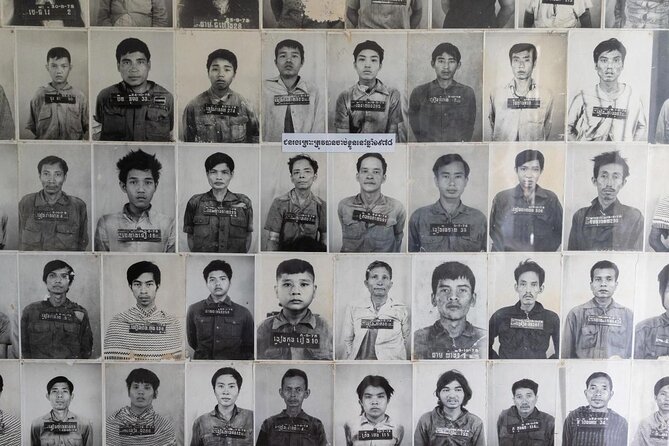
- Two major Khmer Rouge sites in one 4+ hour outing, with guided time at each place
- Guide translation of displays so you don’t miss the meaning behind the photos and documents
- Choeung Ek context first, then Tuol Sleng (S21) for the prison/interrogation side of the system
- Air-conditioned vehicle + bottled/cool water, so you’re not baking in transit
- Small group size (max 20), which usually keeps the pace humane on a grim itinerary
- Strong guide-led personal perspective, including human stories shared by guides like Makara, Darian, Rouan, Ron, and Chamroeun
A Half-Day That Links Two Terrifying Parts of the Same System
This is not a sightseeing loop. It’s a structured visit to two places that explain how the Khmer Rouge used fear, detention, and mass killing as policy—not chaos. The tour timing is built for focus: about 4 hours 15 minutes total, with roughly 2 hours at each stop.
The big “why” is simple: Choeung Ek shows the killing fields, while Tuol Sleng (S21) shows the prison and interrogation process that fed into that system. If you’re short on time in Phnom Penh, doing both on the same day saves you from piecing the story together on your own.
To learn more about Phnom Penh's recent history, these guided visits cover the S-21 and Choeung Ek memorial sites
Choeung Ek Killing Fields: Respect, Context, and What to Expect
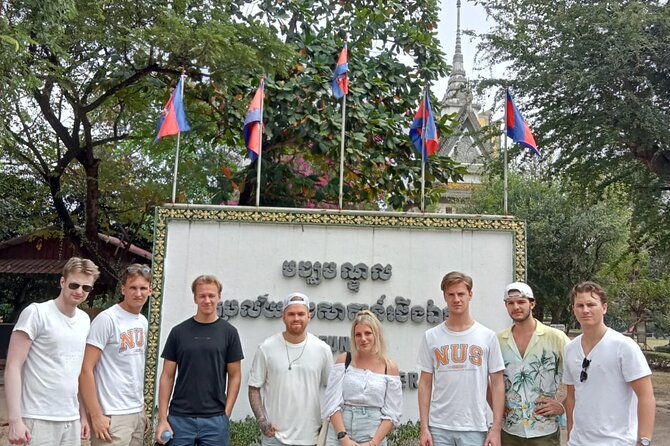
Your day starts with pickup from Amanjaya Pancam Hotel (Dekcho Damdin St. 154). Then you head to Choeung Ek Genocidal Center, about 9 miles south of Phnom Penh. The drive itself is usually straightforward, but the moment you arrive, the tone changes fast.
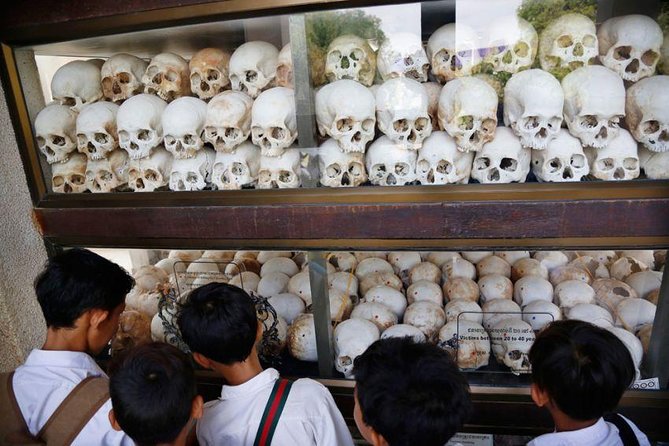
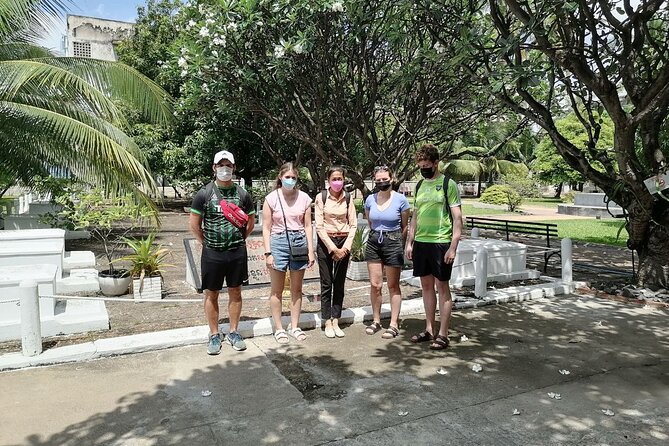
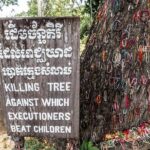
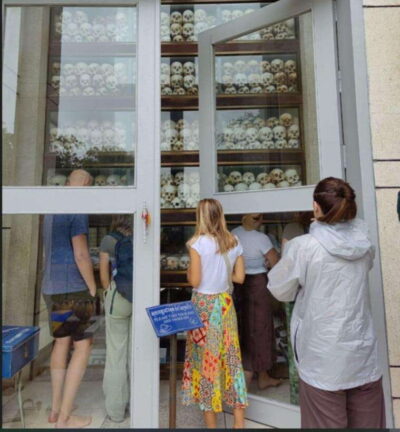
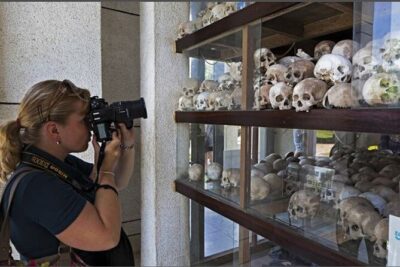
This site was once an orchard and a Chinese cemetery before the Khmer Rouge transformed it into the area known as the killing fields. The tour frames the staggering scale: executions are often cited around 20,000 victims, and over about three years, the Khmer Rouge massacred and buried roughly 2.5 million people.
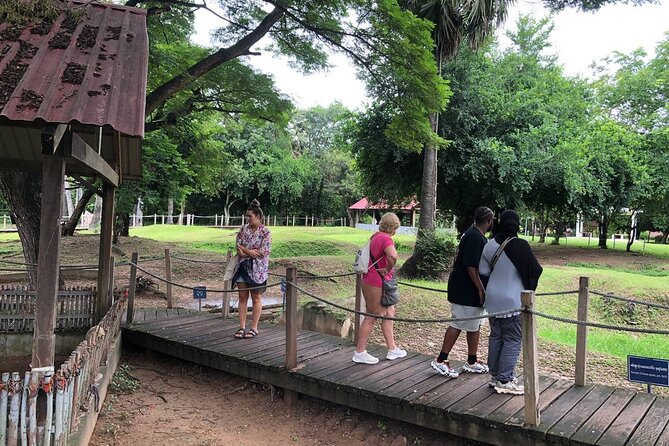
When you’re there, you’re not touring for entertainment. You’re walking through evidence and memory, and you’ll be encouraged to pay respects to the victims as part of the visit. That matters because Choeung Ek can feel like “just photos” if you rush. With a guide, it lands as a human story tied to documented events.
Practical note: plan your mental pacing. You’ll have a guided ~2-hour block here, which is long enough to absorb the place but short enough to not lose track of your own limits. If you tend to get overwhelmed in galleries, go slowly, and let the guide set the rhythm.
Tuol Sleng (S21) Prison: A Former School Built for Interrogation
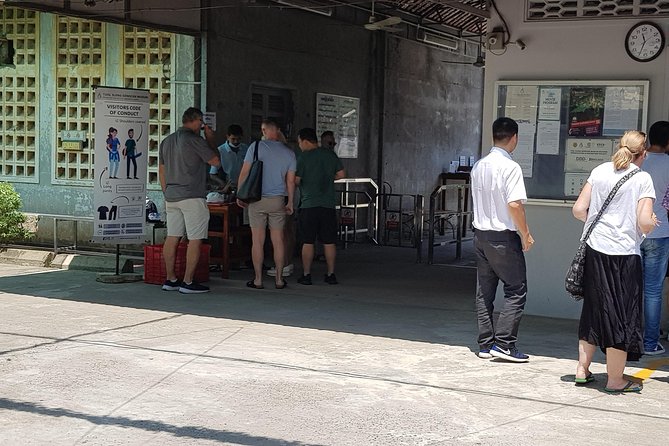
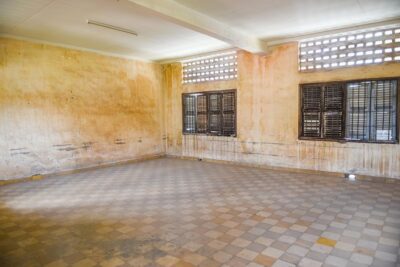
After Choeung Ek, you return to Phnom Penh for the second stop: Tuol Sleng Genocide Museum (S21). The name Tuol Sleng means hill of the poisonous trees, and the site’s history adds to the shock. A once-used school became a high-security prison.
Tuol Sleng held prisoners as part of the Khmer Rouge machine of control and suspicion. The numbers given on the tour are grim but specific: between 14,000 and 17,000 prisoners were detained, tortured, and held there. The tour points out that torture spaces included primitive brick cells built in former classrooms, which turns the setting into something uniquely haunting.
What makes Tuol Sleng especially powerful is how it explains the process, not just the outcome. You’ll see the way detention and interrogation functioned, and you’ll get help making sense of displays through guide translation. That is where you’ll notice the tour isn’t just facts—it’s interpretation, clarity, and context.
One detail worth knowing: some visitors note there are not the usual audio-style supports you might expect at a museum. That’s another reason the guide’s role matters here; you’re relying on the live explanation rather than device-based storytelling.
The English Guide Factor: Translation Plus Human Stories
The tour’s biggest strength is the guide. The format is simple: you get an English-speaking guide, and they translate the displays so the story stays understandable while you’re standing in front of it. That’s not a small thing—these sites use dense historical context, and you’ll get more out of them when someone connects the dots out loud.
The guide quality is also backed by real personalities named in accounts of the experience. Guides such as Makara, Darian, Rouan, Ron, Chamroeun, Neang, Om, Ohm, and Sammy are praised for clarity and perspective. A repeating theme: guides often bring personal context too—family history, childhood memories, or lived understanding of what it meant to grow up during the Khmer Rouge years.
That human layer can hit harder than the documents. But it’s also what makes the places feel less distant. You stop treating the genocide like a chapter in a textbook and start seeing how it shaped people and families over generations.
What Makes the Two-Site Flow Work (And Where It Can Feel Too Much)
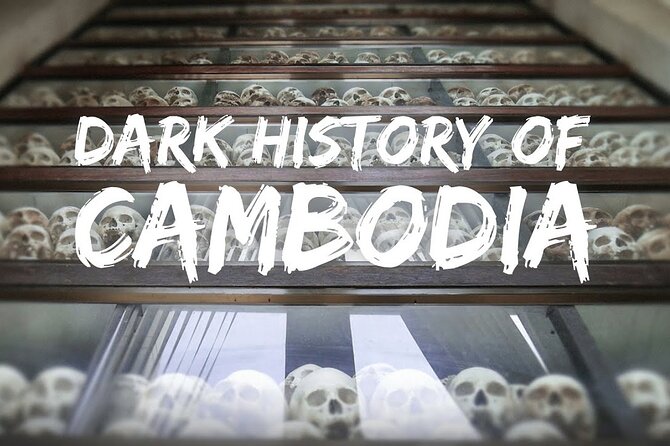
The order matters. Starting with Choeung Ek gives you the “what happened” side of the Khmer Rouge system: mass killing fields and the scale of atrocity. Then moving to Tuol Sleng answers a different question: how prisoners were captured, processed, and interrogated first.
That structure helps your brain organize a difficult history. You’ll understand the system as a pipeline—detention and torture leading toward mass death—rather than two unrelated stops.
Still, you should be aware of your own capacity. This is a somber, confronting experience. The guides do a professional job keeping the visit organized, but you will see grim material. If you’re prone to getting anxious in memorial spaces, take breaks, sit when you can, and give yourself permission to slow down.
Step inside more of Phnom Penh's museums and galleries
Price and Value: How $19 Adds Up (And When It’s Worth It)
The advertised price is $19.00 per person, which is often why people book quickly. Here’s the honest math: admission is not included. You’ll pay about $3.00 for Choeung Ek and $5.00 for Tuol Sleng, so add $8 total for entry fees. Your realistic all-in cost is closer to $27, plus any tipping you choose.
What you get for that price is more than transportation. Included in the tour are a professional English-speaking tour guide (license included) plus a driver, air-conditioned vehicle, and cool/bottled water, along with clean and safe transport. For many visitors, paying a little extra for a guide—especially one who translates—feels like the smart move because it prevents the experience from becoming confusing or superficial.
Also, the group size cap is 20 travelers, which can help keep questions possible and the schedule from getting chaotic. When you’re dealing with heavy history, that “pace control” matters.
Timing, Pickup, and the One Logistics Quirk to Watch
The tour runs about 4 hours 15 minutes and includes pickup from Amanjaya Pancam Hotel, then returns you back there at the end. That makes the plan easy: you know where to start and finish, and you can build the rest of your day around it.
Still, one operational issue shows up in accounts: pickup details can sometimes be confusing if messages don’t line up perfectly with your watch. In one case, a party described arriving early for pickup and finding the vehicle collection instructions didn’t match exactly, forcing them to walk to the car. It was framed as an early communication slip more than a broken tour.
My practical advice: confirm pickup timing the day before or on the morning of your tour, and be ready a little early at your meeting point. If you receive a message with timing instructions, follow those timestamps closely. It’s the simplest way to avoid losing time right at the start of a long, emotional day.
Who Should Book This Tour (And Who Should Think Twice)
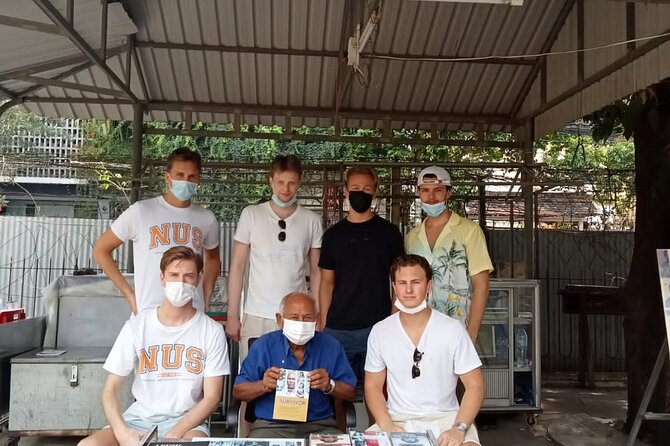
This tour fits best if you want one day to explain the Khmer Rouge system clearly. If you care about recent Cambodian history, want the story in human terms, and appreciate a guide-led explanation, you’ll likely feel satisfied.
It may be less ideal if you’re looking for light sightseeing, or if you know you struggle with graphic, emotionally intense material. Nothing about this tour is “optional” in the sense of skipping the subject matter—you’re there to face it. Plan your day around that reality.
Practical Tips to Make the Visit Easier
Bring water (you’ll likely receive it, but you’ll feel better carrying your own small bottle too). Wear shoes you can stand and walk in comfortably. Then, mentally plan for slower moments: you’ll want time to read and absorb, not just move along.
If you want maximum value from the translation, arrive ready with at least a couple of questions. For example: what changed over time in Khmer Rouge policy, or how interrogation fit into their control strategy? Guides often handle these well because their job is to connect the exhibits into one understandable story.
Should You Book This Tour?
I’d book this tour if you want a clear, guide-led connection between Choeung Ek and Tuol Sleng, and if you’re comfortable with a deeply heavy subject. The $19 price is strong, and the included English translation is the part that turns the visit from information into understanding.
Skip or reconsider if you’re not emotionally prepared for genocide memorial sites. Also, if you’re highly schedule-sensitive, build in a little buffer for pickup timing and keep an eye on any collection messages you receive.
If you’re choosing only one structured option in Phnom Penh for Khmer Rouge history, this is one of the most direct routes—and the guide component is the reason it’s more than just a drive to two landmarks.
FAQ
How long is the Killing Fields and Tuol Sleng tour?
It’s about 4 hours 15 minutes (approx.).
Is hotel pickup included?
Pickup is offered. The tour starts at Amanjaya Pancam Hotel and ends back at the meeting point.
Are admission fees included in the $19 price?
No. Admission is not included. Choeung Ek Genocidal Center is USD 3.00 per person, and Tuol Sleng Genocide Museum is USD 5.00 per person.
What’s included in the tour price?
A professional English-speaking tour guide license and driver, air-conditioned vehicle, and cool/bottled water.
How big is the group?
The tour has a maximum of 20 travelers.
Does the guide translate the exhibits?
Yes. The guide translates the displays so you get more out of your visit.
What if the weather is bad or the tour is canceled?
If canceled due to poor weather, you’ll be offered a different date or a full refund. Cancellation is free, and you can cancel up to 24 hours in advance for a full refund.
More Tours in Phnom Penh
More Tour Reviews in Phnom Penh

More Phnom Penh History & Remembrance Visits
Keep browsing: more Phnom Penh tours and day trips our team has reviewed





Killing Fields & Genocide History Tours, compared.
 ★ 4.8The Killing Fields & Tuol Sleng Genocide MuseumFrom $193,337 reviews
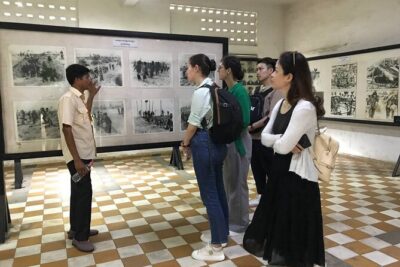 ★ 5.0The Killing Field and Toul Sleng Genocide Museum (S21) TourFrom $191,977 reviews
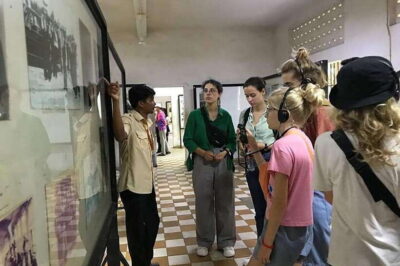 ★ 4.8killing field & Toul Sleng genocide museum TourFrom $19540 reviews
 ★ 4.9Highlights Tour Including S21 and Killing FieldsFrom $30453 reviews
 ★ 5.0Visit 11 Places in One Day including S21 & Killing FieldFrom $30361 reviews
 ★ 4.9Royal Palace, S21, Killing Fields & More TourFrom $35295 reviews
 ★ 4.0Killing Fields and Prison S21 Bus TourFrom $15206 reviews
 ★ 5.0Tuol Sleng Genocide Museum (S-21) and Choeung Ek Killing Fields TourFrom $19123 reviews
Browse the lists this tour appears in