
Reviewed · PHNOM PENH COOKING CLASSES
Phnom Penh’s Hands-On Khmer Cooking Class in the Countryside
A ferry ride and a family kitchen in the countryside? That is the hook. You’ll cook Khmer favorites with an English-speaking host, Sophors, including the signature Chicken Amok, and you’ll start with a local market where you learn how people actually pick produce. One thing to consider: you need to handle your own getting-there (public ferry plus a short tuk-tuk), and it may not suit back or heart issues due to being active outdoors.
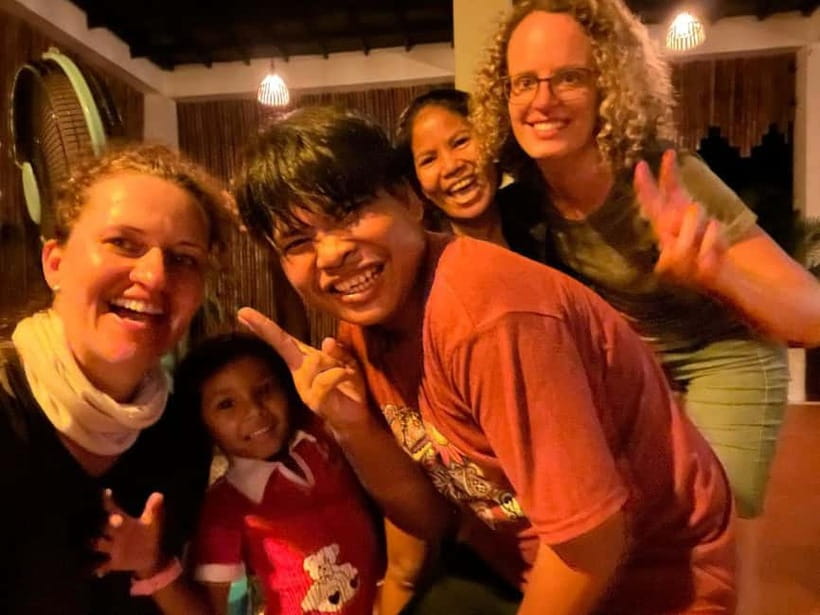
For me, the best part is how this isn’t just instructions on a cutting board. You get the human side of Cambodia: Sophors and her family make the evening feel like you’ve been invited in, not herded through a script. The second big win is the food: you come away with real Khmer techniques, not just a recipe photo for later.
If you’re after a purely comfortable, minimal-effort activity in Phnom Penh, this one asks a little more of you. You’ll be walking around a village market, you’ll cook hands-on, and you’ll spend part of the evening away from the main tourist lanes.
In This Review
- Key highlights you’ll actually feel during the class
- A countryside Khmer cooking night, starting with the ferry run
- Getting to Arey Ksat: simple transport and clear meeting flow
- The village market stop where ingredients really matter
- Organic garden tour and the small extras that make it personal
- Cooking Chicken Amok and two more Khmer dishes
- Eat with the family: meal, culture, and hospitality from Sophors
- Price and logistics: is $35 good value?
- Who this cooking class fits best (and who should skip it)
- Tips to enjoy it smoothly (camera, cash, and comfy clothes)
- Should you book this Phnom Penh countryside cooking class?
- FAQ
- What time does the class start?
- How long is the experience?
- What is the price, and what’s included in the $35?
- Is the public ferry ticket included?
- Do I need a hotel pickup?
- How big is the group?
- Is there an English-speaking guide?
- What dishes will I cook?
- What should I bring?
- Where do we meet after the ferry?
- Is it suitable for everyone?
Key highlights you’ll actually feel during the class
- A small group (max 10) so the cooking stays hands-on and questions don’t get lost
- Chicken Amok as the anchor dish, taught with a clear local approach
- Village market tour focused on choosing ingredients like locals do
- Organic garden stop (when it’s running) plus extra context about what grows nearby
- Family hospitality from Sophors and her family, not a distant host-with-a-smile setup
A countryside Khmer cooking night, starting with the ferry run
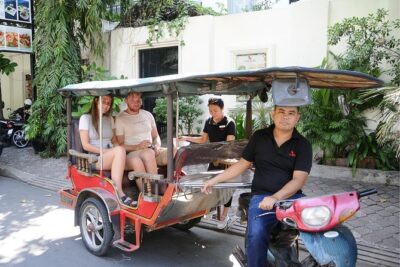
The most Cambodian part starts before the stove. Instead of meeting straight in town, you take a public ferry across the river to Arey Ksat, then you connect by tuk-tuk to the meeting point at Meet The Province. That little commute changes the tone fast: the evening turns from a city activity into a proper countryside visit.
The payoff is that you don’t just learn food as a concept. You see where ingredients come from, you hear how people talk about everyday cooking, and you get a meal that feels tied to daily life. That is why people love this class so much—the warmth is built in, not added on.
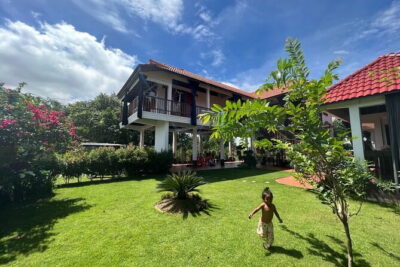
You’re in the countryside hinterlands of Phnom Penh, not in a tourist bubble. So expect a calmer rhythm. Also expect that the evening will feel social rather than formal. In a class like this, the cooking is the vehicle, but the family atmosphere is the destination.
A few more Phnom Penh tours and day trips our team keeps coming back to

Getting to Arey Ksat: simple transport and clear meeting flow
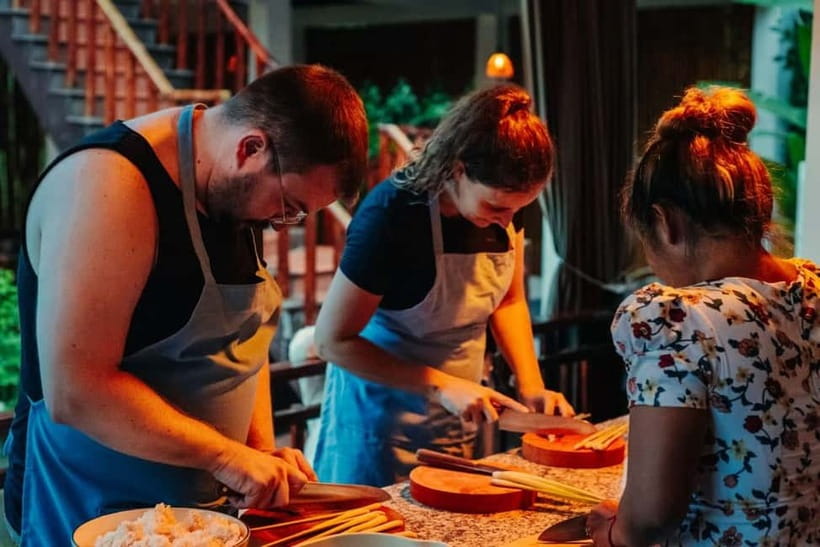
Here’s the practical outline you need to plan for.
- You take the public ferry at 4:00 PM from Phnom Penh Ferry Station (near NagaWorld Casino) to Areyksat
- The ferry runs about every 5 minutes, and the crossing takes around 15 minutes
- You arrive at Areyksat Ferry Dock, where the team is waiting to start the cooking journey
- After that, you take a tuk-tuk to the meeting point at Meet The Province
Two logistics notes that help your night go smoothly:
- Bring cash. The class includes bottled water, but the ferry ticket is not included.
- Go in with comfy expectations. This is a village-based evening, so you’ll likely be standing, walking, and moving around more than you would in a studio kitchen.
Also, the class time is set: the experience runs about 4 hours. That means you’re not watching a demo and you’re not stuck for half a day either. It’s a solid evening plan.
The village market stop where ingredients really matter
The market visit is where the class pays off. Instead of memorizing a recipe, you learn how to choose real Khmer ingredients and how that choice affects flavor and texture.
Your guide takes you through a local market in a village area not frequented by tourists. They explain how to select the best produce—what looks right, what’s fresh, and what’s used for Cambodian dishes. It’s the kind of skill you can use again later if you shop in Cambodia or cook Khmer-inspired food at home.
What I like about this stop is that it makes you pay attention. You notice aromas from herbs, you see how ingredients are grouped, and you start understanding why Khmer food has its own logic. Some dishes turn on balance—sweet, sour, salty, and aromatic—so picking the right ingredients is part of the cooking process, not a separate chore.
If you want a souvenir, this is the best kind: knowledge you can bring home.
Organic garden tour and the small extras that make it personal
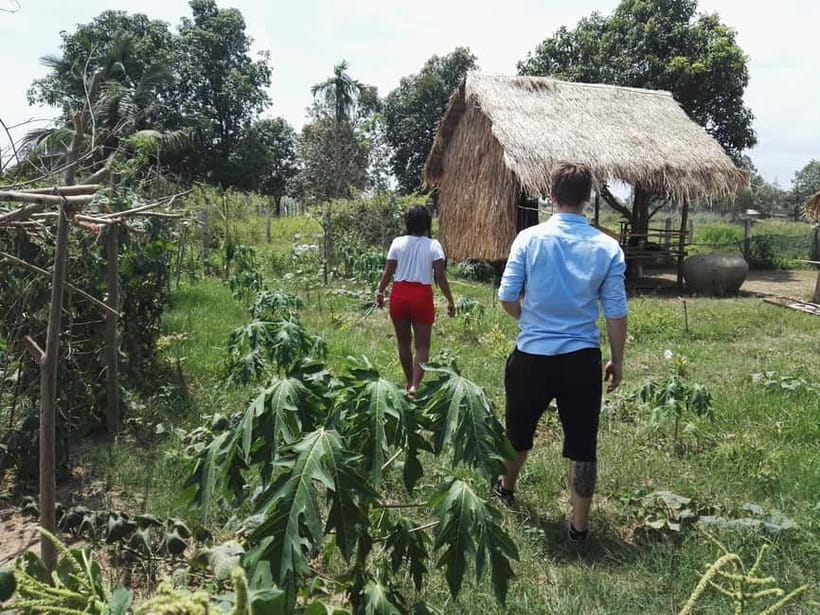
After the market, you head into the countryside side of things with an organic garden tour. Even when the garden isn’t the main headline, it helps explain what you’re cooking with. You begin to connect the herbs, plants, and daily produce to the dishes you’ll make.
One practical heads-up: in at least one recent experience, the garden tour did not happen because of renovations. If that situation occurs again, you’ll still have the cooking and the meal, but you might lose that extra context piece. The good news is that the cooking and family time remain the core.
You might also get small touches that make it feel human—like fruit tasting or other local knowledge shared by the host. These aren’t the kind of add-ons that feel forced; they come from how the family runs the evening.
Cooking Chicken Amok and two more Khmer dishes
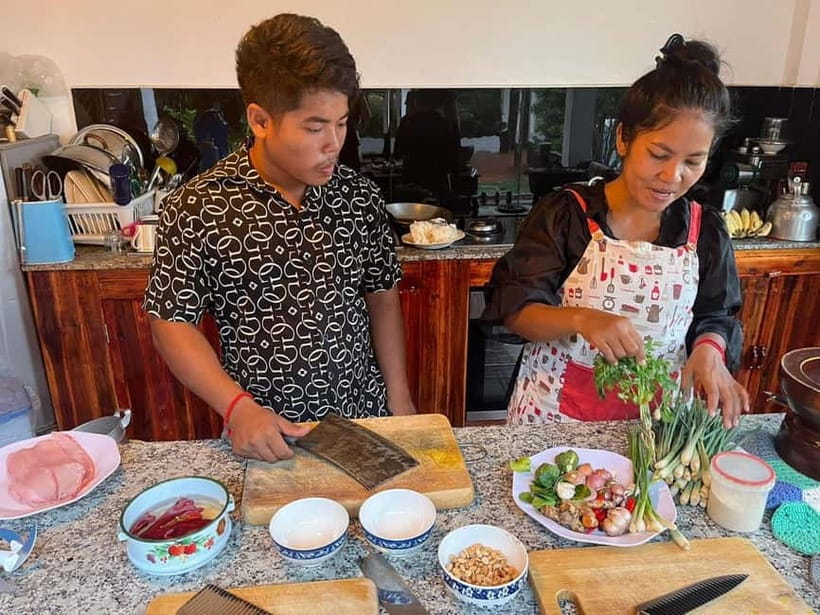
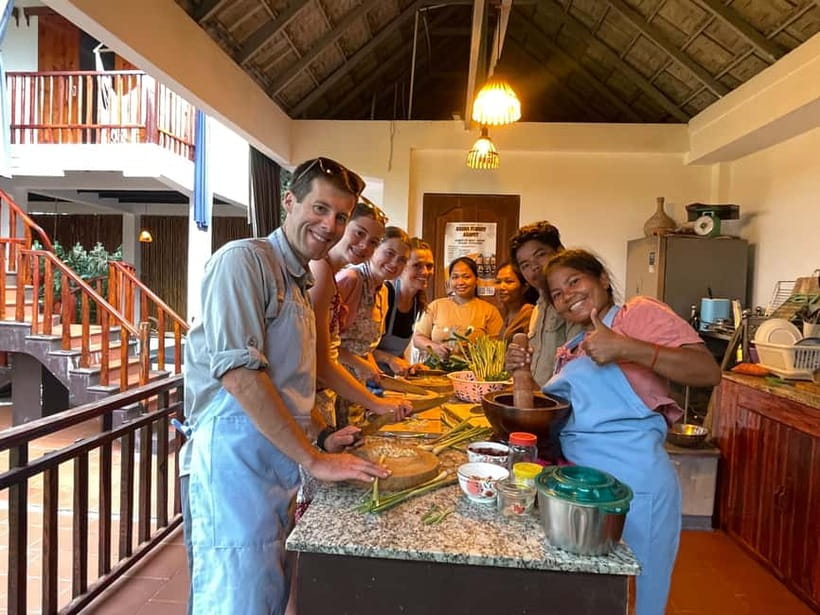
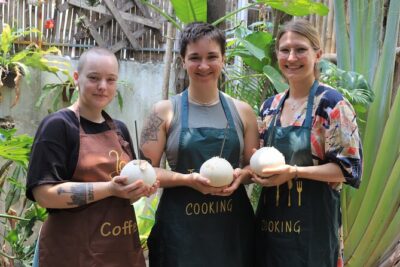
If you’re only learning one Khmer dish in Phnom Penh, Chicken Amok is the obvious choice. Here, it’s not a vague “try this spice paste” situation. You get hands-on instruction in a real cooking flow, starting from prep and moving toward the point where you can smell the dish coming together.
Expect to cook three Khmer dishes during the session. While the exact menu can vary, recent classes have included:
- Chicken Amok
- an eggplant dish
- a soup
- plus a banana dessert in the mix
That combination matters because Khmer cooking often leans into variety: one dish with a signature method (like Amok), another with vegetable depth, something comforting in a soup, and a sweet finish.
I also appreciate that this class isn’t built around fancy techniques you can’t reproduce. You learn the logic and method, then you make it happen with your own hands. The group size (limited to 10 participants) helps here—there’s enough attention to guide you as you chop, mix, and assemble.
Important note if you’re deciding based on health or comfort: the cooking portion is active. There can be standing, leaning, and repetitive prep. This is why the class is not suitable for people with back problems or heart problems.


Eat with the family: meal, culture, and hospitality from Sophors
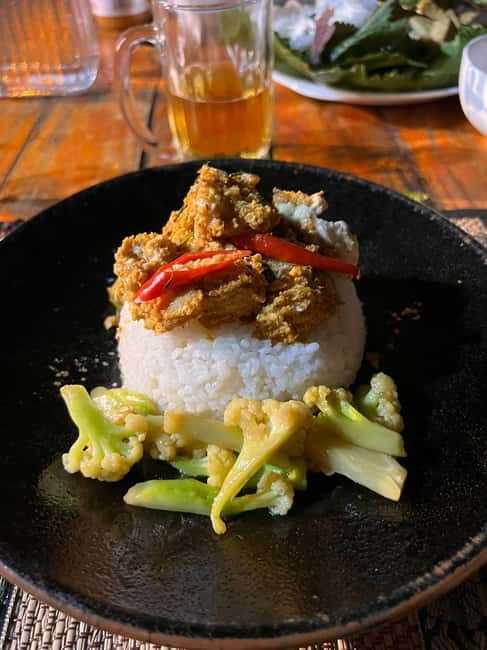
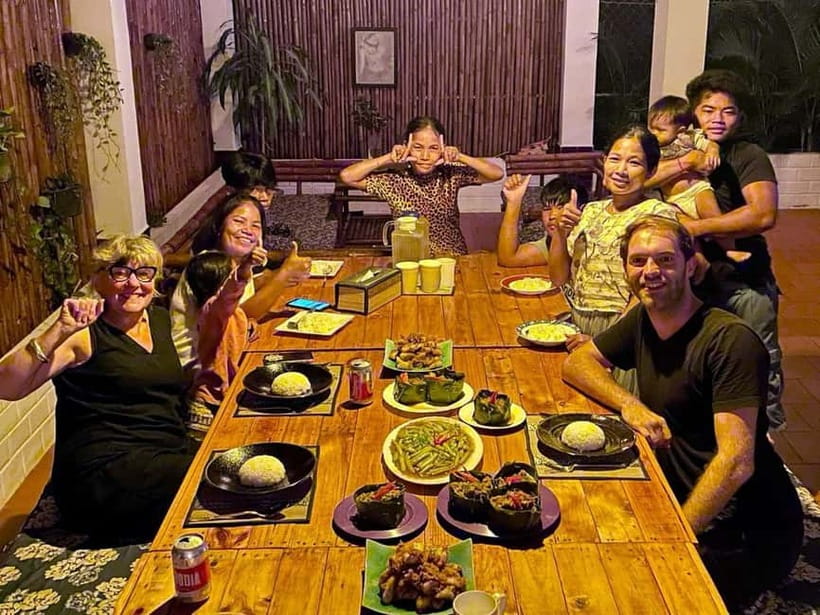
After cooking, you sit down to enjoy what you made. This part matters. In many cooking classes, the meal is just a wrap-up. Here, it’s the payoff to the effort and a chance to talk with the host and her family.
Sophors is the standout name connected to this experience. People describe her as kind, accommodating, and welcoming, and they specifically mention time spent with her family. That family connection shows up in the tone: the class feels like you’re part of the household for the evening, not an outsider passing through.
It also helps that you’re eating Khmer dishes you made yourself. So you’re not just tasting the food—you’re understanding it. When you bite into something like Amok, you can connect the flavors back to the ingredients and the steps you did earlier.
If you want an authentic cultural experience, this is one of the best ways to get it without needing to plan a full day around it.
Price and logistics: is $35 good value?
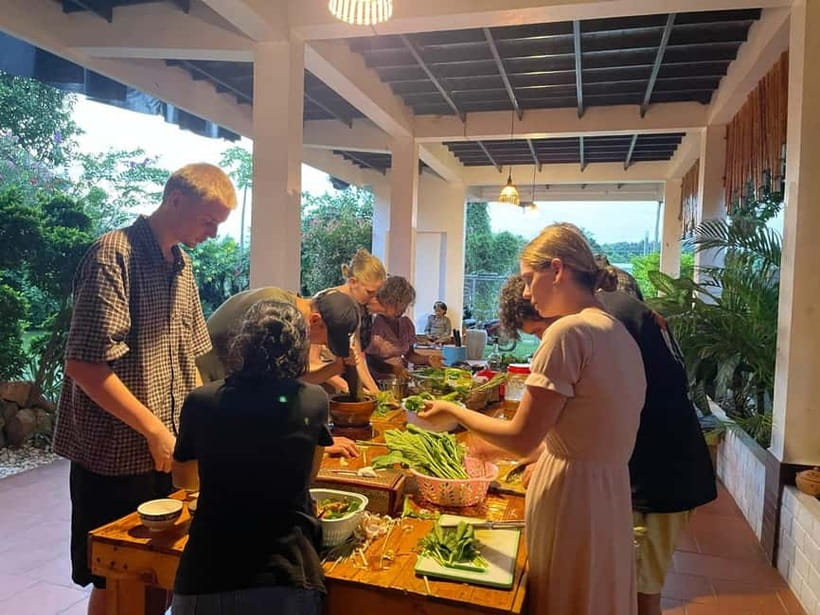
For $35 per person and around 4 hours, this can be excellent value—mostly because the class includes more than just cooking.
What’s included:
- Pick-up at Areyksat Ferry Station
- Local market tour
- Organic garden tour
- Hands-on cooking class
- Bottled water
What’s not included:
- Public ferry ticket ($0.15 per person)
- Hotel pickup
So you’re paying for a structured countryside evening: transport coordination, market guidance, garden context, and an active cooking session, plus the meal. The ferry ticket is minor. The bigger logistics difference is that you get yourself to the ferry rather than receiving a hotel pick-up.
If you’re already near Phnom Penh Ferry Station, the hassle is low. If you’re staying far away, you’ll want to budget time (and maybe a tuk-tuk) to arrive before the 4:00 PM departure.
Who this cooking class fits best (and who should skip it)
This is a great fit if you:
- want hands-on cooking, not just watching
- care about Khmer flavors and want to learn ingredient choices
- like meeting local families and learning from real daily life
- prefer small groups (max 10)
It’s not a great fit if:
- you have back problems or heart problems (the activity level is part of the experience)
- you need a fully seated, low-movement evening
- you hate transport changes and prefer everything to start right at your hotel
Also, if you dislike being away from the main tourist lanes, remember this one starts with a village market and a countryside setting.
Tips to enjoy it smoothly (camera, cash, and comfy clothes)
A few practical things make the difference between a smooth evening and a rushed one.
Bring:
- A camera (you’ll want photos of the market, cooking, and the setting)
- Comfortable clothes for walking and hands-on cooking
- Cash (useful for the ferry ticket since it’s not included)
My advice: wear clothes you don’t mind getting a little messy. Cooking classes are practical work, not a museum visit.
And plan your arrival timing so you can catch the ferry without stress. The class is built around the 4:00 PM start, and the team is waiting at the dock after the crossing.
Should you book this Phnom Penh countryside cooking class?
Book it if you want an evening with real people, real ingredients, and food you’ll actually remember. The strongest reasons to go are simple: small-group hands-on cooking, a market-based ingredient lesson, and the host family hospitality centered on Sophors.
Skip it if you need hotel pickup, want minimal walking/standing, or have health limitations related to back or heart concerns.
If you’re on the fence, here’s my quick decision rule: if you’re the type who likes learning by doing—and you’re okay taking a ferry and tuk-tuk to reach the countryside—this is a great use of one Phnom Penh evening.
FAQ
What time does the class start?
You take the public ferry at 4:00 PM from Phnom Penh Ferry Station. The activity begins after you arrive at Areyksat Ferry Dock and connect onward.
How long is the experience?
The class runs for about 4 hours.
What is the price, and what’s included in the $35?
It costs $35 per person, and includes pick-up at Areyksat Ferry Station, a local market tour, an organic garden tour, a hands-on cooking class, and bottled water.
Is the public ferry ticket included?
No. The public ferry ticket costs $0.15 per person and isn’t included.
Do I need a hotel pickup?
No hotel pickup is provided. You’ll need to make your own way to the ferry and then use tuk-tuk after you reach Areyksat.
How big is the group?
The group is small, limited to 10 participants.
Is there an English-speaking guide?
Yes, there is a live tour guide in English.
What dishes will I cook?
You’ll learn to cook three Khmer dishes, with Chicken Amok as part of the experience. Examples mentioned include Chicken Amok, an eggplant dish, soup, and a banana dessert.
What should I bring?
Bring a camera, comfortable clothes, and cash.
Where do we meet after the ferry?
After the ferry, you’ll be taken to the meeting point at Meet The Province.
Is it suitable for everyone?
It’s not suitable for people with back problems or heart problems.
More Phnom Penh Workshops & Classes to Bookmark
More Tour Reviews in Phnom Penh
More Phnom Penh Cooking Classes in Phnom Penh
Keep browsing: more Phnom Penh tours and day trips our team has reviewed









Phnom Penh Cooking Classes, compared.
 ★ 5.0Khmer Cooking Class Half Day (AM or PM)From $31316 reviews
 ★ 5.0Khmer Cooking Class Full DayFrom $5813 reviews
 ★ 5.0Cooking Class in Phnom PenhFrom $317 reviews
 ★ 5.0The Mekong Village Cooking EscapeFrom $594 reviews
Browse the lists this tour appears in