
Reviewed · KILLING FIELDS & GENOCIDE HISTORY TOURS
Phnom Penh :S21 Tuol Sleng Museum & Killing Field Tour
A day in Phnom Penh that stays with you. This tour pairs Tuol Sleng Genocide Museum and Choeung Ek for a guided, step-by-step look at what the Khmer Rouge did to ordinary people. I like that you’re not just looking at objects—you’re learning the story in a way that helps it make sense.
Two things I really liked: the English guide (for many visitors, the difference between confusion and understanding) and the careful pacing—about two hours at each site. You’ll also get hotel pickup and a tuk-tuk ride so you can focus on the content, not on sorting transport.
One drawback to keep in mind: this is emotionally heavy ground. Plan for real feelings, plus weather—since the tour runs rain or shine—and bring what you need to stay comfortable.
In This Review
- Key highlights that matter most
- Why Tuol Sleng and Choeung Ek belong together
- Getting from your hotel: tuk-tuk rides that keep the day moving
- Tuol Sleng Genocide Museum: from high school to security prison
- How the English guide changes everything (Rith is a great example)
- Choeung Ek Killing Fields: orchard and cemetery before the executions
- Emotional weight: how I’d plan your day around it
- What you really pay: $18 base price plus site fees
- Who this tour suits best (and who should skip it)
- Final verdict: should you book this tour?
- FAQ
- How long is the Phnom Penh Tuol Sleng and Killing Fields tour?
- What is included in the price?
- Are the Tuol Sleng and Killing Fields entrance fees included?
- Does the tour run in bad weather?
- What should I bring for the day?
- Is alcohol allowed during the tour?
- Is the tour suitable for pregnant women?
- Can I cancel and get a refund?
Key highlights that matter most
- Guided Tuol Sleng: a former high school transformed into a security prison
- Guided Choeung Ek: a Chinese cemetery and orchard turned into killing fields
- English storytelling that connects what you see to what happened
- Practical comfort: hotel pickup/drop-off, water, and snacks included
- Real names of guides in the experience: guides such as Rith, plus an accommodating tuk-tuk driver like Mere
- Rain or shine planning, so sunscreen and sunglasses aren’t just nice ideas
Why Tuol Sleng and Choeung Ek belong together
What makes this combo work is the progression. You start in Tuol Sleng, where the Khmer Rouge used a school as a security prison, then you move to Choeung Ek, where executions took place in a place that once served other peaceful uses. Seeing both sides of the system—capturing people and then killing them—lands harder than either site alone.
I also like the way the guide helps you “read” the day. You don’t just walk through rooms and paths; you learn what you’re looking at and why it mattered to the Khmer Rouge regime. That context turns the experience from dark sightseeing into meaningful education.
If you’re even slightly sensitive to heavy history, treat this as a full emotional commitment. It can be intense, but it’s also focused and guided, which makes it easier to handle.
To learn more about Phnom Penh's recent history, these guided visits cover the S-21 and Choeung Ek memorial sites
Getting from your hotel: tuk-tuk rides that keep the day moving
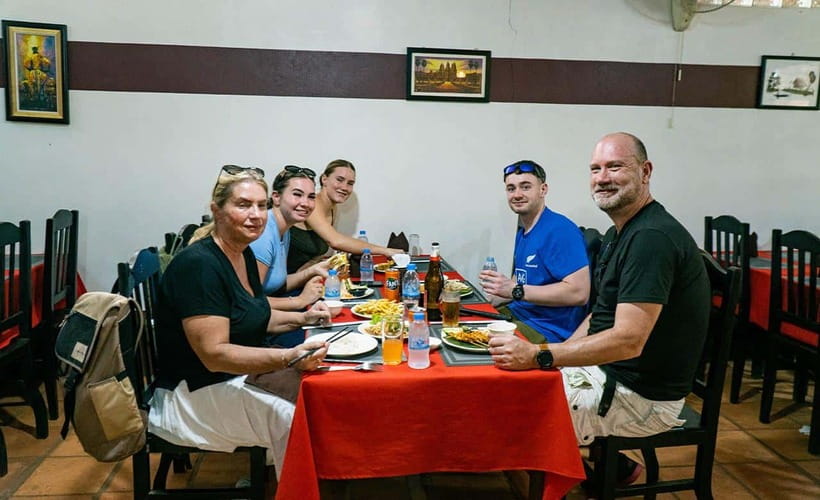
Your day starts with pickup from your hotel in Phnom Penh. You’ll then ride in a tuk-tuk with the driver, plus you’ll have water and snacks along the way—simple, but it makes a difference when you’ll be outside and walking.
Because you’re being transported between two major sites, you avoid the “half-day scramble” feeling. You show up, get guided time at each location, and then you’re dropped back in Phnom Penh.
One practical tip: wear comfortable shoes and keep your camera and sunscreen within reach. The tour runs rain or shine, so you don’t want to spend the morning hunting for supplies when the weather shifts.
Tuol Sleng Genocide Museum: from high school to security prison
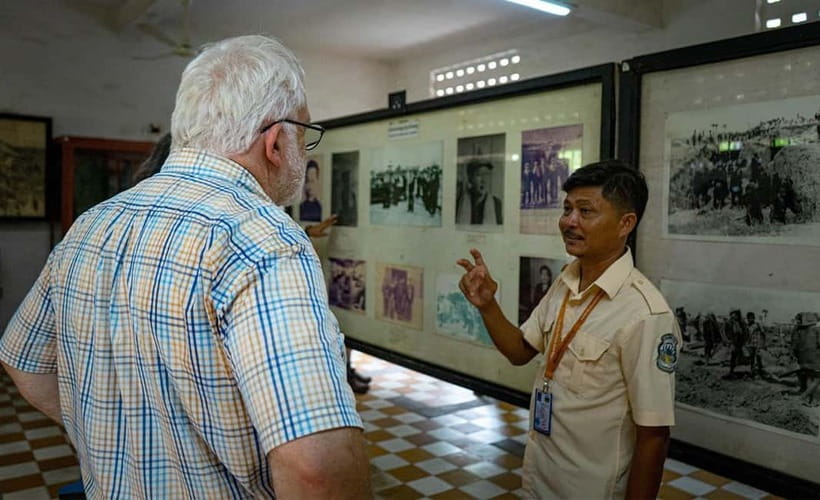
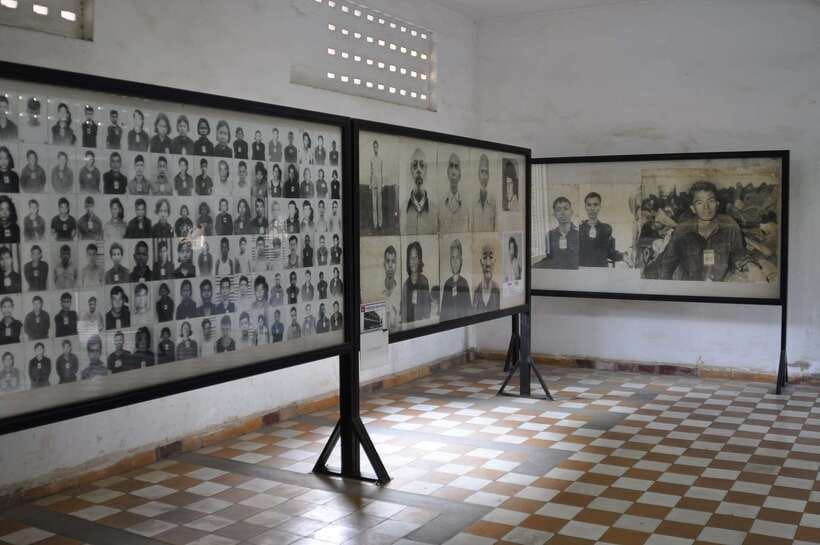
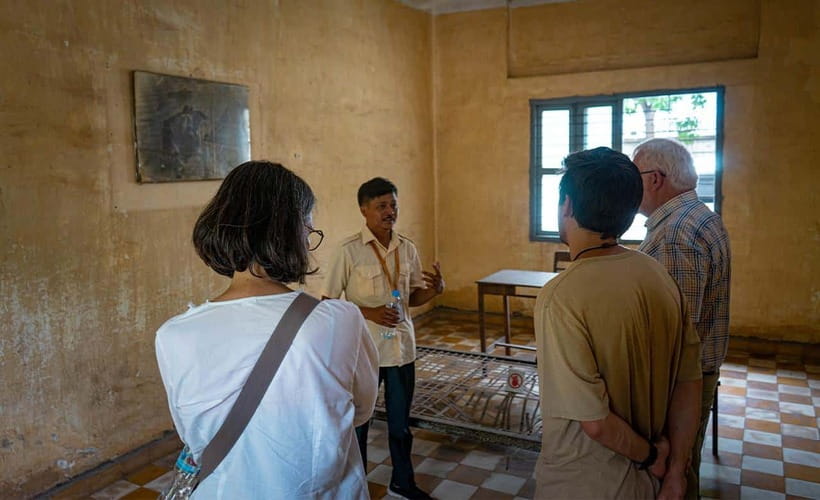
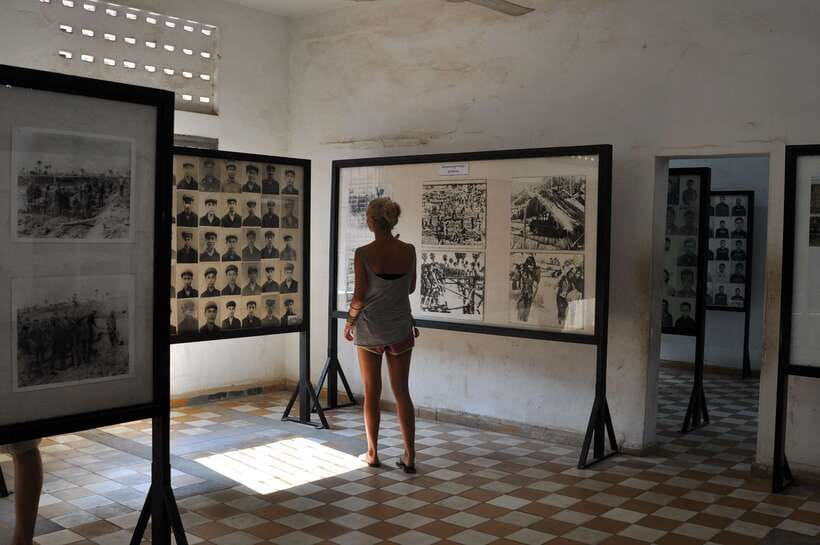
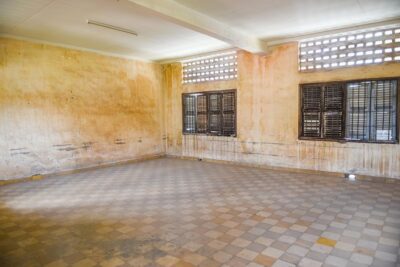
Tuol Sleng (S21) is the first stop, and it’s set up for a guided visit that lasts about two hours. This place matters because it wasn’t built as a prison in the beginning. It started as a well-regarded high school and later became a heavily guarded security prison during Pol Pot’s regime.
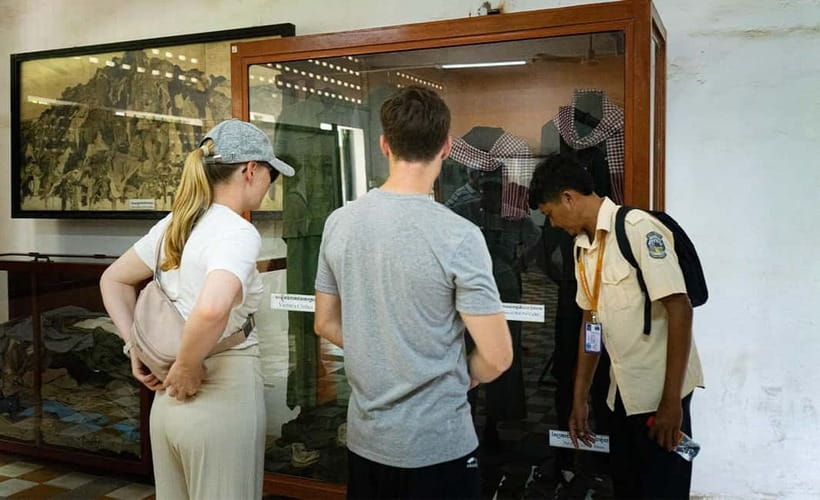
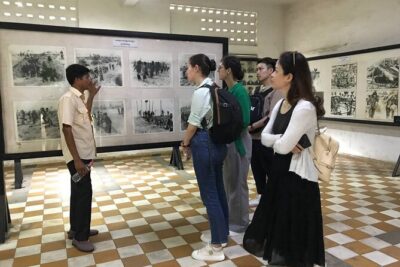
During your visit, you’ll learn what the Khmer Rouge did to people after they were detained, and you’ll see how the prison functioned as a system. The museum is emotionally difficult, but the structure helps you understand the sequence instead of getting lost in details.
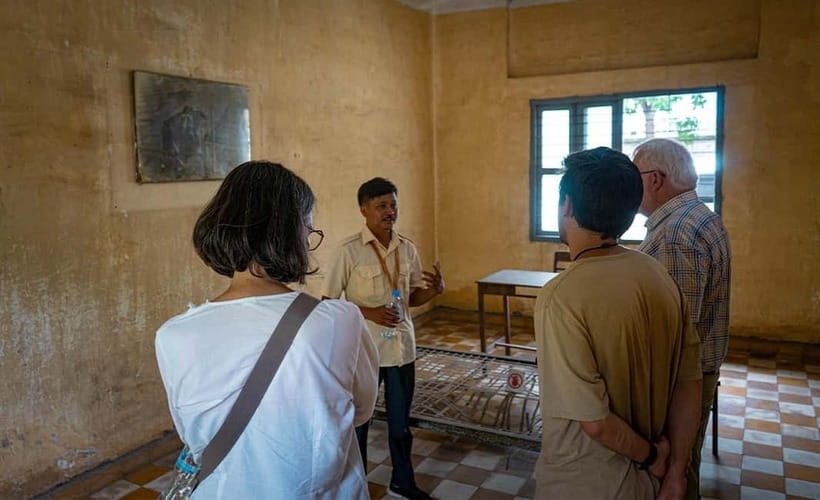
What I found useful is that a strong guide can help you connect the building’s purpose to the evidence you see today. In this tour, guides like Rith are specifically praised for giving plenty of information—especially history before and during the Vietnam War period, including how certain Cambodian provinces were taken and are now claimed as parts of Thailand. That kind of context gives you a clearer picture of how political conflict can turn into something monstrous.
How the English guide changes everything (Rith is a great example)
An English guide isn’t just about translation. It’s about interpretation—what to pay attention to, what questions to ask yourself, and how the story connects across Cambodia’s turbulent years.
In the experience I’m basing this on, Rith is called out as very knowledgeable and able to explain big-picture history in a way that feels relevant. One of the most interesting takeaways is how the guide frames older Cambodia during the Vietnam War era, including shifting borders and provinces. That background helps the Khmer Rouge period feel less like a random tragedy and more like the outcome of escalating power struggles.
I’d suggest you lean in during the Q&A moments. If your mind starts to wander, ask a simple question like what the Khmer Rouge was trying to achieve through detention. When you understand the purpose behind the horror, the visit becomes heavier—but also clearer.
Choeung Ek Killing Fields: orchard and cemetery before the executions
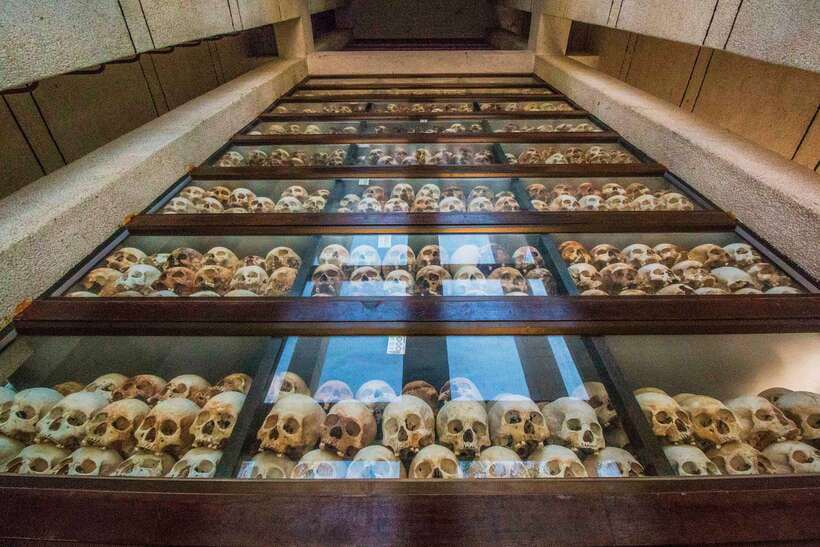
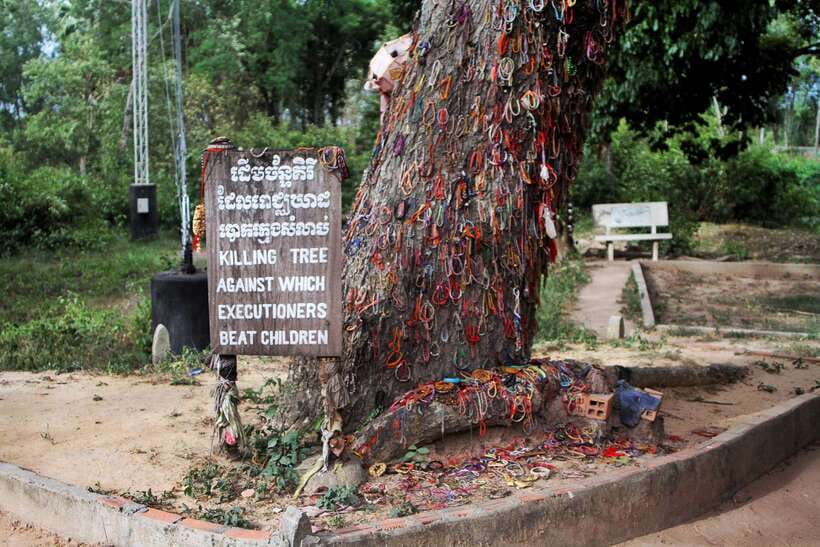
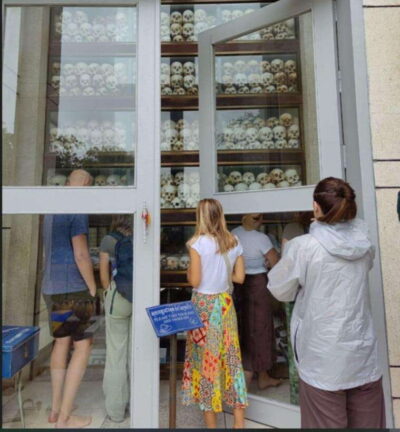
After Tuol Sleng, you go to Choeung Ek Genocide Center for another guided visit of about two hours. The setting itself is haunting: long before the killings, the area was an orchard and also included a Chinese cemetery.
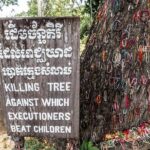
During Khmer Rouge rule, the place became infamously known as the killing fields. The scale described for this site is enormous, with around 20,000 victims executed at this location and an astonishing total number of massacred victims over a three-year period. The center’s purpose today is to keep the memory of those atrocities from fading.
This is one of those places where the “why” matters as much as the “what.” You’ll learn how an everyday landscape was turned into an execution site. That transformation is the shock: it’s not just tragedy—it’s the way normal life can be weaponized.
Because it’s outside, plan for weather. Rain can make paths slick; sun can make it draining. You’ll be walking and standing, so sunglasses and sunscreen aren’t optional in practice.
Step inside more of Phnom Penh's museums and galleries
Emotional weight: how I’d plan your day around it
This tour is built around two of Cambodia’s most painful sites. That means your brain will keep processing long after the guide stops talking.
I recommend doing it early in the day if possible, so you’re not trying to squeeze it in after a full travel day. Once you’ve finished, you’ll likely want quiet time. Even if you feel fine at first, the second site can hit in a different way.
You should also keep the practical stuff simple:
- Bring sunscreen and sunglasses since it runs rain or shine.
- Take your breaks seriously. Water and snacks are included, and that’s not “extra”—it’s what helps you keep your footing and your focus.
- Skip alcohol and anything that affects your judgment. The tour doesn’t allow alcohol and drugs, and with this subject matter, clear thinking helps.
If you’re traveling with someone who tends to shut down emotionally, consider telling them ahead of time that it’s normal for this to be intense. The tour is guided, but it still asks you to feel.
What you really pay: $18 base price plus site fees
The listed price is about $18 per person for a total duration of around five hours. That figure is good value when you consider what’s included: hotel pickup and drop-off, a driver in a tuk-tuk, water and snacks, and an English guide.
Then there are the on-site museum fees: Tuol Sleng Genocide Museum costs $5, and the Killing Fields entrance is $3. So you should expect to add a few dollars on top of the $18 base. Still, compared with paying for separate tickets and trying to arrange transport yourself, the “everything organized for you” approach is practical.
Why it’s good value: you’re paying for time with a guide at two major sites, not just entry. The guide’s explanations—like the way Rith connects the dots to Cambodia’s broader historical background—are where your money usually shows up in the experience.
Who this tour suits best (and who should skip it)
This is a tour for people who want a guided, structured introduction to Khmer Rouge history in Phnom Penh. If you like understanding context and learning from an English guide, you’ll likely get more out of the day.
It may not be a fit if you’re sensitive to highly distressing content, even with a guide. And it’s specifically noted as not suitable for pregnant women, so plan another option.
If you’re short on time but want to see both Tuol Sleng and Choeung Ek without getting lost in logistics, this format makes sense. The pickup, transport between sites, and guided time mean you spend your energy on learning—not negotiating schedules.
Final verdict: should you book this tour?
Yes, I’d book it if you’re in Phnom Penh and you want the most efficient, guided way to understand the Khmer Rouge prison-to-killing-field timeline. The combination of Tuol Sleng and Choeung Ek is strong, and the English guidance makes the experience clearer instead of just sad.
I’d only hesitate if you know this kind of history is too much for you emotionally right now. In that case, you might consider doing something lighter first, then returning later with a better headspace.
FAQ
How long is the Phnom Penh Tuol Sleng and Killing Fields tour?
The tour duration is 5 hours.
What is included in the price?
Hotel pickup and drop-off, a tuk-tuk driver, water and snacks, and an English tour guide are included.
Are the Tuol Sleng and Killing Fields entrance fees included?
No. Tuol Sleng Genocide Museum costs $5, and the Killing Fields entrance fee costs $3.
Does the tour run in bad weather?
Yes. The tour takes place rain or shine.
What should I bring for the day?
Bring sunglasses, a camera, and sunscreen.
Is alcohol allowed during the tour?
No. Alcohol and drugs are not allowed.
Is the tour suitable for pregnant women?
No. It is not suitable for pregnant women.
Can I cancel and get a refund?
Free cancellation is available up to 24 hours in advance for a full refund.
More Tours in Phnom Penh
More Tour Reviews in Phnom Penh

More Phnom Penh History & Remembrance Visits
Keep browsing: more Phnom Penh tours and day trips our team has reviewed





Killing Fields & Genocide History Tours, compared.
 ★ 4.8The Killing Fields & Tuol Sleng Genocide MuseumFrom $193,337 reviews
 ★ 5.0The Killing Field and Toul Sleng Genocide Museum (S21) TourFrom $191,977 reviews
 ★ 5.0Killing field and Toul Sleng genocide museum TourFrom $19610 reviews
 ★ 4.8killing field & Toul Sleng genocide museum TourFrom $19540 reviews
 ★ 4.9Highlights Tour Including S21 and Killing FieldsFrom $30453 reviews
 ★ 5.0Visit 11 Places in One Day including S21 & Killing FieldFrom $30361 reviews
 ★ 4.9Royal Palace, S21, Killing Fields & More TourFrom $35295 reviews
 ★ 4.0Killing Fields and Prison S21 Bus TourFrom $15206 reviews
Browse the lists this tour appears in