
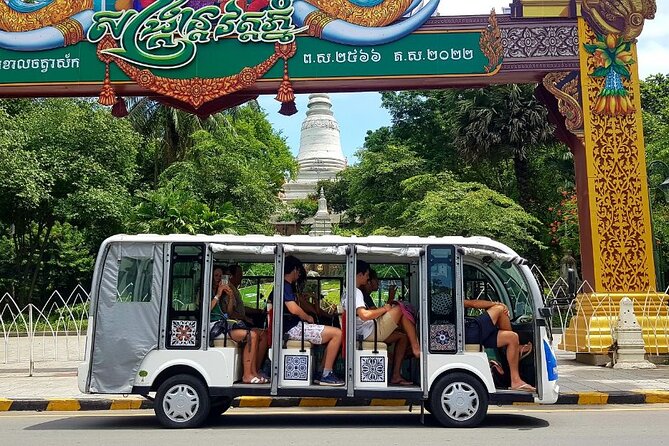
Reviewed · HISTORICAL TOURS
Guided Phnom Penh Heritage Tour
Phnom Penh has a time machine vibe. This guided heritage loop gives you a fast, organized way to connect today’s streets with the French protectorate era, Art Deco dreams, royal life, and the shadow of the Khmer Rouge, using a digital tablet plus headphones.
What I like most is the way the stories are delivered on the bus and at the stops—short, clear, and easy to follow. I also like that it’s built for photos and context, with video that shows how key places looked back in the day, plus occasional “virtual” access to buildings you usually can’t step into.
One thing to consider: some big-name sights along the route are view-only during the tour, so if you’re hoping for full temple/palace museum time, you’ll need a second visit later.
In This Review
- Key Things to Know Before You Go
- A Tablet-Guided History Walk Through Phnom Penh
- Price and Time: What $24.36 Buys You
- How the Tour Flows: Stops, Timing, and Photo Windows
- First Stop Energy: From the City’s Big Picture to the Post Office
- Stop 1: Phnom Penh (getting your bearings)
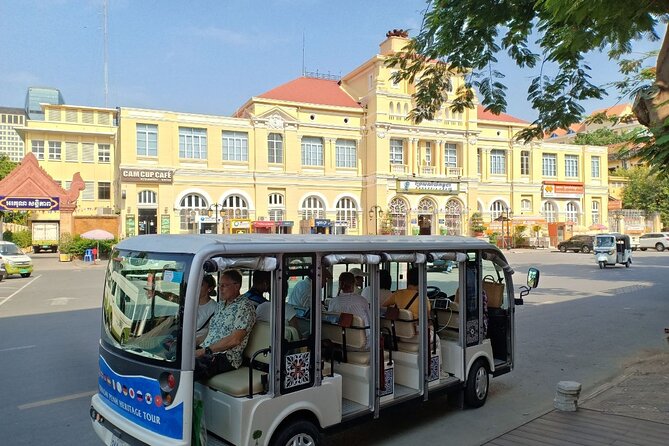
- Stops 2–3: Cambodia Post Office and the Palais de la Poste area
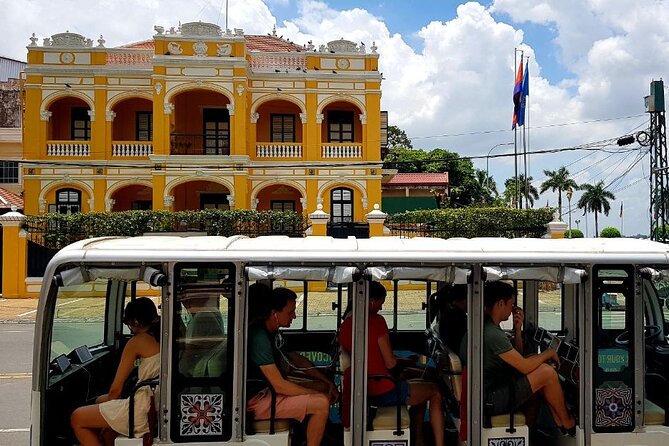
- Stop 4–6: Le Manolis, the old municipal police, and the governor’s house
- Stop 7: Chinese house and Hokkien Temple (with a longer tablet segment)
- Ancient-to-Art-Deco Bridges and the Wat Phnom Question
- Stop 8: Naeggas Bridge (naga bridge story)
- Stop 9: Wat Phnom (pictures yes, hill visit no)
- Stop 10–11: Country club area and Raffles Hotel Le Royal
- Stop 12: Train station (the former railway stop story)
- Libraries, Fine Arts, and That Question: Can You Go In?
- Stop 13: Hyatt Regency Phnom Penh (No Problem Villa story)
- Stop 14: Royal University of Fine Arts (longest stop in the middle)
- Stop 15: National Museum (not included inside)
- Stop 16: FCC Phnom Penh (mansion under renovation)
- UNESCO, the Royal Palace Area, and Ending at Street 240
- Stop 17: UNESCO Cambodia (UNESCO house story)
- Stop 18: Royal Palace (audio only, visit not included)
- Stop 19: Residence of the British Ambassador to Cambodia, then the epilogue
- Who This Tour Fits Best
- The Guide Factor: Oliver’s Role in Making It Work
- Should You Book the Phnom Penh Heritage Tour?
- FAQ
- What’s the duration of the Phnom Penh Heritage Tour?
- How much does the tour cost?
- What’s included in the price?
- Is private transportation included?
- Which places have admission included, and which are not included?
- Can I visit inside any stops?
Key Things to Know Before You Go
- 10-language tablet audio with headphones means you can actually hear the history without squinting at signage
- Max 10 travelers keeps the experience calm and makes it easier to ask questions
- 22 major sites tied to the French protectorate period gives you a coherent storyline instead of random stops
- Some interiors depend on what’s open (you may be able to go in)
- View-only for Wat Phnom hill, the National Museum, and the Royal Palace during the tour window
- Ending at Street 240 (near the Royal Palace/Wat Botum Square area) is a handy place to continue exploring
A Tablet-Guided History Walk Through Phnom Penh
This tour is designed for people who want meaning, not just monuments. You’re guided around Phnom Penh by Oliver, while your tablet plays audiovisual history in 10 languages through supplied headphones. It’s a practical setup in a city where sights are spread out, and it helps you connect the dots between buildings you might otherwise treat as separate photo stops.
The tour’s main theme is the French protectorate footprint—how Phnom Penh grew from a fishing village into a capital, how French-style planning showed up in the city’s early urbanization, and how architecture trends like Art Deco landed here. Then it shifts into the social structure of the early 1900s, the royal family’s role, and the dark hours of the Khmer Rouge. You don’t get a textbook lecture; you get short, story-shaped segments that make the city’s layout easier to understand.
Prefer a local at your side? Here are more guided tours around Phnom Penh


Price and Time: What $24.36 Buys You
At $24.36 per person for about 2 hours 30 minutes, this is solid value if you’re trying to get oriented fast. You’re paying for four things working together: a real guide (Oliver), the tablet audiovisual content, time behind the wheel between stops (no long walks in heat), and a small group size (up to 10).
Also, the tour gives you a planning advantage. By the end, you’ll know which places you’ll want to return to for longer, slower time—especially since you’ll see some major sites only from the outside during the city loop.
What’s not included is private transportation, but you generally won’t feel that gap because the tour’s format is already built around a shared ride between points. If you hate group tours in general, this might still feel structured—but the small cap helps.
How the Tour Flows: Stops, Timing, and Photo Windows
The experience runs as a guided circuit with 19 stops and room to take photos. There’s “bus time” where you can enjoy the scenery and get your shots without wearing out your legs. When you arrive at a stop, you’re typically given enough time to look around and watch the relevant segment on the tablet.
One handy detail: bottled water is included. On a hot day in Phnom Penh, that matters more than it sounds.
If you’re planning your day, I’d treat this as your first Phnom Penh history orientation (even if it’s not your first day in Cambodia). The way the tablet storytelling links locations helps you later when you’re navigating on your own and deciding what deserves a second visit.
First Stop Energy: From the City’s Big Picture to the Post Office
You begin at the corner of Street 102 & Street 13, and the tour ends on Oknha Chhun St. (Street 240) near the Royal Palace and Wat Botum Square area. That end point is a big plus: you finish close to several of the places many people want to return to.
Stop 1: Phnom Penh (getting your bearings)
This is your setup stop. You get a broad overview that frames Phnom Penh’s dramatic changes—how the city became the capital and how later regimes and architecture shaped what you see today.
Trace more of the past on these Phnom Penh history tours
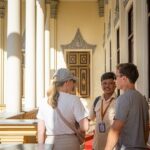
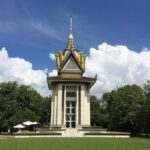

Stops 2–3: Cambodia Post Office and the Palais de la Poste area
The tour hits two connected story beats around the Cambodia Post Office and the Palais de la Poste. You’ll watch tablet audio visuals that cover the old Indochina Bank connection and related historic context. This is one of the easiest segments to appreciate because the buildings themselves look like they belong to a specific era, and the audio explains why.
Practical note: admission is listed as free for these stops, and the tour provides time to watch the media segments without rushing.
Stop 4–6: Le Manolis, the old municipal police, and the governor’s house
Next comes a set of smaller-but-meaningful civic and social landmarks:
- Le Manolis (the early hotel story)
- Commissariat of Phnom Penh Municipal Police (the old police station story)
- Council for the Development of Cambodia (the governor-general’s house story)
This cluster is where French-era organization becomes visible. You start to see how power and daily life were designed around institutions—hotels for elite visitors, police for order, and government spaces for administration.
Stop 7: Chinese house and Hokkien Temple (with a longer tablet segment)
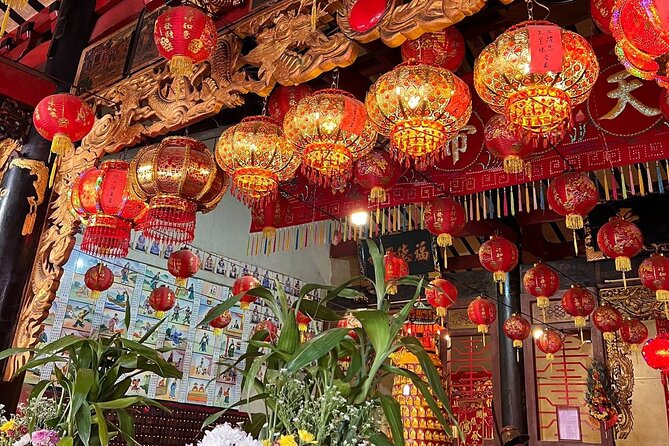
At 關帝古廟 (the Hokkien temple / associated area) you get a longer audiovisual segment. The tour focuses on the Chinese house and the Hokkien Temple, including cultural context you might miss if you only see places as photo backgrounds.
There’s also a real possibility of entering the Hokkien temple if it’s open. That open/closed detail is worth keeping in mind, because the tour is built to offer inside access when possible, but it’s not guaranteed.
Ancient-to-Art-Deco Bridges and the Wat Phnom Question
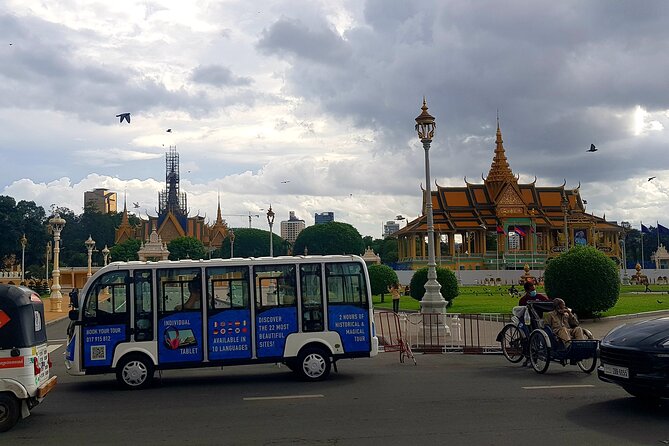
Stop 8: Naeggas Bridge (naga bridge story)
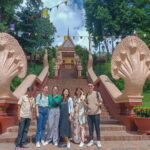
The naga bridge stop is short, but it’s a good example of the tour’s approach: it mixes local symbolism with the broader city story. You’re not just collecting landmarks; you’re learning what they represent.
Stop 9: Wat Phnom (pictures yes, hill visit no)
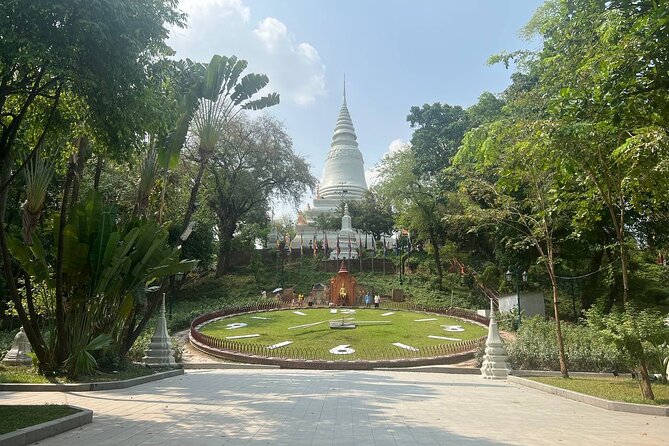
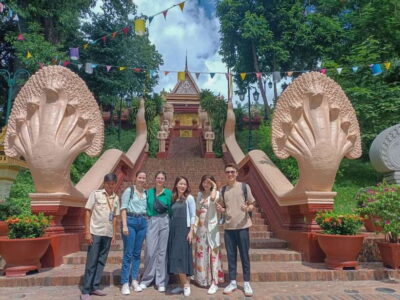
At Wat Phnom, you can take photos, but the visit to the hill temple is not included in the city tour. So if Wat Phnom hill is a must for you, plan to add it later on your own with extra time.
This is a classic example of how the tour can give you the “why” without promising the full ticketed experience of every site. It’s still worth it, especially when you’re using the tour to build your priority list.
Stop 10–11: Country club area and Raffles Hotel Le Royal
Next you’ll pass through the story world of the country club (where the current US embassy is located). One important rule here: pictures are not allowed at that stop.
Then you get the Raffles Hotel Le Royal segment. Even if you don’t go inside, the audio helps you understand why this hotel matters in Phnom Penh’s early 20th-century story—more than just a pretty facade.
Stop 12: Train station (the former railway stop story)
You’ll also get the railway station story. This matters because rail and transit often explain how capitals grow fast—who arrives, what trade moves, and how neighborhoods develop.
Libraries, Fine Arts, and That Question: Can You Go In?
One of the best things about this tour is that it doesn’t treat everything as outside-only. You may be able to enter certain places if they’re open.
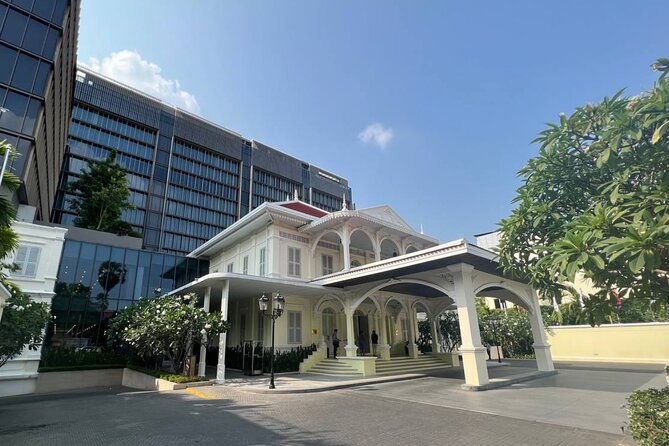
Stop 13: Hyatt Regency Phnom Penh (No Problem Villa story)
At Hyatt Regency Phnom Penh, the tour audio focuses on the old No Problem Villa story. It’s the kind of stop that feels small on the map but bigger once the context lands.
Stop 14: Royal University of Fine Arts (longest stop in the middle)
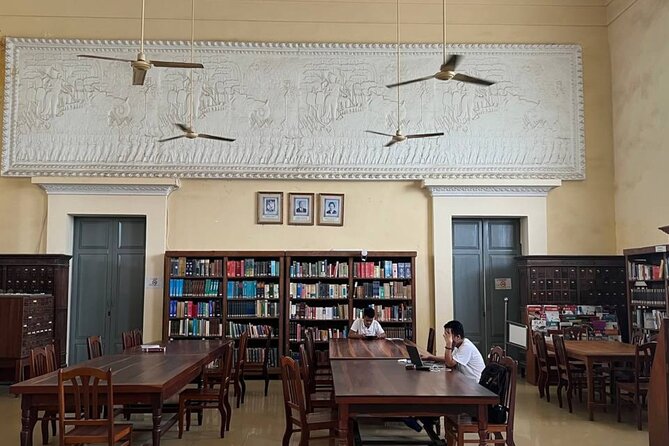
The Royal University of Fine Arts gets a longer segment, and the tour sometimes includes a guided look inside with stories. A great practical detail here: you may get to see students practicing their art, which turns the stop from “look and leave” into something more human.
Admission here is listed as free, and this is one of the places where you can feel how the city’s culture continues—not just how it changed in the past.
Stop 15: National Museum (not included inside)
The National Museum stop includes audiovisual content, but the visit is not included during the city tour. If you care about museum time, schedule it separately so you don’t end up with the frustrating feeling of being right near something you can’t fully experience on the same day.
Stop 16: FCC Phnom Penh (mansion under renovation)
The FCC Phnom Penh segment covers an old mansion that’s under renovation (noted for 2024/2025). You get the story, but you should treat the stop as a history marker rather than a guaranteed inside visit.
If you’re someone who likes to photograph buildings mid-change (construction scaffolding and all), this one will feel interesting; if you’re expecting a fully open building tour, manage expectations.
UNESCO, the Royal Palace Area, and Ending at Street 240
Stop 17: UNESCO Cambodia (UNESCO house story)
The UNESCO Cambodia stop is short, but it fits the narrative arc. By this point, you’ve already learned how Phnom Penh shifted through colonial-era growth and later tragedy. The UNESCO segment adds the present-day conservation and international recognition angle.
Stop 18: Royal Palace (audio only, visit not included)
The Royal Palace stop includes audiovisual history, but the actual visit is not included. The tour gives you context so that when you come back, you’ll know what you’re looking at and why the place is important.
Stop 19: Residence of the British Ambassador to Cambodia, then the epilogue
The tour finishes with the Residence of the British Ambassador to Cambodia story on Street 240, then wraps up with an epilogue. This is a strong ending point because you’re close to major sights and can keep going at your own pace.
Who This Tour Fits Best
This heritage loop is a great fit if:
- You have limited time in Phnom Penh and want a coherent overview.
- You like architecture and want to understand why buildings exist where they do.
- You want to choose next-day priorities based on what you see from the outside plus the tablet context.
- You travel with patience for short segments and quick photo stops.
It’s also a good “first Phnom Penh day” tour. In Phnom Penh, getting your bearings early pays off, and the tablet’s historical timeline makes it easier to navigate your later visits.
If you’re the kind of traveler who wants to stay inside major sites for long stretches (museums, palaces, temple climbs), plan to do those as separate add-ons since the city tour’s format is structured around viewpoints and audiovisual segments.
The Guide Factor: Oliver’s Role in Making It Work
The tour experience leans heavily on the guide’s ability to keep things friendly and practical. Oliver is repeatedly described as easy to find in busy areas and helpful with questions, and that matters because Phnom Penh street life can be chaotic when you’re trying to line up a bus and keep moving on schedule.
Also, the combo of guide + tablet tends to work well. The tablet handles the visuals and historical framing, and the guide fills in real-world questions—what to look for, where you can go inside if it’s open, and how to make the short time at each stop count.
Should You Book the Phnom Penh Heritage Tour?
Yes—if you want the best value for a first pass at Phnom Penh’s history, this tour is one of the smarter uses of a limited day. For $24.36 and about 2.5 hours, you get a lot of context tied to major buildings, plus the small-group feel that helps you ask questions.
I’d book it early in your trip if you can. You’ll finish with a clear shortlist of what to revisit—like the spots that allow inside access when open, versus the ones that are view-only during the tour window.
FAQ
What’s the duration of the Phnom Penh Heritage Tour?
It’s about 2 hours 30 minutes.
How much does the tour cost?
The price is $24.36 per person.
What’s included in the price?
You get bottled water, an in-guide person (Oliver), and a tablet with audiovisual guide in 10 languages, along with headphones.
Is private transportation included?
No, private transportation is not included.
Which places have admission included, and which are not included?
Most stops list admission free, but visits to Wat Phnom hill, the National Museum, and the Royal Palace are not included in the city tour. The country club stop also notes pictures are not allowed.
Can I visit inside any stops?
You may have the chance to visit inside if places are open, including the old bank (if open), the Hokkien temple, the National Library (if open), and the Royal University of Fine Arts.
More Guided Phnom Penh Tours to Bookmark


More Tours in Phnom Penh


More Tour Reviews in Phnom Penh


Keep browsing: more Phnom Penh tours and day trips our team has reviewed









Historical Tours, compared.
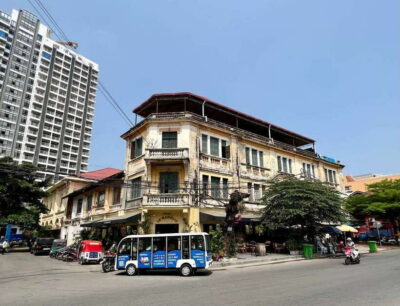 ★ 5.0Heritage tour of Phnom Penh in electric busFrom $2749 reviews
 ★ 5.0Oudong Mountain History and Pagoda TourFrom $11039 reviews
 ★ 4.3Phnom Penh Historical Sites Tour by Tuk TukFrom $2530 reviews
 ★ 5.0Phnom Penh Historical TourFrom $2913 reviews
 ★ 5.0( Free eSim) Phnom Penh Historical Full Day TourFrom $407 reviews
 ★ 5.0Chiso temple, Neang khmao, and Taprum temple historical site TourFrom $1905 reviews
 ★ 5.0Learn about a dark period of Cambodian history by expert guideFrom $293 reviews
Browse the lists this tour appears in