
Reviewed · KILLING FIELDS & GENOCIDE HISTORY TOURS
Royalpalace, Toul Sleng (S21), Museum & Killing Field
History feels close in Phnom Penh. This day tour strings together the Royal Palace and Silver Pagoda with the heavy reality of Tuol Sleng (S-21) and Choeung Ek. I love how the schedule balances beauty and meaning, so you’re not only ticking sites—you’re building context as you go.
My one real caution: you’ll ride in a tuk-tuk for the trip out to the Killing Fields, and it can feel long and bumpy in heat and traffic. If you’re sensitive to cramped seating or have knee/back trouble, plan around that.
In This Review
- Key things to know before you go
- Royal Palace and Silver Pagoda: A graceful start before the hard parts
- National Museum: Angkor sculpture in a traditional setting
- Wat Phnom: A hilltop story that explains the city name
- Tuol Sleng (S-21): When a school became a prison
- Lunch break and the drive to Choeung Ek Killing Fields
- Price and logistics: What your $75 covers, and what to budget for
- Who this day trip suits best
- Should you book this tour?
- FAQ
- How long is the tour?
- What time do we meet?
- What does the $75 price include?
- Are entrance fees included?
- How much are the entrance fees for the main sites?
- What should I wear?
- Is lunch included?
- Is the guide in English?
- Is pickup available?
Key things to know before you go
- Royal Palace + Silver Pagoda: start with gardens and a famous crystal Buddha viewpoint next door to the palace complex
- National Museum stop: Angkor-era sculpture in a traditional terracotta-roof building (1917–1920)
- Wat Phnom orientation: a small hilltop pagoda that explains the name and story behind Phnom Penh
- Tuol Sleng (S-21): a former school turned Security Prison 21, with the context explained by an English-speaking guide
- Choeung Ek Killing Fields: you’ll visit the memorial area with a stupa showing thousands of skulls behind glass
- Budget for tickets: the $75 tour price covers guiding and transport, but entrance fees are extra
Royal Palace and Silver Pagoda: A graceful start before the hard parts
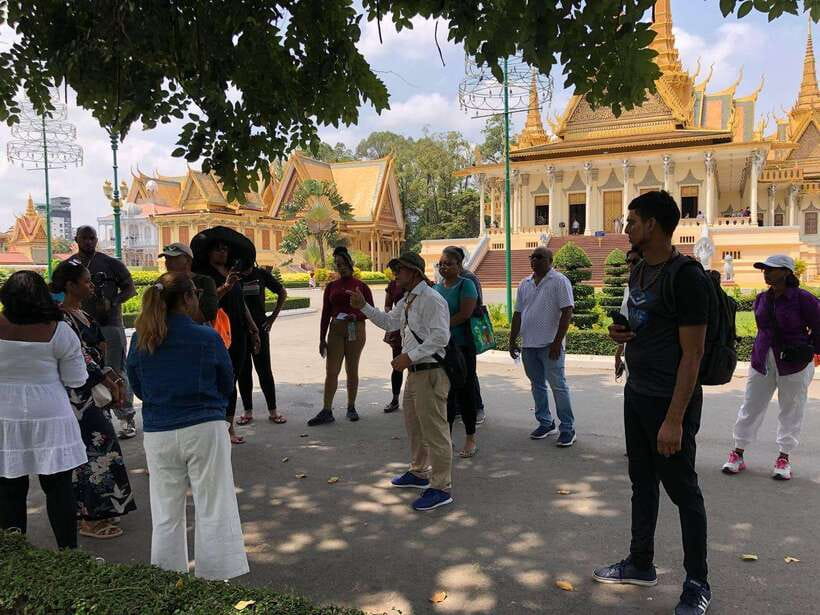
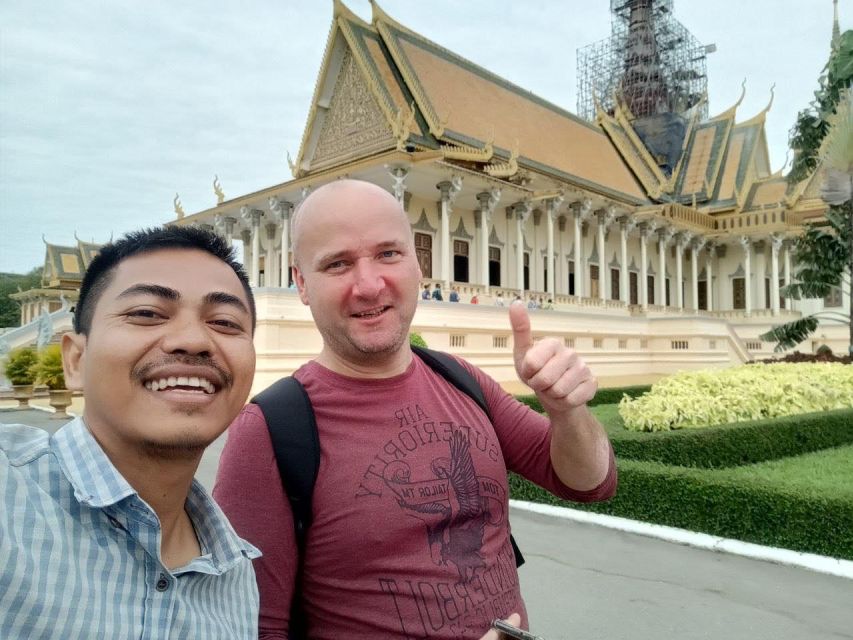
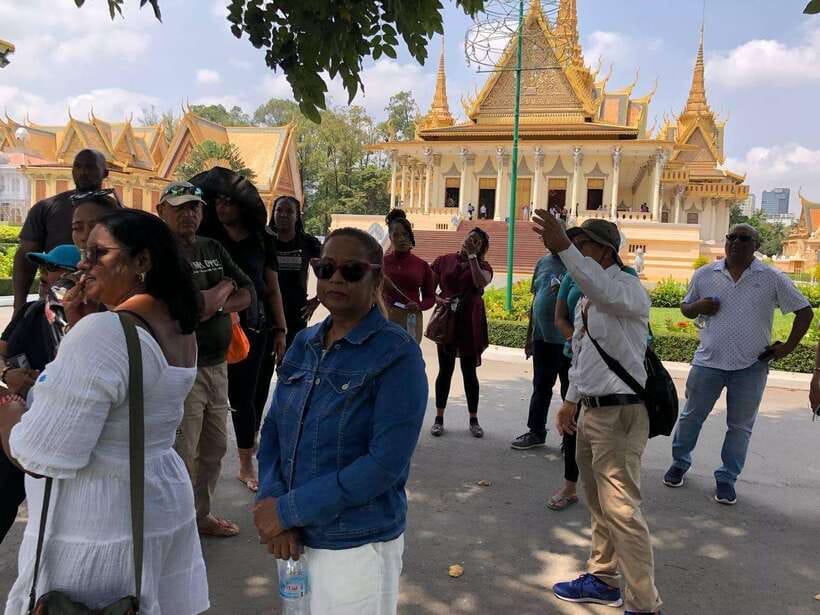
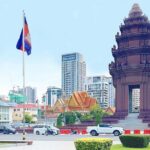
You begin early in Phnom Penh (you’ll meet at 8:00AM at your pickup point). The first stop is the Royal Palace area, which is understandably popular: it’s the kind of place that gives you instant scale for Cambodia’s royal era—then right beside it, you get a calmer, more garden-like moment.
The highlight here is the Silver Pagoda (Temple of the Emerald Buddha). Expect lush grounds, temple details, and that striking Buddha statue said to be crafted from baccarat crystals. Even if you’re not a “museum person,” this is one of those stops where your brain goes, okay, I get the atmosphere of this country—before you move into the darker chapter of the day.
What works well for you: the timing. You’ll spend about an hour here before switching gears. That hour is usually just enough time to see the main features without feeling rushed, and it sets you up to appreciate the National Museum later.
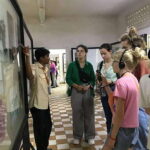
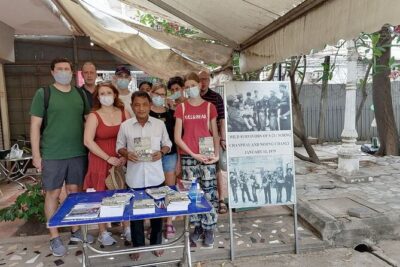
To learn more about Phnom Penh's recent history, these guided visits cover the S-21 and Choeung Ek memorial sites
National Museum: Angkor sculpture in a traditional setting
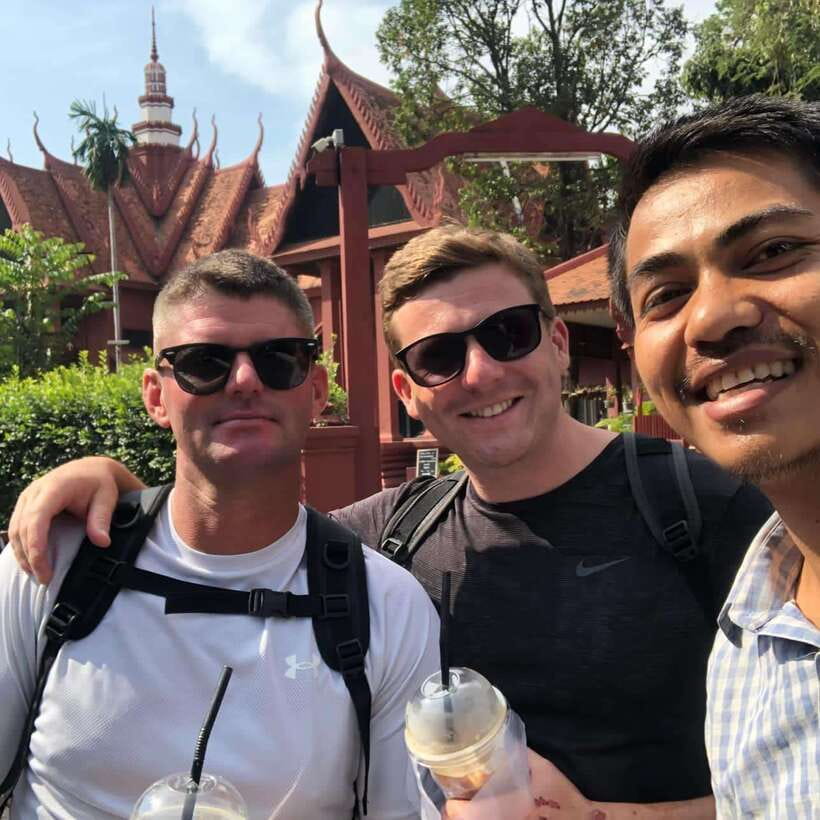
After the palace area, you head to the National Museum. What I like about this stop is the way it’s framed: you’re not just looking at objects—you’re standing in a building that feels Cambodian from the start.
This museum sits in a traditional design structure with a terracotta roof, built between 1917 and 1920. That matters because it keeps the day from turning into a “parade of rooms.” You get a sense of place before the art does the talking.
Inside, the museum holds what’s described as one of the world’s finest collections of sculpture from the Angkor period. The big payoff is the range: you can see pieces dating to both Angkorian and pre-Angkorian eras, plus more recent Cambodian art. If you’re the type who likes to connect dots, this is where you start understanding how Cambodia’s visual culture evolved over centuries—not just what a single king or decade produced.
Don’t miss style cues. The museum’s sculptures range from sandstone to intricate bronzes, and the display includes wooden Buddha collections. Even on a short visit, you can walk out with a better eye for what makes Angkor-era sculpture feel so detailed and controlled.
Possible drawback: the day is long. The National Museum is engaging, but if you’re tired from early pickup and walking, your attention can dip. Bring a mindset of short bursts—enjoy one section at a time with breaks in between.
Wat Phnom: A hilltop story that explains the city name
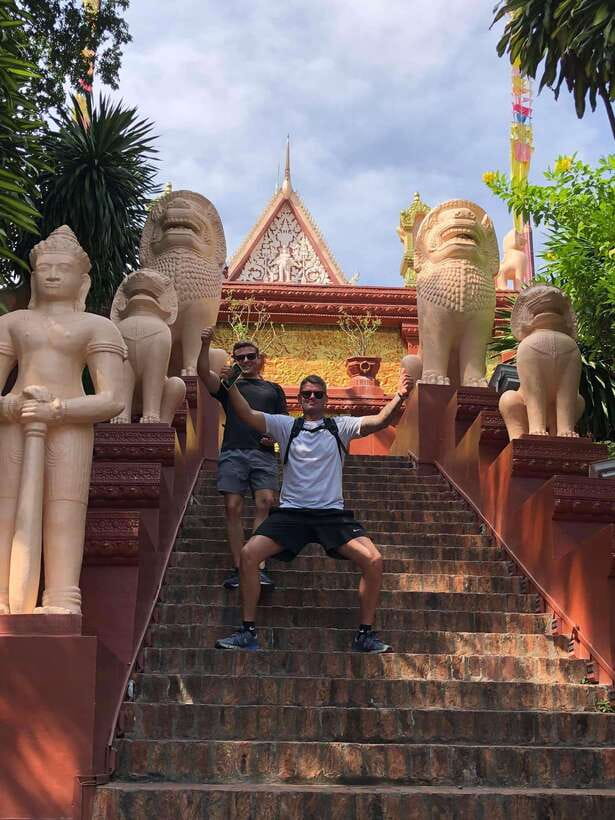
Next comes Wat Phnom, a pagoda that sits on one of the few hills in Phnom Penh. Phnom Penh is famously flat, so a hilltop temple instantly changes your perspective—literally. You’ll hear the short story tied to how the city got its name.
I like this stop because it’s quick and grounding. It gives you local context without adding too much fatigue to an already packed day. It’s also a nice contrast: after the palace’s grandeur and the museum’s art-focused calm, Wat Phnom brings you back to everyday Phnom Penh—people, movement, and the rhythm of a living place rather than an era behind glass.
Practical note: dress matters for temple areas. If your clothes don’t meet the standard, you may feel awkward adjusting on the spot. Long sleeves are a smart choice for this entire day.
Tuol Sleng (S-21): When a school became a prison
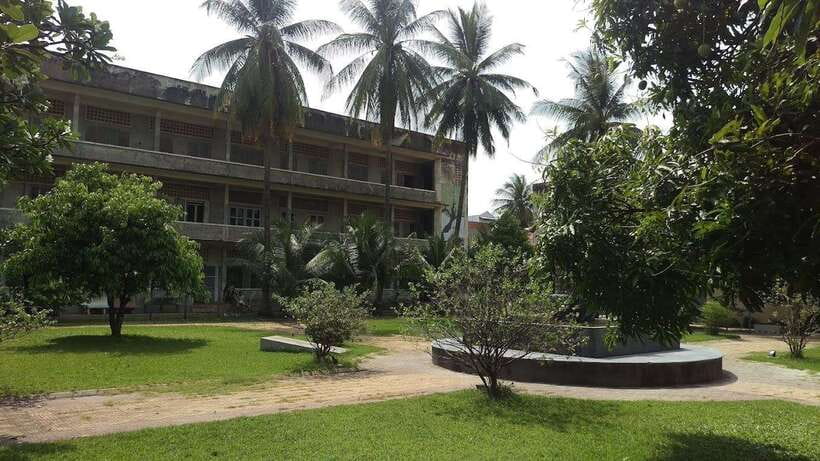
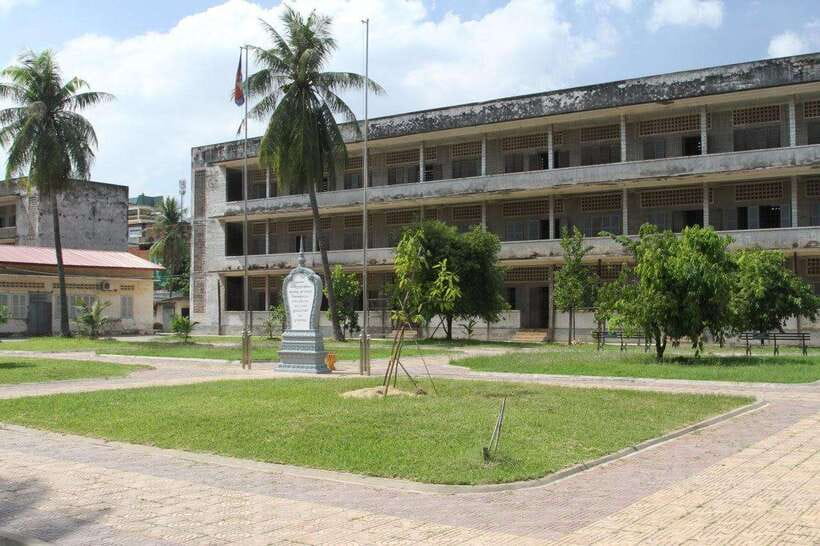
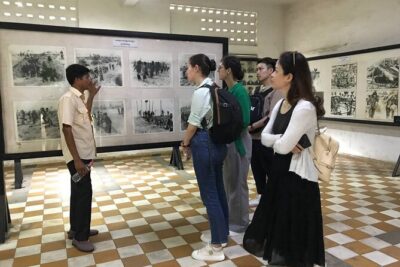
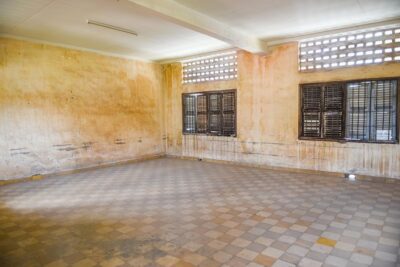
Then you reach Tuol Sleng Museum, also known as Security Prison 21 (S-21). This is the part of the day that changes the temperature in the room. It’s not “scary” in a theme-park way—it’s heavy because it’s factual and close.
The basics you’ll want to keep in mind: in 1975, Tuol Svay Prey High School was taken over by Pol Pot’s security forces and turned into S-21. Your English-speaking guide will explain the backstory and the museum’s history in depth, which is crucial here. Without that context, some details can blur together, and you lose the point of the place.
As you move through the exhibits, you’ll be confronted with the reality of detention, torture, and the way the system operated. This isn’t the place for multitasking. I’d treat the visit like a guided lesson you can’t speed through.
How to make it easier on yourself: wear comfortable clothes, carry a bottle of water if you like, and take pauses when you need them. You don’t have to “push through.” The point is understanding, not endurance.
Lunch break and the drive to Choeung Ek Killing Fields
After the morning stops, you’ll take a break for lunch. Lunch isn’t included, so plan for this moment rather than hoping it solves itself. Having a meal break between S-21 and the Killing Fields can feel like a relief—but it also gives you a chance to reset emotionally so you can handle what comes next.
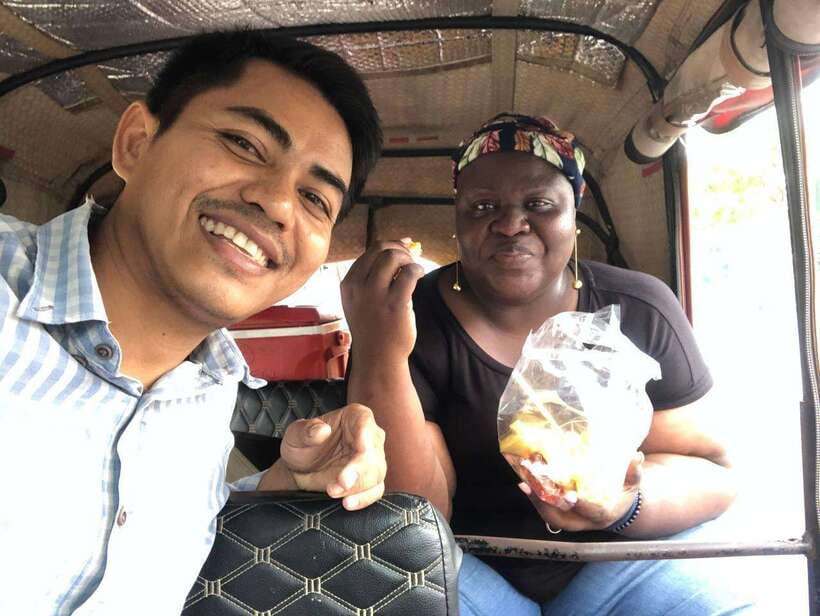
Then you drive out to the Killing Fields of Choeung Ek, about 16 km south of Phnom Penh. This is where transport becomes a real factor. You’ll be in a tuk-tuk, and the ride can be around 45 minutes, depending on traffic and conditions. The heat and jostling can be tough, especially if you’re tall or you have sore knees or a bad back.
If that sounds like you, consider your comfort plan early. One approach that can work is asking for flexibility around the timing and how you handle the longer ride segment. The key is not to change the content of the visit—just make the travel side less punishing.
Once you arrive, you’ll be accompanied by a guide who provides the history of the extermination camp area. Between 1975 and 1978, about 17,000 men, women, children, and infants (including nine westerners) detained at S-21 were transported to Choeung Ek. The explanation also covers how victims were often bludgeoned to death to avoid wasting precious bullets.
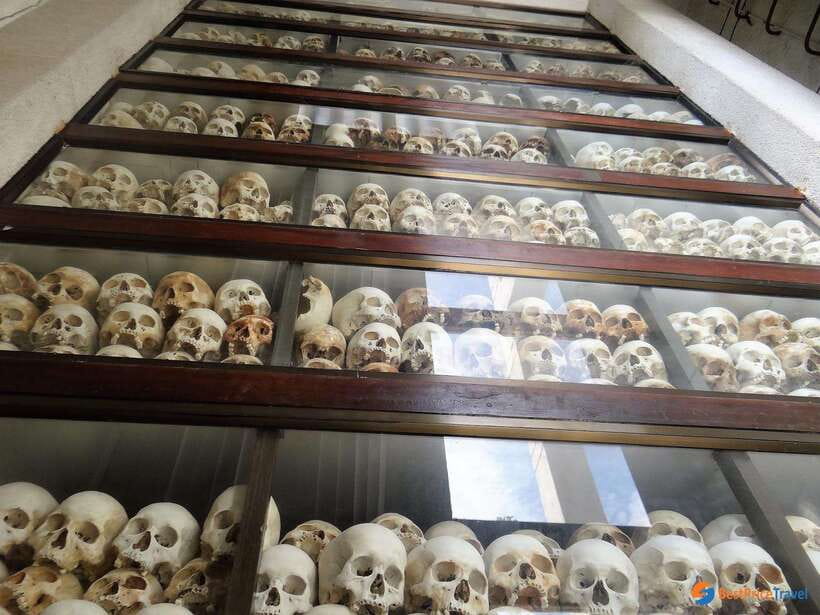
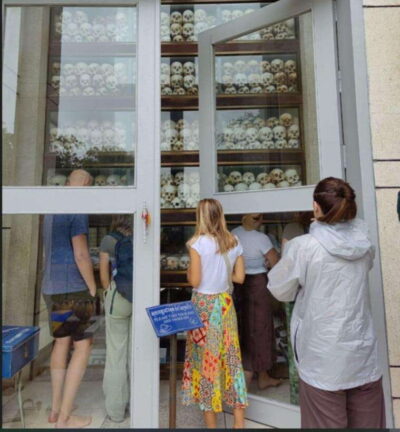
As you walk the grounds, you may see details that can feel hard to process: fragments of human bone and bits of cloth scattered around disinterred pits. The memorial area is designed to make the scale visible through the Memorial Stupa, erected in 1988, where you can see over 8,000 skulls arranged behind clear glass panels by sex and age.
This is a place to slow down. If you rush, it’s just sites and photos. If you take a little time, it becomes a clearer understanding of the system—and why the memorial matters.
A few more Phnom Penh tours and day trips our team keeps coming back to
Price and logistics: What your $75 covers, and what to budget for
The tour price is $75 per person for about 10 hours. That’s a full-day structure with hotel pickup and drop-off in/around Phnom Penh, a tuk-tuk driver, and an English-speaking guide. You’ll also get a fresh bottle of water.
The important part: entrance fees are not included. You should budget separately for:
- Royal Palace: $10
- National Museum: $10
- Wat Phnom pagoda: $1
- Tuol Sleng S-21: $5
- Killing Fields: listed as $3, though prices may run higher at the time of visit (one schedule notes $6 as of March 24)
Add those up and you’re looking at a total that can surprise you if you only think in terms of the base $75. Plan to carry extra cash.
Dress code and comfort are not optional. Sleeveless shirts are not allowed. For the palace especially, you’ll want clothes that feel comfortable but meet the requirement. Long-sleeved shirts are a safe default, especially in hot weather when you’re also doing lots of walking.
My practical takeaway: this is good value if you want a guided day with transport sorted and context explained. It’s not the cheapest “standalone tickets” approach, but the guide and the sequencing matter here—especially around S-21 and the Killing Fields.
Who this day trip suits best
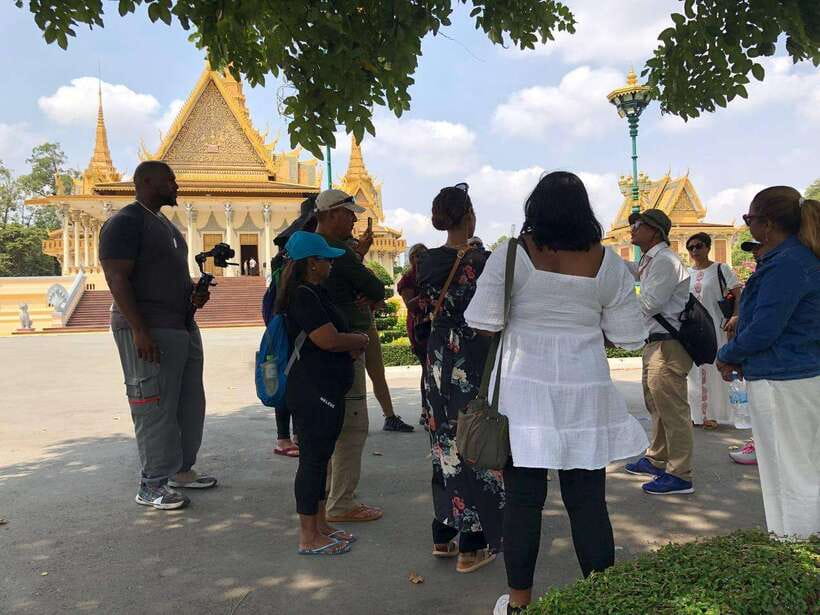
This tour is best for you if:
- you want the major Phnom Penh anchors in one day (palace area, museum, Wat Phnom, S-21, Choeung Ek)
- you prefer an English-speaking guide to explain the meaning behind what you’re seeing
- you like a schedule that mixes visual culture and historical context, instead of one-only focus
It may feel like a lot if:
- you have mobility limits for temple steps and museum walking
- you’re very sensitive to heat and long tuk-tuk rides
- you don’t like switching gears from art and architecture to trauma-focused memorial spaces
If you’re bringing kids or you’re unsure about emotional intensity, you’ll want to think carefully. This is a memorial and prison site day, not a casual sightseeing loop.
Should you book this tour?
Yes, I think you should book it if you’re ready for a meaningful day and you plan your comfort and budgeting. The palace-and-museum morning makes the later stops more understandable, not less. And having a guide for S-21 and Choeung Ek is the difference between seeing facts and actually grasping what the places represent.
If the tuk-tuk ride to Choeung Ek sounds like your weak spot, address it before you go—bring supportive clothing, water, and a plan for how you’ll handle that travel stretch. Also budget for the entrance fees so the day stays smooth instead of stressful.
Bottom line: this is a long day, but it’s the kind that leaves you with more than photos—especially after you connect the royal setting, the museum’s art timeline, and the real history documented at S-21 and Choeung Ek.
FAQ
How long is the tour?
The tour lasts about 10 hours.
What time do we meet?
You meet at 8:00AM at your pickup point in Phnom Penh.
What does the $75 price include?
It includes hotel pickup and drop-off, a tuk-tuk driver, a professional English-speaking guide, and fresh bottle water.
Are entrance fees included?
No. Tickets/entrance fees for each site are not included in the $75 price.
How much are the entrance fees for the main sites?
Royal Palace is listed at $10, the National Museum at $10, Wat Phnom at $1, Tuol Sleng (S-21) at $5, and the Killing Fields at $3 (one note also mentions $6 as of March 24).
What should I wear?
Wear comfortable clothes. Sleeveless shirts are not allowed, and long sleeves are a good idea, especially for the Royal Palace.
Is lunch included?
No, lunch is not included.
Is the guide in English?
Yes, the tour uses an English live guide.
Is pickup available?
Pickup is included and is based on your location in/around Phnom Penh (with typical pickups in the capital).
More Tour Reviews in Phnom Penh

More Royal Palace & Silver Pagoda Tours in Phnom Penh
More Phnom Penh History & Remembrance Visits

Keep browsing: more Phnom Penh tours and day trips our team has reviewed





Killing Fields & Genocide History Tours, compared.
 ★ 4.8The Killing Fields & Tuol Sleng Genocide MuseumFrom $193,337 reviews
 ★ 5.0The Killing Field and Toul Sleng Genocide Museum (S21) TourFrom $191,977 reviews
 ★ 5.0Killing field and Toul Sleng genocide museum TourFrom $19610 reviews
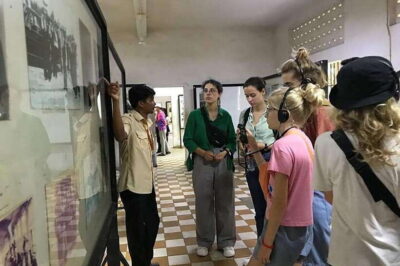 ★ 4.8killing field & Toul Sleng genocide museum TourFrom $19540 reviews
 ★ 4.9Highlights Tour Including S21 and Killing FieldsFrom $30453 reviews
 ★ 5.0Visit 11 Places in One Day including S21 & Killing FieldFrom $30361 reviews
 ★ 4.9Royal Palace, S21, Killing Fields & More TourFrom $35295 reviews
 ★ 4.0Killing Fields and Prison S21 Bus TourFrom $15206 reviews
Browse the lists this tour appears in