
Reviewed · PRIVATE
13 Days Private Tour to Cambodia, Angkor Wat and Vietnam
Temples, genocide sites, and boats in one trip. This private 13-day route strings together Cambodia’s Angkor with Vietnam’s Hue, Hoi An, and Ha Long Bay—plus Cu Chi and the Mekong Delta. You’ll hit UNESCO World Heritage stops and still cover daily-life scenes on the water.
I particularly love two things: the airport-to-hotel handling and the way the trip stays organized when you’re crossing countries and flying domestically. I also love the lodging style here: you get named hotels in prime locations, and you even spend a night on a Halong Bay cruise (so it’s not just a day trip).
One possible drawback: the schedule is full. You’ll spend time on planes and moving between cities, and you’ll also visit very heavy history sites like Tuol Sleng and the Killing Fields, plus War Remnants Museum in Ho Chi Minh City.
In This Review
- Key things that make this tour work so well
- Temples and trauma, plus water time
- Phnom Penh: Royal Palace gardens, Khmer art, and the weight of S-21
- Angkor Wat time: Angkor Thom’s faces, Ta Prohm’s mood, and the main temple
- Banteay Srei and the countryside: pink sandstone, Preah Khan, and Kampong Phluk
- Hanoi by cyclo and puppets, then an overnight on Ha Long Bay
- Hoi An UNESCO streets and Hue’s Imperial City on the Perfume River
- Saigon and the Mekong: tunnels, reunification history, and Cai Be by sampan
- Price and logistics: what $4,360 buys you here
- Should you book this Cambodia and Vietnam private tour?
- FAQ
- How long is the tour?
- Where does the tour start and end?
- What’s included in the price?
- Are flights included?
- Which UNESCO World Heritage sites are covered?
- What type of accommodation and cruise are included?
- Do I need a visa for Cambodia?
- What’s the cancellation policy for a full refund?
Key things that make this tour work so well
- Mr. Ann-style coordination and quick airport meets so you’re not stuck figuring things out after landing
- UNESCO hits in Cambodia and Vietnam: Angkor, Hue, Hoi An, and Ha Long Bay
- Private guiding with English-speaking expertise across temples, museums, and city streets
- Real time on the water: Tonle Sap/Lake-region village life, a Perfume River cruise, Ha Long Bay overnight, and Cai Be on the Mekong
- Comfort upgrades built into the route: a full hotel lineup plus an overnight cruise cabin, with daily breakfasts and set lunches
Temples and trauma, plus water time
This trip has range. One day you’re reading stone carvings at Angkor. The next day you’re standing where Cambodia’s Khmer Rouge imprisoned and murdered people. Then you switch gears to pagoda views on the Perfume River, lantern streets in Hoi An, and boat life on the Mekong.
I like that you don’t just do temples as a photo project. The route also includes key sites that explain why modern Cambodia and Vietnam take war and survival seriously. That makes the experience more meaningful, but it also means you should mentally pack extra patience for the museum days.
The other big “make it easier” factor is how much is handled for you: licensed English-speaking guides, private air-conditioned transport, entrance fees, most meals, and the flights between cities. When you’re moving from Phnom Penh to Siem Reap, then to Hanoi, then to Danang, then to Hue, then down to Ho Chi Minh City, that’s not a small thing.
Go at your own pace with more private Phnom Penh tours


Phnom Penh: Royal Palace gardens, Khmer art, and the weight of S-21
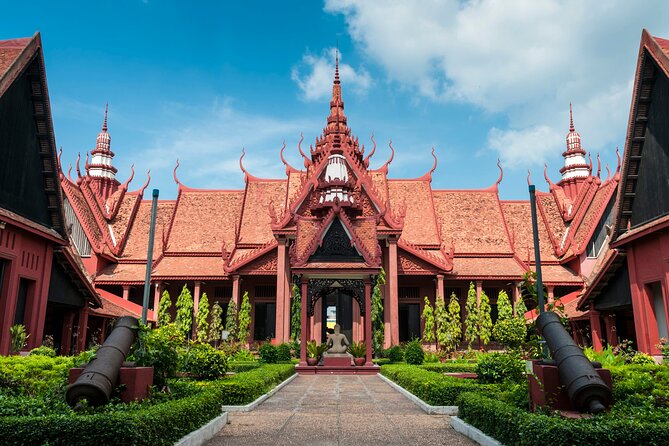
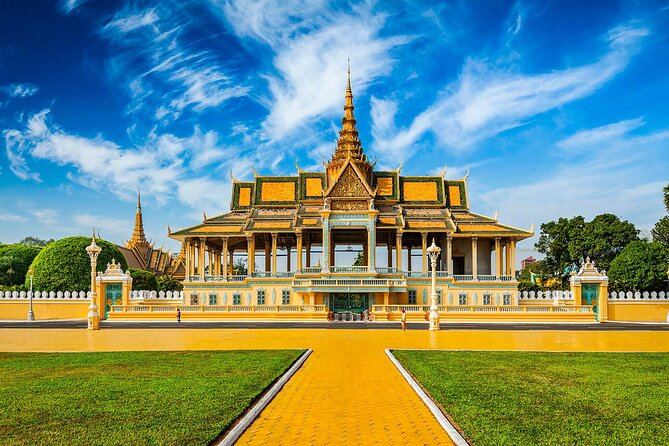
Phnom Penh is a strong start because it gives you both beauty and reality fast. You begin with the Royal Palace complex, built in 1866 under King Norodom. You’ll walk through its pagoda-style structures and gardens and see how the city’s royal heritage still shapes its landmarks.
Next comes the National Museum (built in 1917), which is all about Khmer art and sculptures. If you want context for what you’ll later see in Angkor, this is where you start building the right mental picture. You’re not just staring at temples; you’re learning the language of the culture behind them.
You’ll also visit Wat Phnom (founded in 1373). It’s a short stop, but it helps you get grounded in the city’s religious roots before the heavier days.
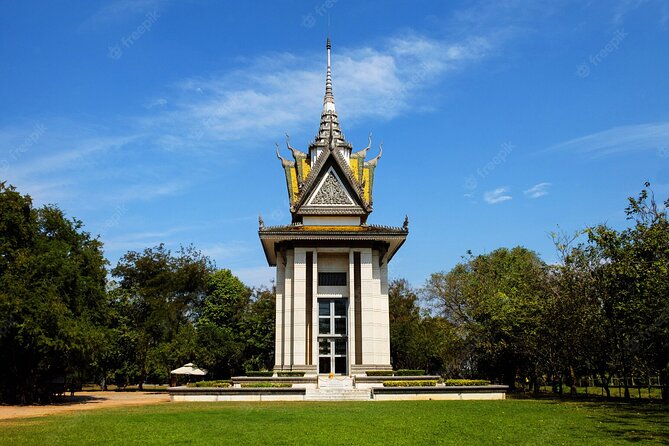
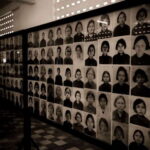
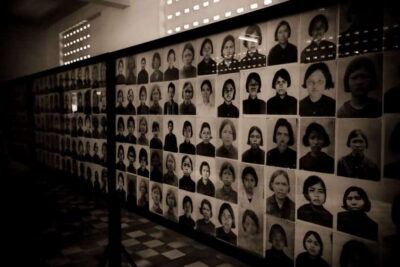
Then the trip turns serious. You’ll have a typical Khmer lunch, and after that you go to Tuol Sleng Genocide Museum. This is the former high school that became S-21 under Pol Pot’s regime in 1975. It’s not a comfortable visit, but it’s direct and historically important.
After Tuol Sleng, you head to Choeung Ek Killing Fields, about 16 km south of the city. The site tells you how the Khmer Rouge system extended beyond the prison walls, with estimates around 17,000 detainees tortured and killed between 1975 and 1978 (including nine westerners mentioned in the tour description). If you’re sensitive to graphic history, give yourself space here and don’t plan anything strenuous afterward.
Angkor Wat time: Angkor Thom’s faces, Ta Prohm’s mood, and the main temple
Siem Reap is built around Angkor, and this tour gives you a well-balanced Angkor day that mixes the iconic and the atmospheric.
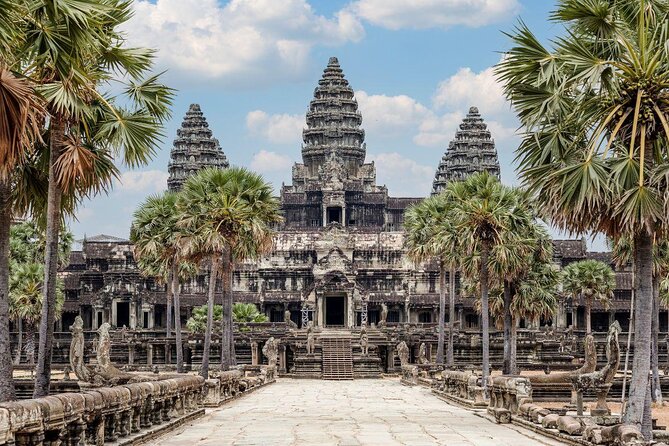
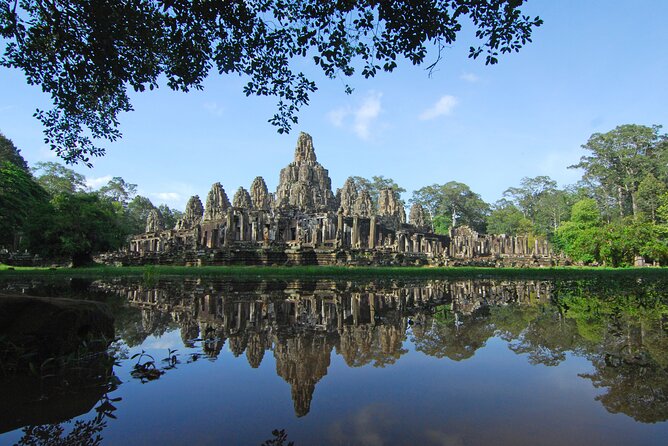
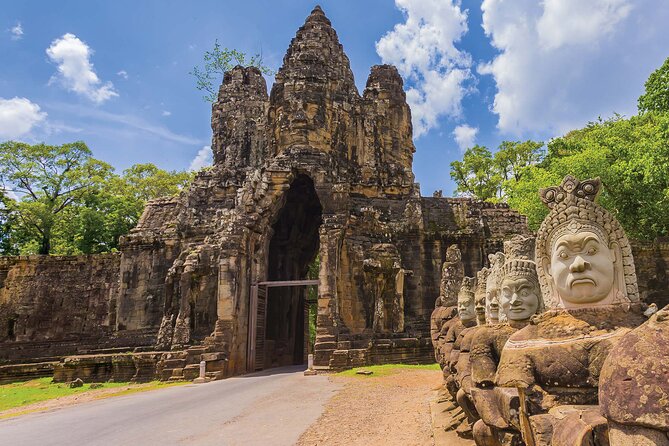
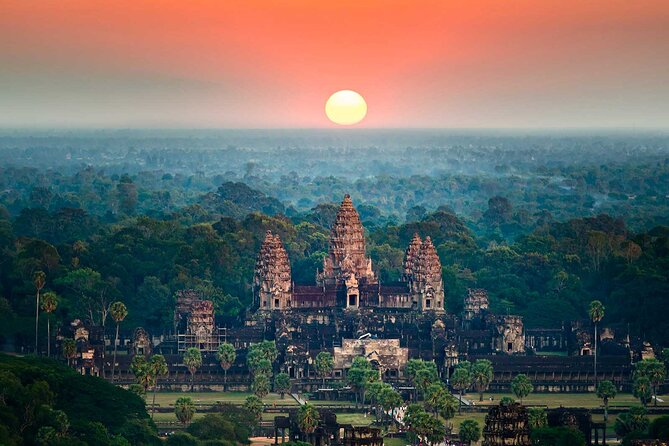
You start at Angkor Thom’s South Gate, then move into the walled city core. From there, you visit Bayon Temple, the one surrounded by faces on all sides. It’s the kind of place where your brain keeps switching between pattern recognition and storytelling. The scale is huge, but the carvings and faces are what you remember.
You then continue through more Angkor Thom highlights: Baphuon, plus Terrace of the Elephants and Terrace of the Leper King. These terraces are great if you like temples that feel connected to real political life—this wasn’t just sacred space, it was power and ceremony in stone.
The day also includes Phimeanakas, a Hindu temple connected to Khleang-style architecture, and then you switch mood with Ta Prohm. Ta Prohm is described as one of the most atmospheric Angkor treasures, and it’s easy to see why: the temple feels like nature and history are co-existing in the same frame.
Lunch happens along the way, and then you hit the big one: Angkor Wat. You’ll spend hours there seeing the bas-reliefs and the devatas (guardian spirits) that cover the temple’s surfaces. The payoff here is not just photos—it’s how Angkor Wat sits as a final, coherent masterpiece after you’ve toured the surrounding “world” of Angkor Thom.
A practical note: even with a guide, Angkor is walking-heavy. Plan to move slowly through the details and let yourself rest between clusters of carvings and courtyards.
Banteay Srei and the countryside: pink sandstone, Preah Khan, and Kampong Phluk
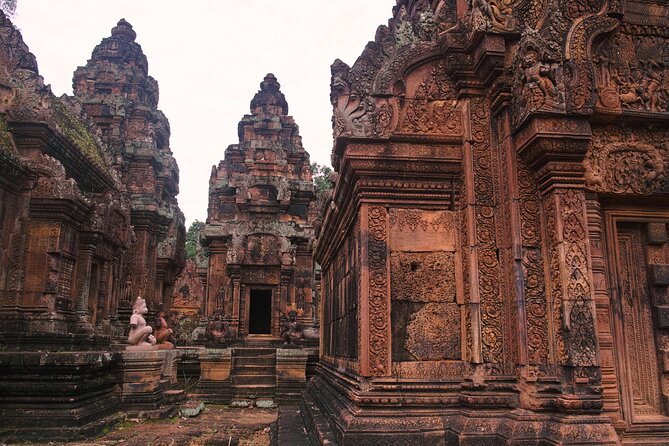
After your main Angkor day, you shift to the “less crowded, more delicate” feeling of the smaller sites. Morning north brings Banteay Srei, famous for its pink sandstone and intricate sculptures. The tour description calls it a jewel of Angkor built in the 10th century and dedicated to Shiva, and that works well if you like temples with fine detail rather than massive scale alone.
You then go to Preah Khan. It’s built in the same style as Ta Prohm and is better preserved, which can make it easier to read. Preah Khan is also tied to Jayavarman VII, so this leg continues the Angkor story rather than feeling like random add-ons.
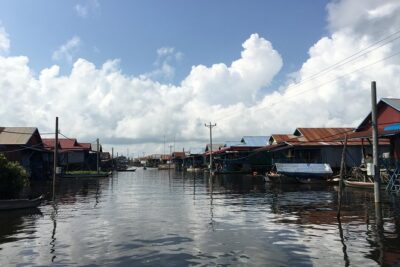
After lunch, the day takes you toward daily life and landscape at Kampong Phluk floating village. You do an ox-cart ride through villages and rice fields, then stop for a fresh coconut drink. This part matters because it reminds you Cambodia is not just Angkor and museums. It’s farming, houses on the water, and families adapting to the seasons.
One more key piece: you end the day by flying to Vietnam. The travel segment is Siem Reap to Hanoi (18:20–20:10), so you’ll start Vietnam in the evening rather than losing the whole day to airports.
Hanoi by cyclo and puppets, then an overnight on Ha Long Bay
Hanoi days on this route are packed with contrasts. You begin with the Ho Chi Minh Complex and Ba Dinh Square. Then you head to Temple of Literature, tied to Confucius and the Imperial Academy—described as Vietnam’s first national university. It’s a good early stop because it frames Hanoi as a long-running center of education and governance.
Next you visit the Vietnam Museum of Ethnology, which highlights the country’s history and includes a huge set of photos and objects. After that you drive through Colonial Hanoi and see the Hanoi Opera House.
The trip doesn’t dodge hard chapters. Hoa Lo Prison, known in some contexts as Hanoi Hilton, gets a visit afterward. Then you move to something calmer: Tran Quoc Pagoda near West Lake. After that, you do a cyclo ride through Hanoi’s Old Quarter, the 36 Streets area.
The evening includes a traditional water puppet performance. It’s a uniquely North Vietnamese art form described as celebrating rural life and folklore for over 1,000 years—exactly the kind of cultural stop that doesn’t require a long attention span to enjoy.
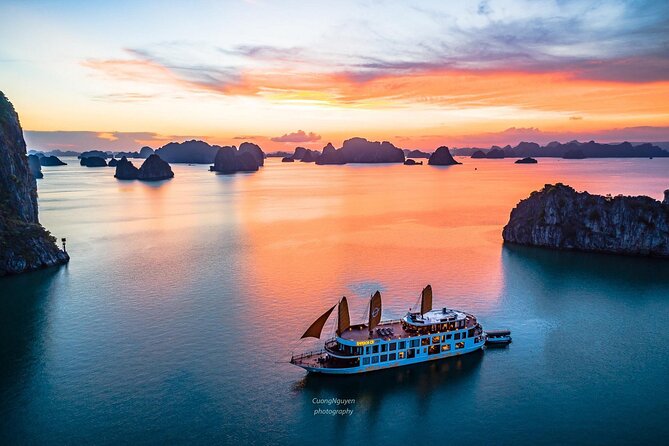
Next you travel to Ha Long Bay, a UNESCO natural heritage site. You go on a one-night cruise on a traditional ship (Dragon Legend Cruise described for the included cabin). This is where your Cambodia–Vietnam switch really feels real: you move from city museums and alley life to karst scenery and open water.
Day 7 is built around gentle moments. You get a morning view with tea or coffee, and breakfast happens on the bay. Then you visit Vung Vieng fishing village by rowboat and meet local people through the water route. It’s short and practical, not a big performance—more like watching how communities work when boats are daily transport.
Then, instead of staying in Ha Long all day, you fly onward to Central Vietnam: Hanoi to Danang (17:35–18:50).

Hoi An UNESCO streets and Hue’s Imperial City on the Perfume River
Hoi An arrives like a slower song after Hanoi energy. You see the Japanese Covered Bridge, the Old House of Phung Hung, the Fukian Assembly Hall (Phuc Kien), and the Tan Ky House—all with a mix of architectural and family-history elements.
You also get two kinds of movement. First there’s a cyclo ride to the older homes and halls, so you’re not just standing still. Then there’s a riverboat along the Thu Bon River plus time to visit a boat-building village. That’s a solid mix if you want culture without only temple-adjacent sights.
After lunch there’s free time to explore Hoi An on your own. In the evening, you go to the Hoi An Memories Show, described as carrying cultural and historical values.
Then you shift north to Hue. Hue is where the tour leans “royal and reflective.” You visit Tomb of Tu Duc, then Tomb of Khai Dinh, which combines Western and Eastern architecture in the tour description. After lunch, you explore the Hue Imperial City (the Citadel), including a ride by private pedal-powered cyclo, which fits the slower pace of this city.
The next day begins at Thien Mu Pagoda, a seven-story octagonal tower built in 1844. Then you cruise along the Perfume River, a calm break after days of walking and stairs.
You finish with the Mausoleum of Emperor Minh Mang, described as among the most beautiful mausoleums, set amid pine hills by the river. After that, you fly to Ho Chi Minh City: Hue to Ho Chi Minh City (13:45–15:15).
Saigon and the Mekong: tunnels, reunification history, and Cai Be by sampan
Ho Chi Minh City (Saigon) hits you from multiple angles in one day. You start with Cu Chi Tunnels at Ben Duoc, exploring an underground world of tunnels and chambers. This stop is intense, and it’s built into the tour so you can connect the region’s wartime tactics to what you’ll see later in museums.
Then you move into city landmarks: Saigon Notre Dame Cathedral, the Saigon Central Post Office, and the Independence Palace (Reunification Palace). Independence Palace matters because it marks the end of the Vietnam War period described in the tour information.
After that, you go to the War Remnants Museum, described as a call for peace and a way to ensure the horrors of war are not repeated. It’s hard-hitting, but it’s one of the most direct places in the city for understanding what the war did to people and places.
You also get shopping time at Ben Thanh Market, plus a stroll around Ho Chi Minh Square, bordered by City Hall and the Rex Hotel area mentioned in the tour details.
Next comes the Mekong Delta reset. You spend time in the My Tho area and then transfer to Cai Be by jetty. The cruise is on a Cai Be Princess Sampan, and the tour description includes welcome touches like cold towels and a refreshing drink.
Lunch is set at Le Longanier Restaurant, in a colonial-style villa in lush tropical gardens by the river, surrounded by fruit trees. After that meal, the Delta portion feels complete: not just sightseeing, but a sense of how river communities live and eat.
Your tour ends in Ho Chi Minh City, with a transfer included from the Mai House Saigon Hotel to the airport. It advises giving about 3 hours for airport check-in.
Price and logistics: what $4,360 buys you here
At $4,360 per person, this isn’t a budget trip. But the cost makes more sense when you look at what’s actually included.
You’re getting:
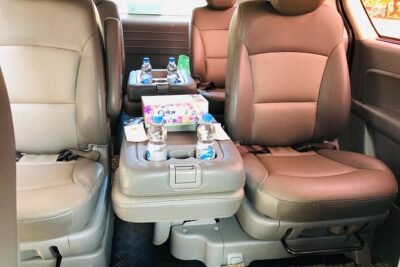
- Private, air-conditioned transport with a safe driver for the segments listed
- A professional licensed English-speaking guide
- Entrance fees for the sites included
- Multiple hotel stays (from iRoHa Garden Hotel with a deluxe balcony room to Hue at Azerai La Residence Hue with a superior river view, and Ho Chi Minh City at Mai House Saigon deluxe rooms)
- An overnight cruise on Ha Long Bay (Dragon Legend Cruise, Deluce Cabin or similar)
- Domestic and international flights in economy class across the route (Phnom Penh to Siem Reap; Siem Reap to Hanoi; Hanoi to Danang; Hue to Ho Chi Minh City)
- Most meals: daily breakfast plus set lunches, and at least one dinner included
- Bottled water: three bottles per person per day
- VAT and taxes/service charges
The biggest “value” part is mental. You don’t need to plan airport transfers between five cities, research entry tickets, or negotiate restaurant timing. This is exactly the kind of trip where a good coordinator shows up when the schedule gets complicated.
The trade-off is that you must be okay with a full itinerary and travel days. If you want lots of downtime and long, flexible afternoons, you might feel the pressure.
Should you book this Cambodia and Vietnam private tour?
Book it if you want a guided, high-touch route that covers the major UNESCO sites (Angkor, Hue, Hoi An, Ha Long Bay) and still includes water-focused moments on the Perfume River and Mekong.
Don’t book it if you want a slow “one city at a time” vacation. This route moves, with multiple flights and a dense mix of temples plus very serious history stops.
If you do book, I’d suggest you go in with two intentions: one for wonder (Angkor and the river scenes) and one for readiness (the genocide and war history museums). Do that, and you’ll end the trip with a strong, grounded picture of Cambodia and Vietnam—not just a stack of stamps.
FAQ
How long is the tour?
It runs for about 13 days.
Where does the tour start and end?
It starts at Phnom Penh Airport (Cambodia) and ends in Ho Chi Minh City (Saigon), with an included transfer to Ho Chi Minh City International Airport.
What’s included in the price?
The price includes private transportation, a licensed English-speaking guide, entrance fees, boat cruises, selected meals (daily breakfast plus lunches and a dinner), named hotel stays, and the specified flight tickets in economy class, plus bottled water and taxes.
Are flights included?
Yes. Flights listed include Phnom Penh to Siem Reap, Siem Reap to Hanoi, Hanoi to Danang, and Hue to Ho Chi Minh City.
Which UNESCO World Heritage sites are covered?
The tour includes UNESCO sites such as Angkor, Hue, Hoi An, and Ha Long Bay.
What type of accommodation and cruise are included?
You stay in included hotels throughout the trip and have one night onboard the Dragon Legend Cruise (Deluce Cabin or similar), plus additional hotel nights in Vietnam.
Do I need a visa for Cambodia?
The plan states that on arrival in Phnom Penh, you’ll obtain your Cambodia visa and clear immigration and customs.
What’s the cancellation policy for a full refund?
You can cancel up to 6 days in advance for a full refund (the cutoff is based on local time). Cancellation 2–6 days before gives a 50% refund.
More Private Phnom Penh Tours to Bookmark
More Tours in Phnom Penh

More Tour Reviews in Phnom Penh
Keep browsing: more Phnom Penh tours and day trips our team has reviewed







Private, compared.
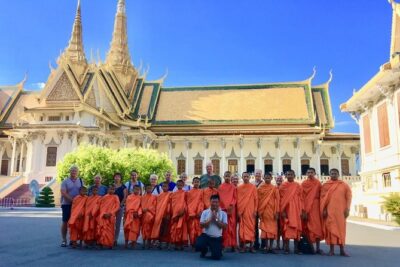 ★ 5.0Phnom Penh Full Day Private Tour Included All Admission TicketsFrom $97585 reviews
 ★ 5.0Phnom Penh to Siem Reap by Private Car or MinivanFrom $59211 reviews
 ★ 4.8Oudong Mountain – Phnom Penh Former Capital Private Day TourFrom $40146 reviews
 ★ 5.0Phnom Penh to Siem Reap Private Car-English Speaking DriverFrom $135119 reviews
 ★ 5.0Visit 9 Places in 3 Hours by Private Tuk-TukFrom $2573 reviews
 ★ 5.0A day Trip Sightseeing Phnom Penh – Siem Reap – Private English Speaking DriverFrom $10567 reviews
 ★ 4.7Phnom Penh private tour Tuol Sleng & Choeng Ek Killing FieldFrom $5964 reviews
 ★ 5.0Phnom Penh To Siem Reap Private Transfer Mini-Van-CarFrom $6556 reviews