
Reviewed · SILK ISLAND & KOH DACH TOURS
Silk Island Tuk Tuk Tour
If you like craft work you can see happening, this one works. A tuk-tuk countryside loop around Silk Island and Koh Dach turns a simple day trip into a hands-on look at how Cambodian textiles and farm life connect. You’ll ride out of Phnom Penh, cross by ferry, watch silk production up close, and end back in the city.
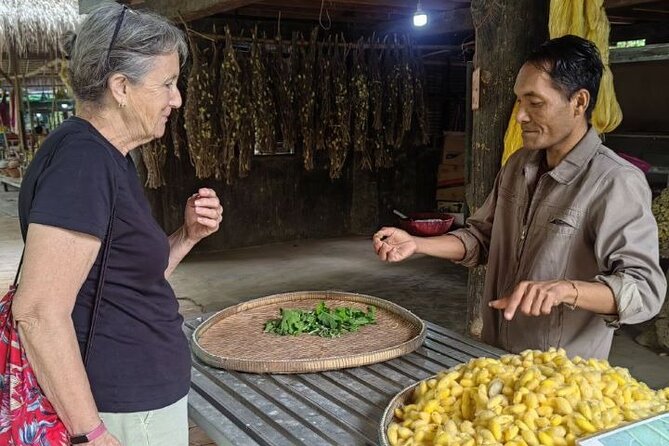
I especially liked the silk demonstrations, where you can trace the process from silkworm eggs to finished products, not just browse a shop. I also liked having a real guide—English-speaking Visal is a standout in past experiences—so the villages, materials, and everyday routines make sense instead of feeling like random stops. One thing to consider: this outing depends on good weather, and the countryside pace means you’ll want to be comfortable with time on the road and outdoors for several hours.
In This Review
- Key things to know before you go
- Silk Island by Tuk-Tuk: What You’re Really Buying for $80
- Meeting Point to Mekong Ferry: Starting Where Things Make Sense
- Stop 1: Mekong Silk Island Center 099 and the Silk-Making Lesson
- Stop 2 on Koh Dach: Chamka Sne Silk Farm and Craft Variety
- Stop 3 on Koh Dach: Pagoda, Village Life, and Farmer-Run Production
- Rice Paddies, Lemongrass, Ginger, Corn, and the Countryside Feel
- The Ferry Back to Phnom Penh: Wrapping Up at a Human Pace
- Price and Value: When $80 Feels Reasonable
- Who This Tour Suits Best (and Who Might Skip)
- Should You Book the Silk Island Tuk Tuk Tour?
- FAQ
- How long is the Silk Island Tuk Tuk Tour?
- What is the price per person?
- What’s included in the tour price?
- Where does the tour start and end?
- Is the ticket digital or paper?
- How many people are in the group?
- What kind of weather does the tour require?
Key things to know before you go

- Handmade silk demonstrations: see the process from silkworm eggs onward, then shop with context.
- Tuk-tuk countryside riding: travel by car-style tuck and smaller paths instead of staying parked at roadside stops.
- Koh Dach craft workshops: you’ll run into traditional silk weaving plus other trades like pottery, dyeing, and wood carving.
- Village and pagoda time: you get more than shopping—there’s a window into daily life and Buddhist temple culture.
- Included tickets, water, and snacks: you avoid the small add-ons that can quietly raise the real price.
Silk Island by Tuk-Tuk: What You’re Really Buying for $80
At $80 per person, this tour isn’t the cheapest way to spend a half-day. But the price starts looking fair when you see what’s wrapped in: a professional English-speaking guide, tuk-tuk and safe driver, bottled water and snacks, and entrance fees. For many people, that’s the big value—less planning, fewer fees, and smoother timing across river crossings and craft stops.
What you’re really paying for is access. You’re not just getting views of rice paddies; you’re getting inside the working world—silk making, village production, and the daily rhythm around a pagoda. If you enjoy learning how things are made (and not only buying the final item), this is a strong match.
The tour also keeps a human size. It caps at 20 travelers, so it doesn’t feel like cattle-call tourism at every turn. That matters when you’re trying to ask questions and watch details up close.
A few more Phnom Penh tours and day trips our team keeps coming back to

Meeting Point to Mekong Ferry: Starting Where Things Make Sense
You’ll start at G Mekong Hotel / Orussey Market Area (419 Mahavithy Preah Monivong Blvd., Phnom Penh, Cambodia). Ending is back at the meeting point, so you’re not stuck figuring out your own return transport in city traffic.
In practice, this matters because Phnom Penh can be chaotic. Having the pickup location set near the Orussey Market area gives you a clear anchor. It’s also the kind of start that reduces stress: you show up, meet your guide, and then the day runs.
From there, you’ll cross by ferry toward the side that leads into the Silk Island area, then switch to tuk-tuk for the countryside roads. That mix—ferry + tuk-tuk—helps you cover ground without feeling like you’re sprinting around Phnom Penh all day.
Stop 1: Mekong Silk Island Center 099 and the Silk-Making Lesson
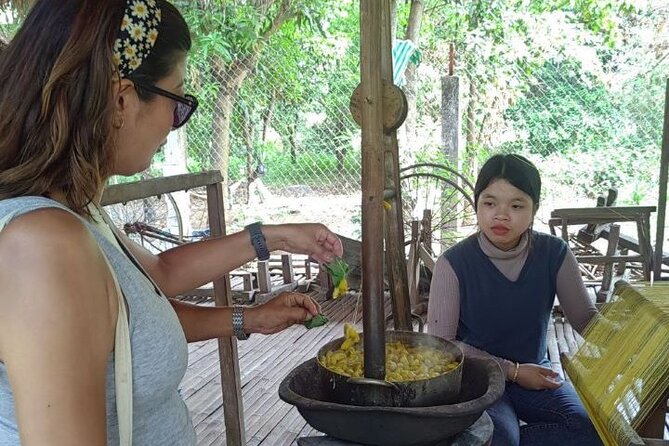
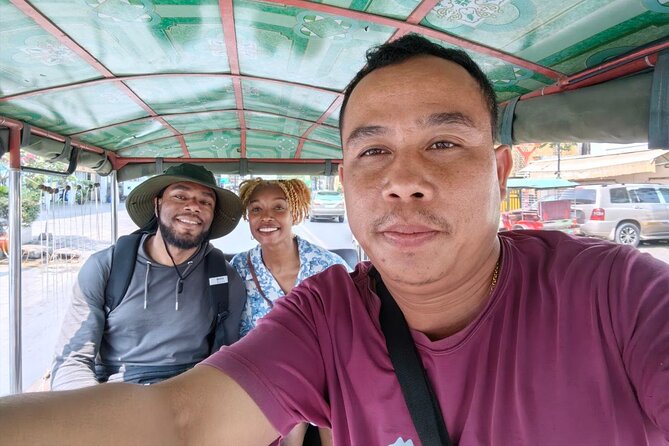
Stop 1 is where the tour earns its keep. After you arrive on the far bank, you hop onto a tuk-tuk for the ride along Silk Island’s paths. Then you land at Mekong Silk Island Center 099, where the main activity is a silk production demonstration.
The best part here is not the shop wall. It’s the full sequence. Past guests highlight a clear walkthrough of how the silk material is made, starting from the stage with moth laying eggs and moving toward finished products. That gives you a mental map before you buy anything, which is a big deal if you’ve ever walked into a textile shop and wondered what you were actually looking at.
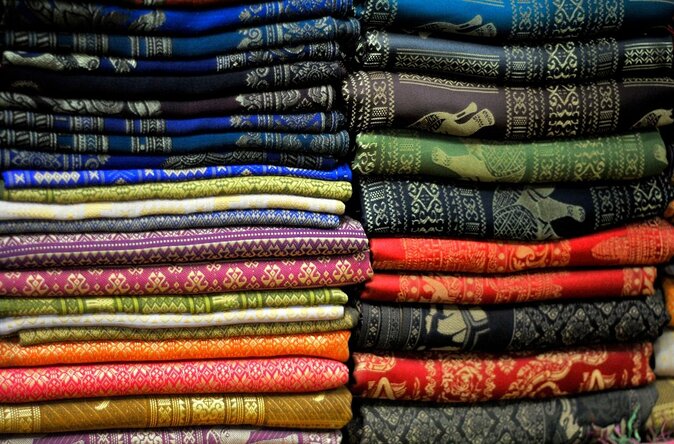
You’ll also have time to see scarves and other items created in an old-fashioned way by hand. Even if you don’t buy, the demonstration helps you notice differences—texture, sheen, and the effort behind the final weave.
What to watch for: if you’re planning to purchase a scarf, take a moment to compare what you like in person. The tour gives you access to the making process, so use that advantage to choose based on feel and quality, not just price tags.
Stop 2 on Koh Dach: Chamka Sne Silk Farm and Craft Variety
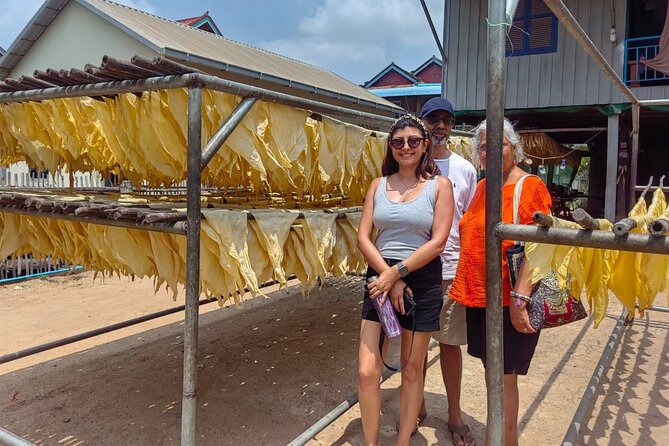
Next comes Koh Dach, with a longer 2-hour segment focused on a traditional craft setting—specifically a Chamka Sne silk farm area. This is where you get more trade variety than a single-purpose silk shop.
You can expect to see processing and traditional handicrafts such as:
- silk weaving
- pottery
- dyeing
- wood carving
This stop is valuable because it shows craft as a local ecosystem, not one isolated product. Silk production connects to dyeing (color work), and you also see that other crafts sit in the same working environment. If you like understanding how craft industries share space and tools, you’ll enjoy the breadth.
There’s also a shopping reality here. If you want local articles, you can pay a visit to the local work area and purchase items. In other words, this is not only educational. You’ll be able to bring something home.
Possible drawback: craft farms can feel like a “watch and then shop” setup. If you’re only there for photos and don’t plan to buy anything, you’ll want to ask questions so the time stays meaningful.
Stop 3 on Koh Dach: Pagoda, Village Life, and Farmer-Run Production
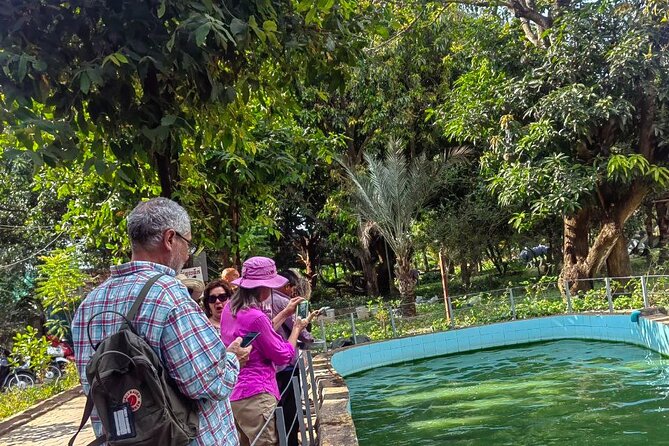
Stop 3 shifts tone. It’s still in Koh Dach, but the emphasis turns toward village life and local production—plus a Buddhist temple visit for full-context Cambodian living.
You’ll visit the local pagoda and spend time around the village and market rhythm. This is the part that helps you connect the craft work to everyday life. It’s one thing to watch weaving; it’s another to see how farming and village routines surround that work.
You’ll also get a glimpse into what farmers produce and how they do it traditionally. The tour info calls out mosquito net, silk sarong, phamuong, Hol, and silk krama made by traditional ways. Even if you don’t recognize every product name, you’ll likely understand the theme fast: local needs drive local textiles.
Why this stop matters: it keeps the day from becoming purely transactional. The pagoda and village elements make the craft stops feel grounded, not staged for tourists.
What to bring mentally: expect a working village environment. Go with a respectful mindset, keep your questions simple, and focus on observing.
A few more Phnom Penh tours and day trips our team keeps coming back to



Rice Paddies, Lemongrass, Ginger, Corn, and the Countryside Feel
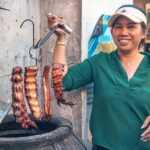
One of the reasons this tour is called a Silk Island tuk-tuk tour is that the route itself is part of the story. You’ll pass through countryside scenes tied to agriculture—rice paddy farmlands and traditional rural landscapes.
The tour description also points to recognizable local crops and pasture types, including lemongrass, banana plant, ginger, and corn pastures. That matters because it reframes Cambodia’s craft output as something built alongside farm work, not separate from it.
If you’ve only seen Cambodia through city temples and museums, this countryside route gives you a different baseline. You’re not just collecting sights; you’re seeing how the land and daily labor feed the products people make.
The Ferry Back to Phnom Penh: Wrapping Up at a Human Pace
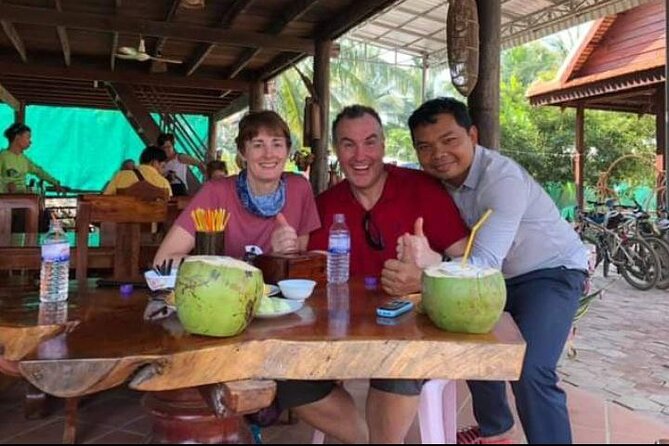
After Koh Dach, the day closes with the journey back. You’ll end by taking a ferry return to Phnom Penh, then head back to the original meeting point.
This ending is smart. It keeps the schedule tight—about 4 to 5 hours total—so you still have time for dinner or a second activity in the city after you get back. It’s long enough to feel like a real outing, but short enough that you won’t arrive home exhausted.
Also, the ferry segment is a nice change of pace. It gives you movement and a reset between the village and your return to the urban grid.
Price and Value: When $80 Feels Reasonable
Let’s talk value plainly. For $80, you’re paying for:
- roundtrip-style guided logistics during the day
- a tuk-tuk ride with a safe driver
- bottled water and snacks
- all entrance fee tickets
- an English-speaking guide
If you were to replicate this solo, you’d likely spend time coordinating transport, finding the right craft stops, paying multiple fees, and handling timing around the ferry. Even if the dollar amount is only slightly lower solo, the hassle is higher.
The tour’s value is best if you want a structured day that still feels personal. It works especially well if you don’t want to figure out routes while you’re also trying to read signage, ask the right questions, and find the real work areas.
If you’re on a strict budget or you already have your own plan to visit craft workshops, you might feel the cost. But for many visitors, the included tickets and guide time are what turn the price into a sensible deal.
Who This Tour Suits Best (and Who Might Skip)
This is a great fit if you:
- like learning how products are made
- enjoy craft work and textiles
- want a countryside day without heavy logistics
- prefer smaller groups (max 20 travelers)
You might want to think twice if:
- you only want major sightseeing landmarks and don’t care about workshops or markets
- you want a very slow pace with tons of downtime
- you’re sensitive to outdoor conditions, since the tour requires good weather
Should You Book the Silk Island Tuk Tuk Tour?
If you want a Cambodia experience that mixes countryside views with hands-on craft learning, I’d book it. The silk-making focus is the star, and the Koh Dach village and pagoda stop keep it from turning into a simple shopping loop. Add in a strong guide experience—Visal is specifically praised—and the included tickets, water, and snacks, and it becomes a day that’s easier than it sounds.
My advice: book if you enjoy questions. This tour pays you back when you’re curious. If that’s your style, you’ll come away with more than photos—you’ll have a real sense of how silk and village life connect.
FAQ
How long is the Silk Island Tuk Tuk Tour?
It runs about 4 to 5 hours.
What is the price per person?
The price is $80.00 per person.
What’s included in the tour price?
The tour includes a professional English-speaking guide, tuk-tuk with a safe driver, bottled water, snacks, and all entrance fee tickets.
Where does the tour start and end?
It starts at G Mekong Hotel / Orussey Market Area in Phnom Penh and ends back at the same meeting point.
Is the ticket digital or paper?
You get a mobile ticket.
How many people are in the group?
There is a maximum of 20 travelers.
What kind of weather does the tour require?
The tour requires good weather, and if it’s canceled due to poor weather, you’ll be offered a different date or a full refund.
More Tour Reviews in Phnom Penh



More Phnom Penh Tuk-Tuk Tours in Phnom Penh
More Silk Island & Koh Dach Tours in Phnom Penh


Keep browsing: more Phnom Penh tours and day trips our team has reviewed









Silk Island & Koh Dach Tours, compared.
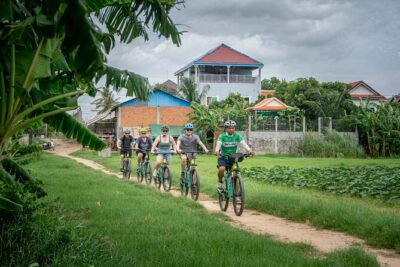 ★ 5.0Phnom Penh Silk Island Bike Tour/ E-Bike or Tuk TukFrom $35495 reviews
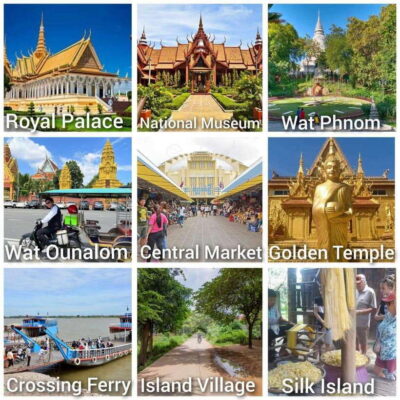 ★ 4.8City & Silk Island Full or Half Day TourFrom $30345 reviews
 ★ 4.9Silk Islands Half-Day Bike TourFrom $39315 reviews
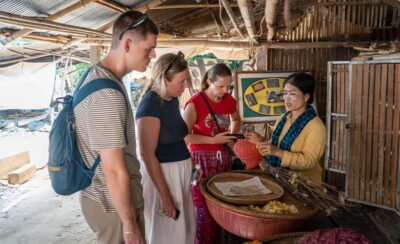 ★ 4.7Phnom Penh to Silk Island By Tuk-Tuk with local ExpertFrom $29249 reviews
 ★ 5.0Silk Island Cycling Adventure & lunch with localsFrom $45246 reviews
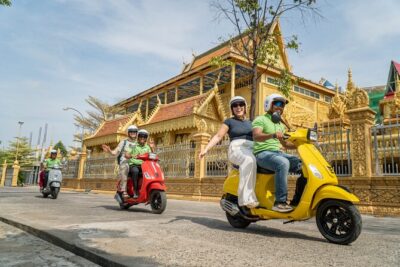 ★ 5.0Phnom Penh Silk Island Vespa Tour / Tuk Tuk AvailableFrom $29102 reviews
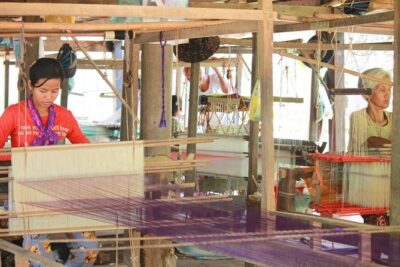 ★ 4.5Mekong Silk Island Cruise – Unlimited Beer, Soft Drinks & Fresh Fruit PlatterFrom $3595 reviews
 ★ 4.9Mekong Islands & Silk Islands Guided Bike TourFrom $6548 reviews
Browse the lists this tour appears in