
Reviewed · FULL-DAY
Phnom penh full day Tour
Phnom Penh hits hard in six hours. This tour is interesting because it pairs palace-and-pagoda beauty with Cambodia’s darkest Khmer Rouge sites, then ends in a calmer temple setting. I love the English explanations that turn each stop into a clear story, and I also like the practical comfort of a minivan plus cool water and soft drinks during the day. One drawback to plan for: the headline price ($35) doesn’t include most entry fees, so your real total will be higher.
The pace is built around five major visits, with set time blocks for each place and driving between them. You’ll go from the Royal Palace area to Tuol Sleng, then out to Choeung Ek, and back for the National Museum and Wat Phnom.
Guides can make or break a history day, and this one often gets strong marks for that. People have credited guides like Sovann and Ned for strong context, patient pacing, and staying with you while you move through sites.
In This Review
- Key things that make this Phnom Penh full-day tour worth it
- Price and logistics: what the $35 covers (and what it doesn’t)
- Pickup and timing: how the day actually flows
- Royal Palace of Cambodia: history you can map in your head
- Tuol Sleng Genocide Museum (S-21): what a former school turns into
- Choeung Ek Killing Field: the orchard turned memorial
- National Museum of Cambodia: Khmer art and archaeology with context
- Wat Phnom: a 46-meter symbol that anchors the city
- Guides that can actually handle a heavy day
- Who this tour suits best (and who should rethink it)
- The real value: why five stops in six hours can work
- Should you book this Phnom Penh full-day tour?
- FAQ
- How long is the Phnom Penh full day tour?
- What does the $35 price include?
- Are the entrance fees included?
- What is the total of the listed entrance fees?
- Where do I get picked up?
- Where do you drop me off at the end?
- What group sizes are available?
- What language is the tour guide?
- What cancellation options do I have?
- What should I bring, and what is not allowed?
Key things that make this Phnom Penh full-day tour worth it
- A full story arc: royal Phnom Penh landmarks, then the Khmer Rouge sites, then cultural stops
- English guide support: explanations that help you understand what you’re seeing
- Good time budgeting: 6 hours with set visit durations for each stop
- Smart pairing of sites: Tuol Sleng and Choeung Ek connect in a way that feels meaningful
- Comfort touches included: minivan transport plus cool water and soft drinks
- Flexible day management: guides may adjust when closures happen or when you need extra help
Price and logistics: what the $35 covers (and what it doesn’t)
On paper, this is a $35 per person Phnom Penh full-day tour for about 6 hours. That price mainly covers the human part and the ride: an English-speaking tour guide, a driver, and minivan transportation, plus pickup and bottled cool water and soft drinks.
The catch is simple: entry fees are not included for the big-ticket stops. From the listed prices, you’re looking at:
- Royal Palace of Cambodia: $10
- Tuol Sleng Genocide Museum (S-21): $5
- Choeung Ek Killing Field: $3
- National Museum of Cambodia: $10
- Wat Phnom: $1
Add those up and you’ll likely spend about $29 more per person on tickets. So yes, the day costs more than $35 in real life, but it’s still reasonable for five major sites plus guide time.
Practical tip: bring some cash. I’ve seen how quickly small friction can become a bigger headache in Phnom Penh, and a guide stepping in once (with a quick reimbursement) is the kind of kindness you shouldn’t count on every time. If you have the entry money ready, the whole day runs smoother.
A few more Phnom Penh tours and day trips our team keeps coming back to
Pickup and timing: how the day actually flows
This tour is designed for pickup in Phnom Penh. Depending on the option you pick, you’ll be met at your chosen starting point, and the guide will look for your name after booking. At the end, you get drop-off back in Phnom Penh, including Phnom Penh 51 Hotel.
The visit durations are tight but realistic for a single day:
- Royal Palace: 1.5 hours
- Tuol Sleng: 1.5 hours
- Choeung Ek: 1 hour
- National Museum: 1 hour
- Wat Phnom: 1 hour
That schedule helps you avoid the common Phnom Penh problem: doing too much, too fast, with no breathing room for questions. Still, remember this is a history-heavy day. Plan for moments when your brain needs a reset, especially after Tuol Sleng and before heading out to Choeung Ek.
Royal Palace of Cambodia: history you can map in your head
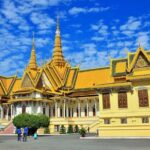
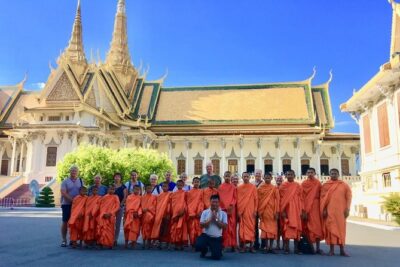
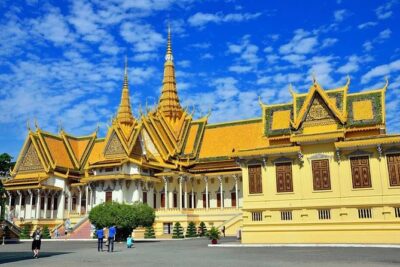
The day often starts with the Royal Palace of Cambodia, a complex built as the official royal residence. The palace was constructed between 1866 and 1870, after King Norodom relocated the royal capital from Oudong to Phnom Penh. It sits on top of an older citadel called Banteay Keo.
If you want something concrete to notice, here it is:
- The complex faces east.
- It’s positioned on the western bank near the Tonle Sap–Mekong river junction area called Chaktomuk, a name tied to Brahma in local tradition.
You’ll probably walk through the grounds with time to look, not just rush past. The value of this stop on a genocide-focused itinerary is that it gives you context for what Phnom Penh symbolized before the Khmer Rouge years—the image of authority, ceremony, and national identity.
One heads-up: the Royal Palace can be closed on some days. When that happens, a good guide won’t leave you with empty time. You still get an enriching flow—just not necessarily in the exact same order.
Tuol Sleng Genocide Museum (S-21): what a former school turns into
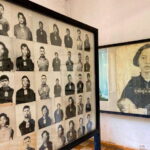
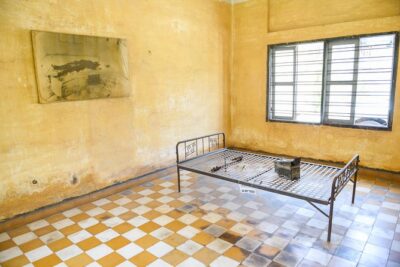
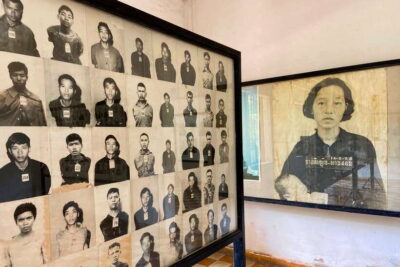
Next comes Tuol Sleng Genocide Museum, also known as S-21. This site isn’t a distant “history textbook” stop. It was a former secondary school that the Khmer Rouge used as a Security Prison from 1975 to 1979.
Here’s what makes this place so hard to forget:
- From 1976 to 1979, an estimated 20,000 people were imprisoned at Tuol Sleng.
- It was one of about 150 to 196 Khmer Rouge torture and execution centers.
The museum does a specific job: it helps you connect the Khmer Rouge ideology to the real, physical machinery of detention—rooms, records, and the cold logic of a system designed to break people.
You’ll want an English guide here, not just because explanations are useful, but because it helps you make sense of what you’re reading in the displays. A strong guide like Ned is the kind of person who can keep the story clear without turning it into a lecture you can’t process.
Tone note for you: this is emotionally serious. I’d treat the 1.5 hours here as your “slow down and absorb” block, not your “speed through because I’m on vacation” block.
Choeung Ek Killing Field: the orchard turned memorial
Then you go out to Choeung Ek, a former orchard in Dangkao. During the Khmer Rouge period (again, 1975 to 1979), it was used as a Killing Field. It’s located about 17 kilometers south of central Phnom Penh and was attached to the Tuol Sleng detention center.
The connection between these two stops is the real point. Tuol Sleng shows the detention system. Choeung Ek shows what happened afterward. Put together, they form a timeline you can actually hold in your mind, instead of remembering separate facts.
This visit is set for about 1 hour. That’s usually enough time to see the memorial space and understand what the site represents, without stretching it into a numb, automatic experience.
If you tend to get overwhelmed at historical sites, pace yourself. The day is structured to move on after this stop, and that transition can feel abrupt. Having a guide who keeps the narrative clear helps you “carry” what you learned into the next, more cultural museum stop.

National Museum of Cambodia: Khmer art and archaeology with context
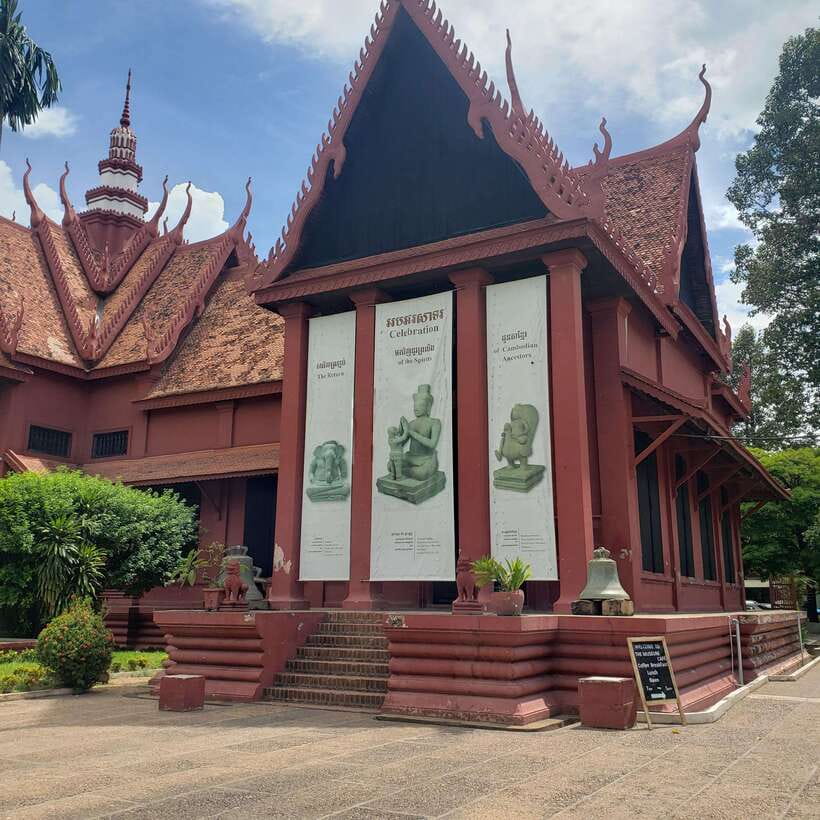
After the genocide sites, the National Museum of Cambodia can feel like a reset. This museum is Cambodia’s largest cultural history museum and is a leading historical and archaeological museum in the country.
Why I like placing this after Tuol Sleng and Choeung Ek: you’re no longer only staring at loss. You’re looking at craft, belief, and the visual language of Khmer culture—things that survived and still shape identity today.
You’ll get about 1 hour here. That’s a good amount of time for seeing major highlights without turning the museum into a marathon. With an English guide, you’ll also be able to understand what you’re seeing instead of just ticking off objects.
Think of this stop as your brain switching from “what was done” to “what endured.”
Wat Phnom: a 46-meter symbol that anchors the city
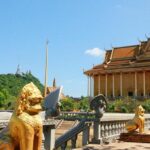
The day ends at Wat Phnom, a Buddhist temple in Doun Penh. Wat Phnom is strongly tied to Phnom Penh’s name and is considered part of Khmer national identity.
It’s also tall: the pagoda reaches about 46 meters. From a practical standpoint, that height makes it easy to understand why this temple became such a symbol for the city.
This is your lighter-feeling stop, not because the day was easy, but because Wat Phnom gives you something else to hold: calm, ritual space, and city views.
This final hour is a good time to slow down, grab a few photos, and let the day settle in.
Guides that can actually handle a heavy day
One of the most praised parts of this experience is the guide work. People have singled out guides like Sovann and Ned for being informed and for explaining Cambodia’s past in a way that stays understandable even when the content is painful.
What you’re looking for in a guide on this itinerary:
- Clear context (so you understand what you’re seeing)
- Patience when you need a moment
- Good pacing between stops
- The ability to answer questions without turning it into a rushed script
There’s also practical flexibility. In one case, a guide helped cover an entrance fee when a traveler didn’t have cash on hand, and reimbursement happened afterward. That’s not something you should plan around, but it does signal a willingness to keep the day moving instead of letting small problems derail it.
Who this tour suits best (and who should rethink it)
This tour fits best if you want a single-day Phnom Penh outline that includes both the royal/cultural highlights and the Khmer Rouge sites. It’s also a great choice if you like having an English guide so the museums don’t feel like silent rooms full of text.
It may not be a match if:
- You’re not comfortable with emotionally intense history (Tuol Sleng and Choeung Ek are not light stops).
- You’re traveling with very young children; the tour isn’t suitable for babies under 1 year.
- You’re older; it’s listed as not suitable for people over 95 years.
If you’re older and still want the history, consider messaging your provider about pace and comfort—but based on the given suitability guidelines, this isn’t marketed for that age range.
Also, note the basic rules: alcohol and drugs aren’t allowed. Bring a camera if you want photos.
The real value: why five stops in six hours can work
Five major sites in six hours sounds intense, and yes, it is. But the structure is what makes it work: each stop is distinct enough that you don’t lose the plot.
You get:
- Royal Palace: “What Phnom Penh looked like in official life”
- Tuol Sleng and Choeung Ek: “How ideology turned into detention and killing”
- National Museum: “What Khmer culture looks like when it survives”
- Wat Phnom: “Where identity and city meaning continue”
That arc is the reason this tour is worth your time. If you only do palaces, you miss the trauma that shaped modern Cambodia. If you only do killing sites, you might leave without seeing what endured. This itinerary tries to give you both.
Should you book this Phnom Penh full-day tour?
Book it if you want an organized, English-guided day that hits the most important Phnom Penh landmarks and genocide sites in a single timeline, without you having to coordinate transport between five locations.
Skip or adjust if you know you need more breathing time, or if you’re prone to shutting down at intense memorials. This is not a “pick up souvenirs and snack your way through history” kind of day.
If you do book, your best move is simple: bring cash for entry fees, carry your camera, and give yourself permission to take it slowly during the heavy stops.
FAQ
How long is the Phnom Penh full day tour?
It runs for about 6 hours.
What does the $35 price include?
The tour includes an English-speaking tour guide, a driver, transportation by minivan, pickup (as an option), and cool water plus a soft drink.
Are the entrance fees included?
No. Entrance fees are listed as not included for the Royal Palace ($10), Tuol Sleng ($5), Choeung Ek ($3), the National Museum ($10), and Wat Phnom ($1).
What is the total of the listed entrance fees?
Adding the listed prices, the entrance fees total about $29 per person.
Where do I get picked up?
Pickup is in Phnom Penh. The meeting point depends on the selected option, and the guide picks you up from your booked location.
Where do you drop me off at the end?
Drop-off includes Phnom Penh 51 Hotel in Phnom Penh.
What group sizes are available?
The tour is available as private or small groups.
What language is the tour guide?
The live tour guide speaks English.
What cancellation options do I have?
You can cancel up to 24 hours in advance for a full refund, and there is also a reserve now & pay later option.
What should I bring, and what is not allowed?
Bring a camera. Alcohol and drugs are not allowed.
More Full-Day in Phnom Penh
More Tours in Phnom Penh
More Tour Reviews in Phnom Penh
Keep browsing: more Phnom Penh tours and day trips our team has reviewed






Full-Day, compared.
 ★ 5.0Phnom Penh Full Day Private Tour Included All Admission TicketsFrom $97585 reviews
 ★ 5.0A Full Day Tour for Royal Palace, S21, Killing Fields & MoreFrom $35115 reviews
 ★ 5.0Phnom Penh Vital Discovery-Full Day Tour (Including all services)From $8867 reviews
 ★ 4.5Full-Day Phnom Penh Sightseeing Tour & Killing FieldFrom $12242 reviews
 ★ 5.0Oudong and Koh Chen Island – Full Day Cruise & Tour with English speaking guideFrom $11020 reviews
 ★ 4.9Full Day Phnom Penh City Tour with Private vehicle and guideFrom $6520 reviews
 ★ 4.5Private Tour: Phnom Penh City Tour Full DayFrom $15618 reviews
 ★ 4.7Phnom Penh Full Day Private Tour with All Admission TicketsFrom $2716 reviews