Reviewed · PHNOM PENH
Phnom Penh Birding Experience and Brunch
Early mornings change everything.
This half-day birding trip from Phnom Penh starts at Areyksat ferry dock and heads east to Mekong River wetlands, where the real draw is the Cambodian Tailorbird plus lots of other water and marsh birds. You also get binoculars as part of the package, so you can focus on spotting instead of scrambling for gear.
I also like that the day is built around a proper break: breakfast (with coffee or tea) in an open-air spot near a small lake, before the longer birding stretch. One possible drawback is the timing: you’re out the door very early, so it’s not a good pick if you want a slow start.
In This Review
- Key highlights you’ll care about
- Leaving Phnom Penh fast: the 6am ferry rhythm
- Getting to Skyland (7NG Road): paddy rice, lotus farms, and real birding time
- Breakfast at PHSAR DEK: fueling the long scan without losing the morning
- The Cambodian Tailorbird moment: why the Skyland stretch is the core
- Birds you can reasonably expect (and how to enjoy the mix)
- Guides and group size: how Vana Adventure Travel keeps it workable
- Price and value: what $85 buys you in the real world
- What to expect day-of: pace, comfort, and practical tips
- Should you book it? Who this tour fits best
- FAQ
- What time does the tour start and where do I meet?
- How long is the Phnom Penh birding experience?
- Is breakfast included?
- Are binoculars provided?
- What birds does the tour focus on?
- What’s the group size and cancellation rule?
Key highlights you’ll care about
- 6am Areyksat ferry start: out of the city early, toward wetter habitat
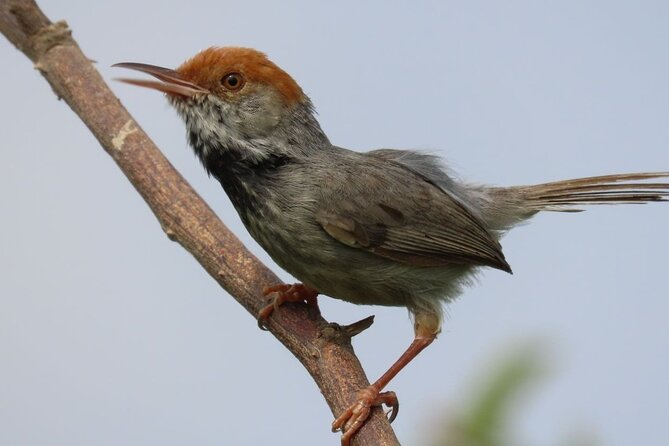
- Cambodian Tailorbird focus during the Skyland/Mekong floodplain portion
- Lotus farms and paddy rice fields on 7NG Road for a classic wetland-bird mix
- Open-air breakfast near a small lake to keep energy up for the full walk-and-scan period
- Max 10 people with a birding guide, which helps you actually get on the right sightings
Leaving Phnom Penh fast: the 6am ferry rhythm
This tour is timed for results. The meeting point is the Areyksat ferry dock (near Koh Pich Island), with pickup at 6:00am. You’ll want to arrive about 15 minutes early so you’re not rushing right as things start moving.
After pickup, you cross the river by ferry and then head east by vehicle toward Mekong wetland habitat. That first stretch matters because birding is all about matching the bird’s daily routine—morning is when a lot of wetland life is active and visible. Even if you’re not a hardcore bird nerd, the advantage is simple: you’re getting to the right kind of habitat before the day heats up and the birds get harder to read.
The ferry-and-drive combo also helps you avoid doing this as a DIY quest. You’re not figuring out timing, routes, or where to stand for best views. You’re just following the plan and learning as you go.
Chasing a different plan? Here are a few more Phnom Penh tours and experiences to consider.

Getting to Skyland (7NG Road): paddy rice, lotus farms, and real birding time
Around 6:30am, you arrive in the Skyland 7NG area. This part is built around a short walk through paddy rice fields, plus time to look over lotus farms. It’s a smart setup because lotus and shallow wet areas tend to bring in a mix of water-adjacent species—birds that feed along edges, perch over cover, or move between water and plants.
You’re given about 1 hour here, so it’s not a long hike. It’s also not a drive-by. You get enough time to settle in, compare what you’re seeing, and let the guide point out what matters rather than just walking past it.
This stop is also a good “entry level” moment if you’re new to birding. The birds may be small and quick, but you’re in the right setting for beginner-friendly sightings—where your eyes can keep track of movement against water and plant shapes. And because binoculars are included, you can actually enjoy the details, not just the silhouettes.
Breakfast at PHSAR DEK: fueling the long scan without losing the morning
At about 7:30am, the tour shifts from spotting to eating. Breakfast is served at a local restaurant nearby in PHSAR DEK. The meal is open air, and you’ll have a view of a small lake, which makes the break feel connected to the rest of the birding rather than a random detour.
This is included breakfast, plus coffee and/or tea. For a half day that runs roughly 5 to 6 hours, this matters more than you might think. If you skip a real breakfast or just grab something quick, you’ll feel it during the later birding stretch, when you’re standing and scanning and your focus needs to stay sharp.
Another practical point: the timing keeps your day efficient. You eat early, then get back to the field fast enough that you still spend the morning actively birding.
If you tend to get hungry on tours, you’ll appreciate that a proper meal is part of the plan. Snacks aren’t listed as included, so if you personally need extra bite-size food, you might want to plan for that outside the tour.
The Cambodian Tailorbird moment: why the Skyland stretch is the core
Around 8:20am, the itinerary reaches its headline target: the Cambodian Tailorbird. This bird is endemic to Cambodia and is described as likely confined to dense shrub habitat in the floodplain of the Mekong. That matters because it explains why this part of the tour is designed as focused field time rather than a series of quick stops.
You’ll spend about 3 hours continuing in the Skyland area after the tailorbird segment. In plain terms, the guide is giving you time to work a specific kind of habitat for a specific kind of bird. For rare-endemic targets, the “time on habitat” approach is usually the difference between a one-second glimpse and a moment you can actually enjoy.
Even if you’re not chasing that species specifically, this portion still tends to deliver because floodplain shrub and wet-edge areas often hold a variety of wetland life. The guide’s job here isn’t just calling out names—it’s helping you understand what the birds look like in motion, what perches they favor, and how to keep your attention on the right part of the field of view.
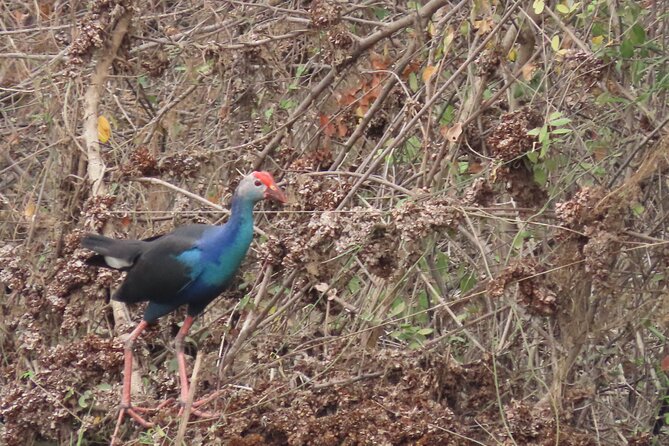
From the species list tied to the trip, this section is where you’re set up for birds like Purple Swamphen, Pheasant-Tailed Jacana, Bronze-winged Jacana, and various herons. The exact lineup depends on conditions, but the habitat focus is clear.
Birds you can reasonably expect (and how to enjoy the mix)

The tour is designed around wetland birds, water birds, and several recognizable targets. Based on the plan, you’re likely to hear the guide call out species across different wetland niches. You might see or look for:
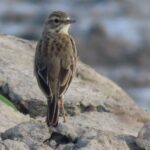
- Cambodian Tailorbird (the special focus)
- Oriental Pratincole and Striated grassbird
- Purple Swamphen
- Black Drongo
- Chinese Pond Heron and Javan Pond-Heron
- Common Greenshank
- Common Snipe
- Green Bee-Eater and Blue-tailed Bee-Eater
- White-breasted waterhen
- Zebra Dove
- Indian Roller
- Pheasant-Tailed Jacana and Bronze-winged Jacana
What I like about this list is the balance. You get marsh birds that show up well in open wet edges, plus birds that can be perched or moving through shrub or field edges. It’s not just herons and ducks; you also get that bee-eater and roller energy, which breaks the monotony of one feeding style.
A good way to enjoy this kind of mix is to stop thinking in terms of ticking boxes. Instead, keep asking yourself simple questions: Is the bird moving, calling, or feeding? Is it near water edges, in open fields, or in denser cover? Your guide can help you map what you’re seeing to the species the trip is targeting, and with binoculars included, you’ll actually catch those small differences.

Guides and group size: how Vana Adventure Travel keeps it workable
This experience is run by Vana Adventure Travel, and the group is capped at 10 travelers. That smaller size isn’t a detail you can ignore. In birding, it helps you avoid the classic problem of too many people all scanning at once, each trying to see a different corner of the habitat. Here, you’re more likely to get organized sightlines and more individual guidance.
The reviews highlight the guide by name—Thong. The pattern is consistent: Thong is described as prompt with pickup and exceptionally knowledgeable about birds and viewing spots. You can feel the value of that quickly because early morning birding is fast. A guide who knows where to stand and what to look for can turn a quiet patch into an active one.
You’ll also be traveling with an air-conditioned vehicle or tuk tuk, depending on the plan that day. Either way, the key is that transportation is handled, so you’re not spending energy coordinating logistics while your eyes should be on the marsh.
Price and value: what $85 buys you in the real world
The price is $85.00 per person for a roughly 5 to 6 hour half-day. On paper, that can sound steep if you compare it to a cheap taxi and a personal guess at where birds might be.
But this isn’t just driving around. For that $85, you’re getting:
- A birding guide
- Binoculars
- Breakfast plus coffee and/or tea
- Transport (including an early ferry crossing and then eastward travel)
- A plan that’s structured for wetland habitat time (rather than wandering)
When I look at value, I focus on the problem the tour solves for you: you get to the right habitat at the right time, with local help for identifying and locating birds, and you don’t lose your morning energy to logistics. Also, this tour starts early, which usually means you’re less likely to waste time later.
One more clue: the tour is booked on average 43 days in advance. That doesn’t guarantee anything, but it does suggest people want this specific schedule and habitat focus. If this is on your shortlist, you’ll have an easier time if you plan ahead.
What to expect day-of: pace, comfort, and practical tips
This is a morning-first outing, with the day structured around walking and scanning in wet habitat. You’ll start at 6:00am, with stops at Skyland around 6:30am, breakfast at 7:30am, and the longer Skyland birding stretch beginning around 8:20am.
That means you should plan for a few realities:
- You’ll be outside and focused for several hours, so go in ready to stay alert.
- The tour is not framed as a long nature walk or a strenuous hike. It’s more about short walks plus repeated scanning with breaks handled by the breakfast stop.
- Alcoholic beverages and snacks aren’t listed as included, so if you want extra munching or drinks, you’ll need to handle that outside the tour.
Also, it’s a small group. If you want a quiet, guided experience with less crowd noise and more chance of staying with your guide’s sighting flow, this size tends to fit.
And if you’re coming from Phnom Penh city, pickup is offered. That removes one of the biggest barriers to early birding—starting before public transit or before you’ve figured out a route.
Should you book it? Who this tour fits best
If you’re aiming for Cambodia-focused birds—especially the Cambodian Tailorbird—and you want a real half-day birding plan with transport and breakfast handled, this is a strong match. The structure is built around habitat time (rice fields, lotus farms, then floodplain shrub/wetland areas), and the inclusion of binoculars makes it easier to enjoy the details.
You’ll also like it if you’re a beginner who wants help building basic bird-reading skills. The day is not just about being outdoors; it’s about learning what to look for in a wetland setting.
I’d consider skipping if you hate early mornings. Starting at 6:00am from Areyksat ferry dock is the whole premise of getting the birds at the right time. If your ideal day begins later, this one won’t feel flexible.
FAQ
What time does the tour start and where do I meet?
Pickup is at 6:00am at Areyksat Ferry Dock (near Koh Pich Island). You should arrive about 15 minutes before the departure.
How long is the Phnom Penh birding experience?
It lasts about 5 to 6 hours.
Is breakfast included?
Yes. You’ll have breakfast, plus coffee and/or tea, during the morning portion at a local restaurant in PHSAR DEK.
Are binoculars provided?
Yes. Binoculars are included, along with a birding guide.
What birds does the tour focus on?
The trip is designed for wetland and water birds and includes targets such as Cambodian Tailorbird, Oriental Pratincole, Striated grassbird, Purple Swamphen, Black Drongo, Chinese Pond Heron, Common Greenshank, Green Bee-Eater, and Blue-tailed Bee-Eater.
What’s the group size and cancellation rule?
The tour has a maximum of 10 travelers. You can cancel for a full refund up to 24 hours before the experience’s start time.