
Reviewed · PHNOM PENH CITY TOURS
Full-Day Discover Oudong Mountain-Former Capital City & Phnom Penh City Tours
One hill. Two capitals. Same unforgettable day. I like how this tour strings together Oudong Mountain and the key sights of Phnom Penh with hotel pickup, so the day feels smooth instead of stressful. I also love the fact that your guide ties together temples, royal stories, and religion in a clear way as you go. One drawback to plan for: Oudong involves stair climbing in the heat, and lunch isn’t clearly spelled out.
If you want your guide to set the pace, this is a solid fit because it’s a true private tour for your group, driven by a guide who can adapt on the fly. In particular, guides like Sam Ang and Suyhong are mentioned for being organized and helpful, including making the Oudong walk more manageable and staying calm during hot weather. Still, because it’s a full day (about 7–8 hours), you’ll want decent energy and comfortable shoes.
In This Review
- Key highlights worth clocking before you go
- Oudong Mountain to Phnom Penh: why this day tour feels so efficient
- Morning at Oudong Mountain: what you’ll actually see and why it matters
- Phnom Udong stairs and hill-side culture: pace yourself, then enjoy the views
- Preah Sakyamoni Chedi and the temple areas at the base
- Wat Phnom, Independence Monument, and Sihanouk: Phnom Penh’s condensed identity tour
- Royal Palace and Silver Pagoda: two close sights that make sense together
- Price and value: what you’re paying for in a private 7–8 hour day
- Who should book this Oudong plus Phnom Penh tour
- Should you book Full-Day Discover Oudong Mountain and Phnom Penh?
- FAQ
- How long is the full-day Oudong and Phnom Penh tour?
- Is hotel pickup and drop-off included?
- Does the tour include an English-speaking guide?
- Are entrance fees included?
- Is lunch included?
- Is this tour private?
- What transportation is provided?
- What’s included for comfort during the day?
- Does the tour work in bad weather?
- What does the itinerary include in Phnom Penh?
Key highlights worth clocking before you go
- Oudong Mountain views with built-in story: you’re not just walking; you’re learning what the ruins and stupas mean.
- Time on Phnom Udong’s stairs: you get a climb and then a viewpoint over the plains below.
- Preah Sakyamoni Chedi and the Khmer Rouge scars: the site history is part of the experience, not background noise.
- Phnom Penh landmarks in one loop: Wat Phnom, Independence Monument, the Sihanouk statue, Royal Palace, and Silver Pagoda.
- Heat-friendly extras included: cold bottled water and a cold hand towel help you keep going.
- Entrance fees handled for the listed stops: fewer surprises once you start moving.
Oudong Mountain to Phnom Penh: why this day tour feels so efficient
This is a classic Cambodia pairing: start with Oudong, then switch gears to central Phnom Penh. Oudong was a former royal capital, and it’s the kind of place where a guide’s explanations make the monuments click, especially the stupas and the sacred hill sites.
The real value here is the day rhythm. You’re not bouncing randomly between far-flung points on your own—you’re getting a structured route with private, air-conditioned transportation and hotel pickup and drop-off. That matters in Phnom Penh, where traffic can turn “quick errands” into a long ordeal.
You’ll also appreciate the practical perks: cold bottled water and a cold hand towel during the trip, plus entrance fees included for the program stops. That combination is how you avoid the common problem with full-day tours—paying extra for everything and then feeling fried before you even reach the good parts.
The trade-off is simple: it’s still a full day, and there’s stair work at Oudong. If you’re sensitive to heat or have mobility limits, think carefully. If you’re okay with short climbs and walking on uneven temple paths, you’ll likely find it a good mix of culture and logistics.
A few more Phnom Penh tours and day trips our team keeps coming back to
Morning at Oudong Mountain: what you’ll actually see and why it matters
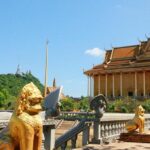
Oudong Mountain is where the tour earns its name. You’ll visit key religious structures on and around the hill, including a stop tied to modern royal-era building activity. One highlight is the stupa built in 2002 by King Norodom Sihanouk, placed atop the hill—an example of how the past keeps getting reworked in the present.
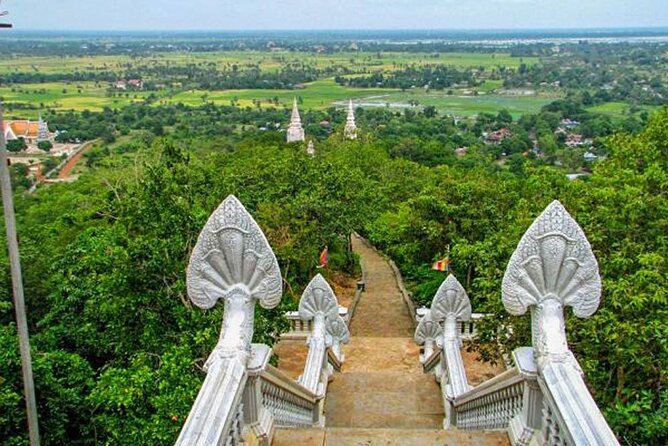
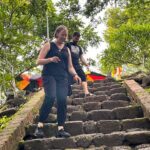
As part of the Oudong visit, you also reach Phnom Udong, which includes climbing stairs up for magnificent views over the plains below. This isn’t just sightseeing from a distance. The stairs and the viewpoint together help you understand why people have long gathered on high ground for sacred and political purposes.
From there, your route includes additional hill-side spiritual stops, including Preah Sakyamoni Chedi. This area includes shrines and Buddha statues on the slopes, and the site’s history includes serious damage during 1977 under the Khmer Rouge. In other words, you’re standing in a space shaped by both belief and interruption—and your guide’s context is what turns the visit from pretty scenery into a meaningful story.
Time at Oudong is usually the part people remember most. You’re seeing a sacred hill setting, plus you’re getting historical explanations that connect the structures to Cambodia’s changing eras. If you prefer your culture stops to come with context, this is a strong point for the tour.
Phnom Udong stairs and hill-side culture: pace yourself, then enjoy the views
The hill climb is the most physical moment in the plan. The climb itself is short-to-moderate by tour standards (with a dedicated stop for it), and it comes with a payoff: you get that viewpoint that looks over the plains below.
A practical tip: go slower than you think you need to. The weather in Phnom Penh area can be hot, and temple hills can make that feel intense. The guides on this tour are specifically noted for being accommodating in hot weather—so don’t be shy about asking for a short pause if you need it.
Once you’re at the top, listen for what your guide points out: the layout of the sacred structures, what the different stupas and shrines represent, and why this place mattered as a capital and a pilgrimage area. Even if you’re not a religion-history person, the “what you’re looking at” part becomes easy once you have a local guide framing it.
Also, remember that some parts of the hill grounds include ruined or restored religious elements. That mix can feel emotionally heavy, especially with the site’s Khmer Rouge history. It’s okay if you need a breath before moving on—this tour’s structure gives you short segments rather than one nonstop slog.
Preah Sakyamoni Chedi and the temple areas at the base
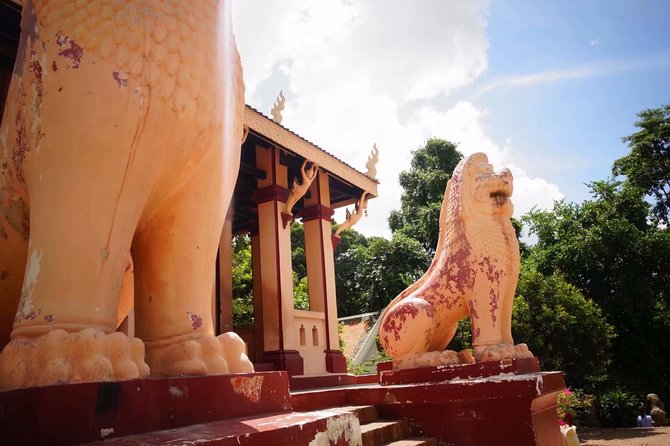
After the climb and viewpoint, the schedule continues with more spiritual structures tied to Buddha worship. Preah Sakyamoni Chedi is a key stop here, and it’s worth treating as its own experience rather than a quick photo spot. You’ll be shown shrines and Buddha statues on the slopes, plus the story of how those elements were damaged or destroyed in 1977 and later re-established.
Then you’ll move down for time at Oudong Temple, where the tour shifts from hill-side focus to the broader area around the mountain. At the base, there’s a cluster of picnic huts, and on weekends the area can get busy. That’s normal for temple tourism—think of it as part of how locals and visitors share the space.
This middle-of-the-day transition is helpful. You get time at the high-impact viewpoint and sacred structures, then you come down before you shift fully into city sightseeing. If you’re the type who gets temple fatigue, the structure helps because it breaks the day into separate “chapters” with different textures.
If you want photos, this is also where you can catch different angles: the mountain and hill complex are visible from more than one perspective, and your guide can help you choose where to stand so you don’t end up with a bunch of identical shots.
Wat Phnom, Independence Monument, and Sihanouk: Phnom Penh’s condensed identity tour
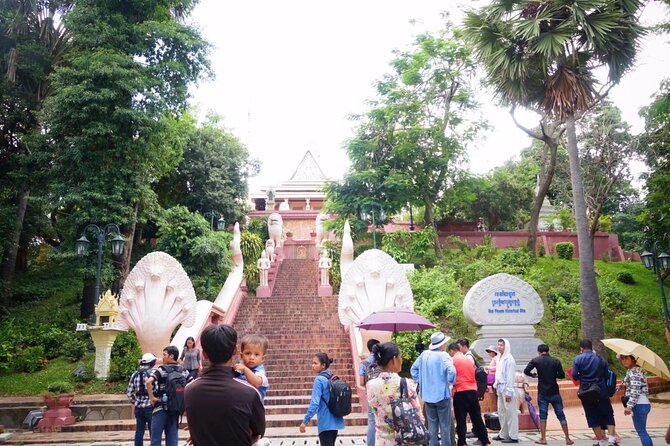
After Oudong, the tour turns into a tight sightseeing loop through central Phnom Penh. It starts with Wat Phnom, which sits atop an artificial hill known as Phnom, about 27 meters high. Wat Phnom is the namesake and symbol of the capital city, so this stop works like a quick orientation to Phnom Penh itself.
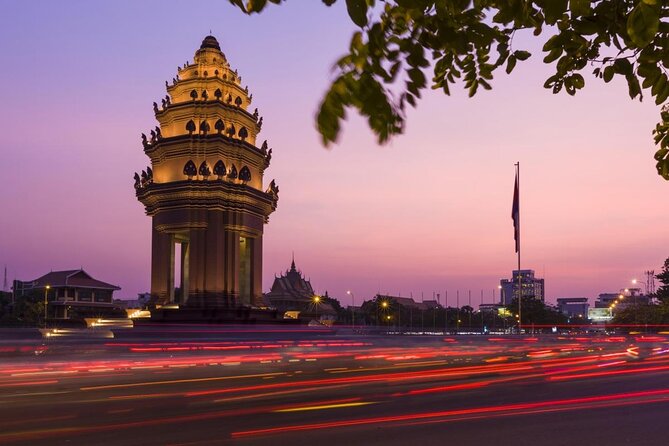
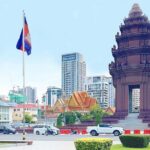
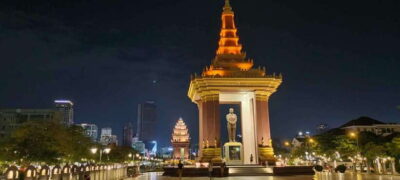
Then you’ll head to Independence Monument, built in 1958. The point here is not just to see a tower in the middle of the city, but to understand why it’s there: it was built to commemorate Cambodia’s Independence Day after winning independence from the French.
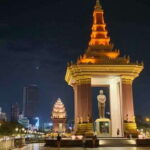
Next comes the Statue of King Father Norodom Sihanouk, completed construction in 2013 and inaugurated on October 11 of that year. These stops may look like classic landmark photo ops, but with a guide explaining the why behind each one, they become part of a broader political timeline.
A helpful way to think about this section: you’re getting the city’s symbols in a compressed format. You’re not spending hours debating which “top attraction” to pick. You’re getting the main anchors—religious and political—before the day’s big-ticket palace sites.
A few more Phnom Penh tours and day trips our team keeps coming back to
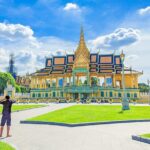
Royal Palace and Silver Pagoda: two close sights that make sense together
The final major portion of the tour focuses on Phnom Penh’s most famous compound area: Royal Palace followed by Silver Pagoda. Since these sit next to each other within the same larger walled compound, the pairing is efficient. You’re not traveling between distant neighborhoods, and you get a strong sense of how power and spirituality are connected in this city.
The Royal Palace is described as a residence built over a century ago for the King of Cambodia and his family, plus foreign dignitaries. It also functions as a venue for court ceremonies and performances—so it’s not just a building exterior. Your time here is a window into formal Cambodian public life.
Next is the Silver Pagoda, officially known as Wat Preah Keo Morokat. It sits next to the Royal Palace and is separated by a walled walkway, still within the same compound. Even if you don’t read every detail on signs, the physical relationship between these sites helps you understand why the tour designers placed them back-to-back.
This section is usually where you’ll feel the day’s pace most. If you’re tired, plan for it: keep your camera ready, take short breaks, and let your guide do the explaining in chunks. That approach keeps the visit enjoyable instead of turning it into a marathon.
Price and value: what you’re paying for in a private 7–8 hour day
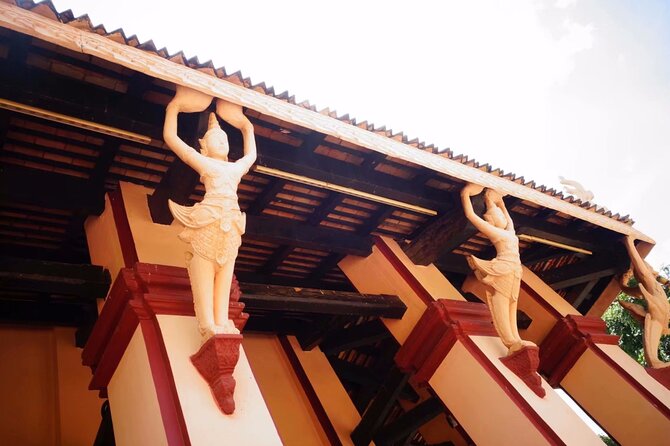
At about $100.52 per person, this tour is priced like a private, all-in sightseeing day rather than a bargain group bus. The key value is what comes included: private English-speaking tour guide, hotel pickup/drop-off, comfortable air-conditioned transport, cold bottled water, cold hand towel, and entrance fees for the program stops.
Lunch and drinks are not clearly included in the information you get, so you should budget for your own meal breaks and personal expenses. If you skip that planning, the day can feel like it costs more than you expected. Still, because the big-ticket entrance fees are handled, you’re less likely to run into surprise add-ons halfway through.
One small logistics note: you’ll receive a mobile ticket, which can make the start of the day simpler if you’re used to scanning and going. And because it’s booked on average about 63 days in advance, it’s worth reserving ahead if you have firm travel dates.
If you’re comparing options, ask yourself what you want most: saving money or buying a smoother day. For many people, paying for a private guide and handled entrances is exactly how you protect your time and keep the visit coherent.
Who should book this Oudong plus Phnom Penh tour
This tour fits best if you want a structured, full-day blend of hill-side sacred sites and central Phnom Penh landmarks. It’s also a good match if you like learning with a guide rather than walking solo trying to guess what you’re looking at.
It’s especially appealing if:
- You want Oudong Mountain early so the day starts strong.
- You care about religion and how Cambodian monuments reflect major historical periods.
- You prefer private pacing with a guide who can adapt in heat.
It might not be the best fit if:
- You strongly dislike stair climbing or long walking in hot weather.
- You want a day with lots of free time for wandering and long meals.
In that case, you may prefer a shorter tour or a day broken into fewer stops.
Should you book Full-Day Discover Oudong Mountain and Phnom Penh?
I’d book it if you want one day that gives you both a sacred hill story and Phnom Penh’s core symbols, without spending energy on route planning. The guide-led pacing, entrance fees included, and heat-friendly touches (water and cold towel) make it feel practical for a place where the weather can be intense.
I’d hesitate only if you expect lunch to be fully handled or if stairs at Oudong would be a problem. In Phnom Penh, small comfort issues can snowball on a full day, so plan your meals and bring comfortable footwear.
Overall, this is a thoughtful way to connect the former royal capital feel of Oudong with the political and religious landmarks of Phnom Penh, in a time-efficient loop.
FAQ
How long is the full-day Oudong and Phnom Penh tour?
The tour runs about 7 to 8 hours.
Is hotel pickup and drop-off included?
Yes. Hotel pickup and drop-off are included.
Does the tour include an English-speaking guide?
Yes. You get a private English-speaking tour guide.
Are entrance fees included?
Yes. Entrance fees for the listed program stops are included.
Is lunch included?
Lunch and drinks are not clearly mentioned as included.
Is this tour private?
Yes. It’s a private tour/activity, meaning only your group participates.
What transportation is provided?
The tour includes private comfortable air-conditioned transportation.
What’s included for comfort during the day?
You’ll receive cold bottled water during the trip and a cold hand towel.
Does the tour work in bad weather?
The experience requires good weather. If it’s canceled due to poor weather, you’ll be offered a different date or a full refund.
What does the itinerary include in Phnom Penh?
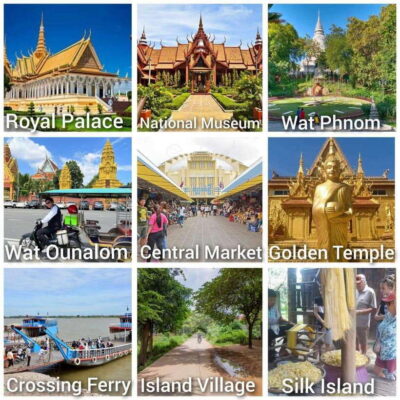
It includes stops at Wat Phnom, Independence Monument, the Statue of King Father Norodom Sihanouk, the Royal Palace, and the Silver Pagoda.
More Tour Reviews in Phnom Penh

More Oudong & Former Capital Tours in Phnom Penh
More Phnom Penh City Tours in Phnom Penh
Keep browsing: more Phnom Penh tours and day trips our team has reviewed





Phnom Penh City Tours, compared.
 ★ 4.9Highlights Tour Including S21 and Killing FieldsFrom $30453 reviews
 ★ 4.8City & Silk Island Full or Half Day TourFrom $30345 reviews
 ★ 4.9Phnom Penh – Siem Reap Road Transfer Plus SightseeingFrom $99153 reviews
 ★ 5.0Phnom Penh City Tour, Silver Pagoda, Genocide Museum, Killing FieldsFrom $65123 reviews
 ★ 4.9City Sights Evening or Half day Tour by Tuk TukFrom $17121 reviews
 ★ 4.6Phnom Penh Small Group City TourFrom $4980 reviews
 ★ 5.0A day Trip Sightseeing Phnom Penh – Siem Reap – Private English Speaking DriverFrom $10567 reviews
 ★ 4.5Full-Day Phnom Penh Sightseeing Tour & Killing FieldFrom $12242 reviews
Browse the lists this tour appears in